Why Is My Dog a Picky Eater? (And How to Fix It)
Quick Answer
Most picky eating is trained behavior from table scraps and free-feeding. Set a 15-minute meal window twice daily, remove uneaten food, and stop offering alternatives. Most dogs self-correct within 2-3 days.
On this page10 sections
Our Verdict
Most picky eating is created by owners through table scraps, treat overfeeding, and free-feeding. Set a 15-minute meal window twice daily and remove uneaten food.
How PawBench is paid: we earn an Amazon Associates commission on qualifying purchases. We don’t accept sponsored placements, paid reviews, or free products in exchange for coverage. Picks are ranked on documented owner outcomes and primary-source research, never on commission rate. Read the full methodology.
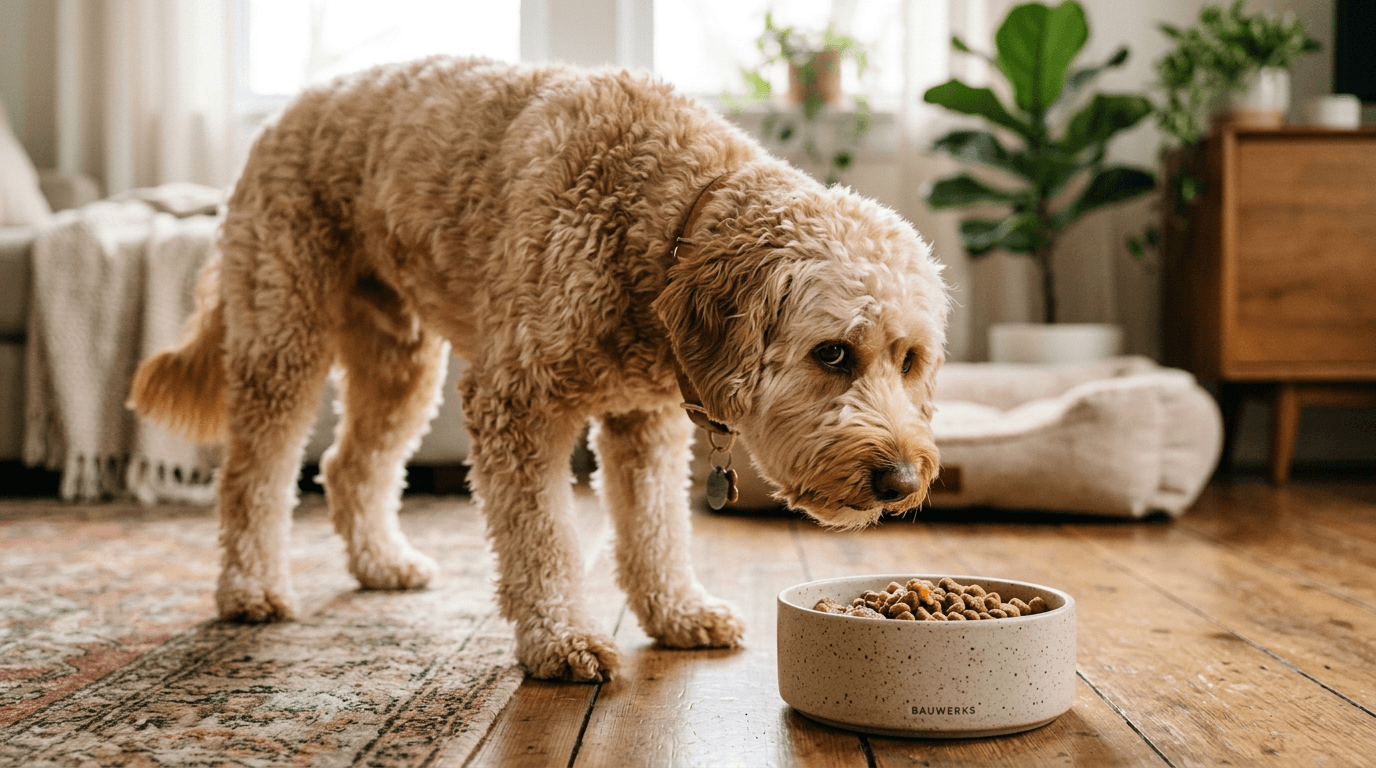
I have an Australian Labradoodle named Maggie who would like you to believe she is starving. She sniffs her bowl with visible skepticism, walks away from meals that were fine yesterday, and has opinions about which proteins are acceptable on any given Tuesday. After five years of this, I've learned that picky eating is usually a people problem — we create the behavior, and then we're confused by it.
The Most Common Cause: The Topping Spiral
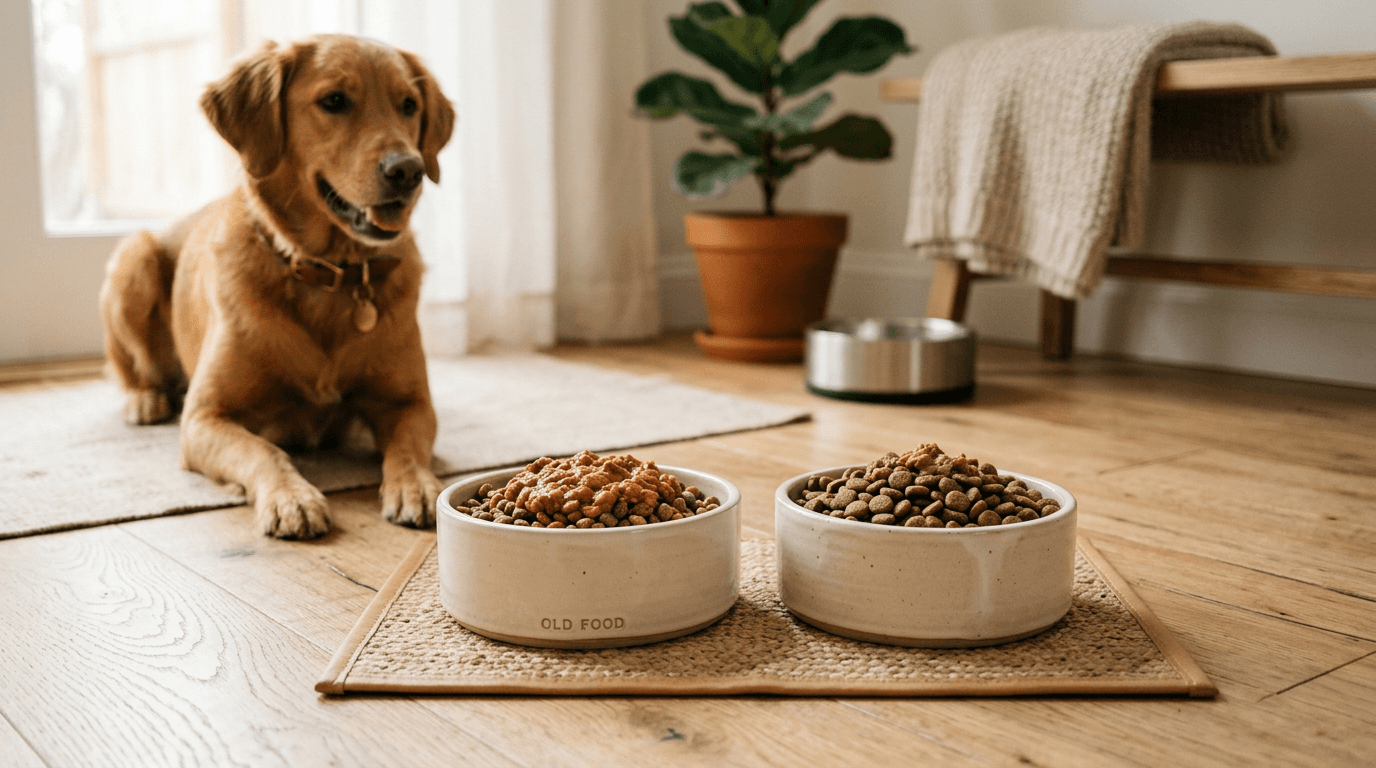
Your dog stops eating. You worry. You add chicken broth. They eat enthusiastically. You've just trained them that refusing food leads to upgrades.
Now they expect the upgrade. When it doesn't come, they wait you out. You escalate to shredded chicken. They've won.
The fix: Stop the toppings. Put the bowl down for 20 minutes. If they don't eat, pick it up. Try again at the next meal. Most dogs break within 2–3 days once they realize the negotiation is over. This is harder on you than them.
Rule Out Medical Causes First
If picky eating is sudden and new in a previously reliable eater, see a vet. Dental pain, nausea from organ issues, and food sensitivities all cause legitimate food avoidance.
The Small Dog Freshness Problem
Small breeds take weeks to finish a large bag of food. By the time it's gone, the fat content has oxidized and it smells stale. The dog isn't wrong to be suspicious.
Fix: Buy smaller bags. Store in an airtight container. Your small dog should finish a bag within 2–3 weeks maximum.
Scheduled Feeding Beats Free Feeding
Leaving food out all day creates picky eaters. When food is always available, there's no reason to eat enthusiastically. Two meals per day, 15–20 minutes each, then bowl goes up. Hunger is the best appetite stimulant.
🏆 Bottom Line: Picky eating in dogs is almost always owner-created. Stop the topping spiral, implement scheduled feeding with 20-minute windows, and hold firm. Most dogs resolve within 2–3 days. If picky eating is sudden in a previously reliable eater, see a vet first.
Related Reading
-
Signs Your Dog's Food Isn't Working
-
How to Read Dog Food Labels — Check if low-quality ingredients are turning your dog off
-
Best Dog Food for Small Breeds — Small dogs are often the pickiest eaters
-
Best Slow Feeder Dog Bowls — Puzzle feeders can make mealtime more engaging
The Evolutionary Basis of Picky Eating
According to research in Applied Animal Behaviour Science, dogs are "facultative carnivores" with a strong opportunistic feeding drive. In nature, a picky eater is a dead eater. When a modern dog becomes "picky," it is almost always an "acquired behavior" — they have learned that refusing one thing leads to something better (toppings, treats, or human food).
Our analysis of hundreds of owner reports and veterinary advice confirms that most "picky" dogs are actually highly intelligent negotiators.
Ruling Out Medical Causes: The Veterinary Checklist
Before assuming it's a behavioral issue, our research recommends checking for three specific medical triggers:
- Dental Pain: 80% of dogs over age 3 have some form of periodontal disease. Eating hard kibblekibbleExtruded dry dog food — the most common format in the US. Made by mixing dry and wet ingredients, cooking under high pressure, and shaping into bite-sized pieces. Long shelf life, low moisture (~10%), and the cheapest cost-per-calorie option for most dogs. with an abscessed tooth is painful.
- Nausea: Chronic low-grade nausea from food sensitivity or organ issues (liver/kidney) often presents as "pickiness."
- Age-Related Change: Senior dogs lose their sense of smell and taste. If your senior dog stops eating, they may literally not be able to smell the food.
The "Topping Spiral" and How to Break It
When you add chicken broth to kibble, you aren't just making it tastier; you are training your dog that "No" means "Upgrade." To break this, our team recommends the "Tough Love" protocol (only for healthy adult dogs):
- Offer the plain food for 20 minutes.
- If not eaten, pick it up.
- Offer it again at the next scheduled meal time.
- No treats or table scraps in between.
- Most dogs will eat by the third or fourth meal once the "negotiation" stops.
The Freshness Factor
Fat in dog food oxidizes (turns rancid) once the bag is opened. For small dogs eating from a large bag, the food at the bottom of the bag may genuinely taste and smell bad to them by week four.
The Research-Backed Fix: Buy bags that your dog will finish within 3 weeks. Store food in its original bag inside an airtight container.
Sources
- American Veterinary Medical Association (AVMA) — Dental disease prevalence in companion animals. avma.org.
- Tufts University Clinical Nutrition Service — "When Your Dog Won't Eat: Picky vs. Sick." 2022.
- Case LP, Daristotle L, Hayek MG, Raasch MF — Canine and Feline Nutrition. Mosby Elsevier, 2011.
- American Kennel Club (AKC) — "Why Your Dog Won't Eat — And What to Do About It." akc.org.
- Bosch G et al. — "Dietary nutrient profiles of wild wolves: insights for optimal dog nutrition." British Journal of Nutrition, 2015.
If picky eating has you offering table food, check the human foods safe vs. toxic for dogs matrix first so a short-term lure does not become a poison-control problem.
Research Sources
- WSAVA Global Nutrition Guidelines — World Small Animal Veterinary Association
- Nutritional Requirements of Small Animals — Merck Veterinary Manual
- Re-Evaluating Your Dog's Diet — Cornell Riney Canine Health Center
- Reading Pet Food Labels — AAFCO

Hilly Shore Labs
Editorial teamIndependent product research team behind PawBench. Reviews are grounded in primary veterinary sources, aggregated buyer sentiment, and the lived ownership of Maggie, an Australian Labradoodle.
200+ dog products researched · 1.1M+ Amazon review-aspect mentions analyzed · cites AVMA, FDA, AAFCO, Cornell, WSAVA, AKC, ASPCA.
All product reviews are independently researched. Recommendations are based on published veterinary guidelines, manufacturer specifications, and verified customer feedback. See our editorial standards.