5 Signs Your Dog's Food Isn't Working (And What to Do)
Quick Answer
Watch for dull coat, chronic loose stools, excessive gas, low energy, and itchy skin. Switch gradually over 7-10 days and give the new food at least 4-6 weeks before evaluating results.
On this page14 sections
Our Verdict
Dull coat, excessive gas, chronic loose stools, low energy, or itchy skin are the top signs. Switch foods gradually over 7-10 days and allow 4-6 weeks to evaluate.

How PawBench is paid: we earn an Amazon Associates commission on qualifying purchases. We don’t accept sponsored placements, paid reviews, or free products in exchange for coverage. Picks are ranked on documented owner outcomes and primary-source research, never on commission rate. Read the full methodology.
Most dogs eat what's in front of them regardless of whether it's actually fueling them well. Here are the five clearest signals that a food change is worth trying.
1. Dull, Dry, or Excessively Shedding Coat
A healthy coat on a dog eating well is shiny, soft, and sheds seasonally. Constant shedding or dullness often points to inadequate omega-3s or low-quality protein.
Try: A food with a named fish or fish oil in the top five ingredients.
2. Large, Soft, or Consistently Smelly Stools
Stool quality is a direct readout of digestibility. Large, soft, smelly stools = low digestibility. Well-digested food produces small, firm, odor-minimal output.
Try: Higher-digestibility food with AAFCO feeding trial verification (not just "formulated to meet" standards).
3. Constant Hunger or Food Obsession
A dog that begs between meals or eats too fast may not be getting calorie-dense enough nutrition for their activity level.
Try: Check you're feeding the right amount for their weight AND activity level. High-energy dogs need more than the bag suggests.
4. Itching, Ear Infections, or Paw Licking
The classic food sensitivity triad. Most common triggers: beef, chicken, dairy, wheat, egg.
Try: An elimination diet — hydrolyzed or novel protein only for 8–12 weeks. Work with your vet.
5. Low Energy or Sluggishness
Rule out health causes first. If clear, try increasing feeding by 10% for two weeks and monitor energy.
How to Switch Foods Safely
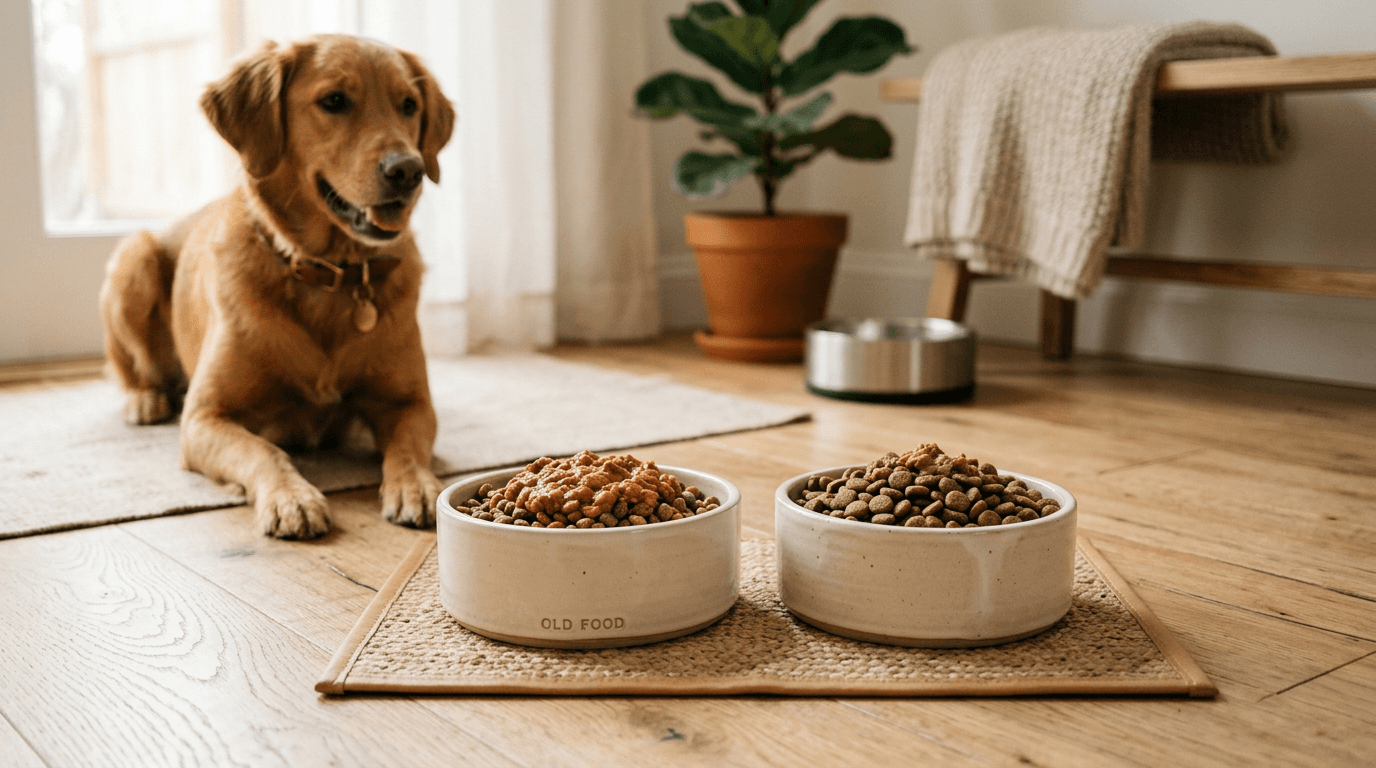
Any transition needs 7–10 days. See our food switching guide for the exact schedule.
🏆 Bottom Line: Coat quality, stool consistency, energy level, and skin health are your most reliable readouts of whether a food is actually working. If two or more of the five signs are present, a food change is worth discussing with your vet — especially before trying supplements or expensive specialty diets.
Related Reading
-
Best Dog Food for Allergies — Alternative foods if your current pick is causing issues
-
How to Read Dog Food Labels — Identify the ingredient causing problems
-
Best Dog Health Supplements 2026 — Digestive supplements to support the transition
Why Digestion and Coat Quality are the Best Indicators of Health
According to the National Research Council (NRC) and the Association of American Feed Control Officials (AAFCO), a dog's outward appearance — particularly their skin, coat, and stool quality — is the most reliable non-invasive indicator of nutritional adequacy. When a food isn't working, it's often because the specific protein-to-fat ratio or fiber source isn't optimal for that individual dog's metabolic rate or digestive sensitivity.
Even "high-quality" foods can be the wrong choice for a specific dog. Here's how to evaluate the five key signs with more depth.
1. Coat Quality and Shedding: The Omega Connection
A healthy coat is more than just an aesthetic preference. The NRC notes that approximately 25–30% of a dog's daily protein intake goes toward maintaining their skin and coat. If the diet is deficient in high-quality protein or essential fatty acids (specifically Omega-3 and Omega-6), the body prioritizes internal organs over the coat — resulting in dullness, brittleness, and excessive non-seasonal shedding.
Based on our analysis of veterinary dermatology reports, a "named fish" or fish oil (Salmon oil, Anchovy oil) in the top five ingredients is the most consistent way to resolve diet-related coat issues within 4–6 weeks.
2. Stool Quality: The Digestibility Metric
AAFCO standards emphasize that stool quality is a direct readout of "apparent digestibility." Well-digested food produces small, firm, low-odor stools. Large, soft, or consistently smelly stools indicate that a high percentage of the food is passing through the digestive tract unabsorbed — often due to low-quality fillers or excessive fiber for that dog's system.
If your dog is producing massive amounts of waste relative to their intake, our research suggests switching to a higher-digestibility formula with a named meat meal as the primary protein source.
3. The Satiety Problem: Constant Hunger
Dogs that beg incessantly or seem food-obsessed despite being at a healthy weight may not be getting calorie-dense enough nutrition or may be lacking specific fiber types that promote satiety.
Research published in Cell Metabolism (Raffan et al., 2016) found that certain breeds — specifically Labrador Retrievers — have a genetic variant (POMC) that affects how their brain processes hunger signals. For these dogs, a high-protein, high-fiber diet is critical to managing their weight without causing constant distress.
4. Food Sensitivities vs. Allergies
According to the American College of Veterinary Dermatology (ACVD), true food allergies are less common than people believe, but food "sensitivities" (intolerances) are widespread. The classic signs — itching, chronic ear infections, and paw licking — often point to a sensitivity to a common protein like chicken or beef.
Before switching foods, our analysis of veterinary guidelines recommends an elimination trial: 8–12 weeks on a novel protein (duck, venison, rabbit) or a hydrolyzed protein diet to see if symptoms resolve.
5. Energy and Vitality: The Metabolic Baseline
If your dog is sluggish despite a clean bill of health from the vet, the caloric density or carbohydrate-to-protein ratio may be the culprit. Working breeds and high-energy dogs need more fat and protein than a standard maintenance kibblekibbleExtruded dry dog food — the most common format in the US. Made by mixing dry and wet ingredients, cooking under high pressure, and shaping into bite-sized pieces. Long shelf life, low moisture (~10%), and the cheapest cost-per-calorie option for most dogs. provides.
Sources
- Tufts University Clinical Nutrition Service — "Evaluating Your Dog's Body Condition and Diet." 2023.
- American Kennel Club (AKC) — "Signs of a Bad Dog Diet." akc.org.
- Olivry T, Mueller RS — "Critically appraised topic: Dietary elimination diets for dogs with food hypersensitivity." BMC Veterinary Research, 2017.
- AAFCO — Digestibility and stool quality as indicators of nutritional adequacy. aafco.org.
- National Research Council (NRC) — Omega-3 fatty acids and coat health in dogs. National Academies Press, 2006.
Research Sources
- Allergy Testing and Immunotherapy — Cornell University College of Veterinary Medicine, Riney Canine Health Center
- Re-evaluating Your Dog's Diet — Cornell University College of Veterinary Medicine, Riney Canine Health Center
- Nutrition FAQs — Tufts University Cummings School of Veterinary Medicine
- 2021 AAHA Nutrition and Weight Management Guidelines for Dogs and Cats — American Animal Hospital Association, 2021
- Nutrition in Disease Management in Small Animals — Merck Veterinary Manual

Hilly Shore Labs
Editorial teamIndependent product research team behind PawBench. Reviews are grounded in primary veterinary sources, aggregated buyer sentiment, and the lived ownership of Maggie, an Australian Labradoodle.
200+ dog products researched · 1.1M+ Amazon review-aspect mentions analyzed · cites AVMA, FDA, AAFCO, Cornell, WSAVA, AKC, ASPCA.
All product reviews are independently researched. Recommendations are based on published veterinary guidelines, manufacturer specifications, and verified customer feedback. See our editorial standards.