How to Switch Dog Foods Without Causing Digestive Chaos
Quick Answer
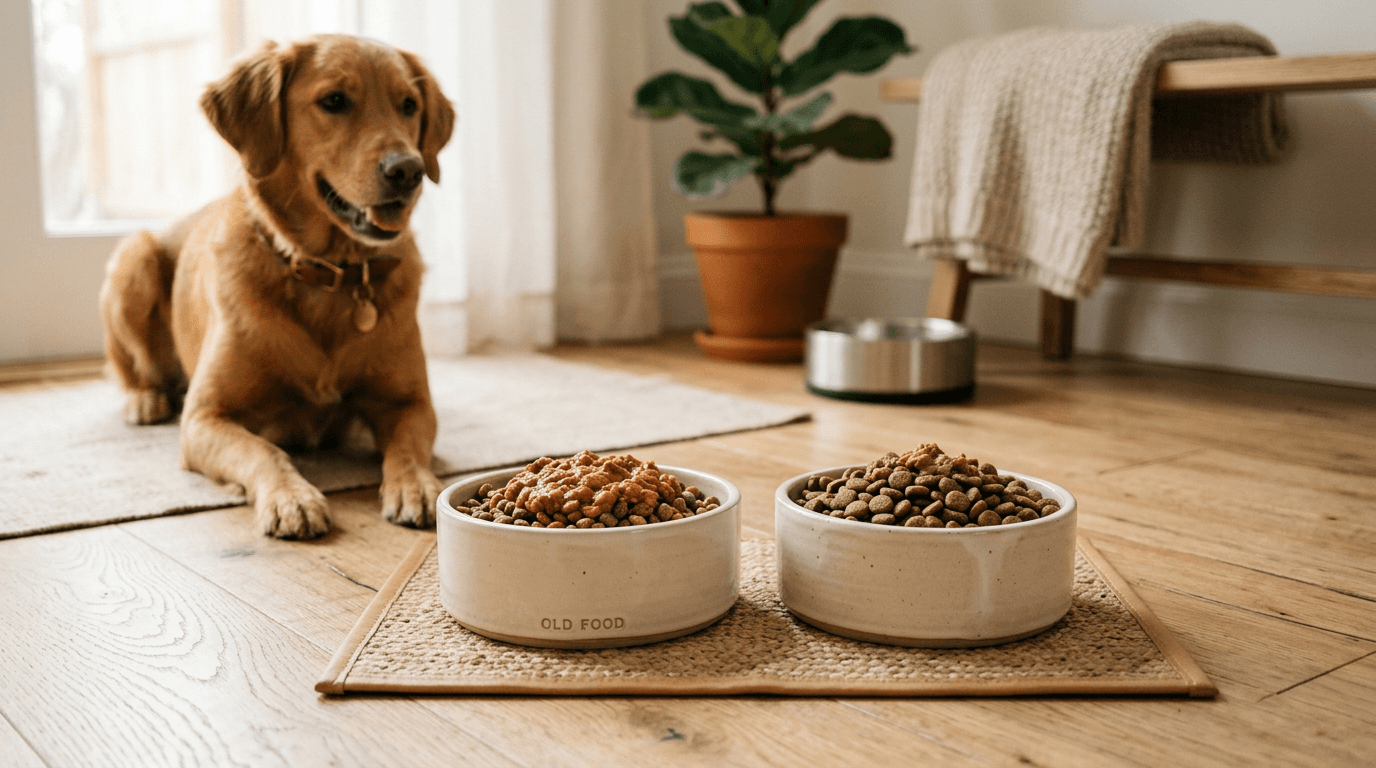
Transition over 7-10 days: Days 1-3 mix 25% new/75% old, Days 4-6 mix 50/50, Days 7-9 mix 75% new/25% old, then switch fully. Rushing causes diarrhea and vomiting in most dogs.
On this page11 sections
Our Verdict
Transition over 7-10 days, mixing increasing ratios of new food (25/50/75/100%). Rushing causes GI upset in most dogs.
How PawBench is paid: we earn an Amazon Associates commission on qualifying purchases. We don’t accept sponsored placements, paid reviews, or free products in exchange for coverage. Picks are ranked on documented owner outcomes and primary-source research, never on commission rate. Read the full methodology.
Switching dog food cold turkey is the single most common cause of self-inflicted digestive upset in dogs. The gut microbiome needs time to adapt — it isn't picky, it's just slow.
The 10-Day Transition Schedule
| Days | Old Food | New Food |
|---|---|---|
| 1–3 | 75% | 25% |
| 4–6 | 50% | 50% |
| 7–9 | 25% | 75% |
| 10+ | 0% | 100% |
For dogs with sensitive stomachs, stretch this to 14–16 days.
Signs You're Going Too Fast
- Loose or soft stools
- Increased gas
- Vomiting after meals
- Refusing the mixed bowl
If any of these appear, stay at the current ratio for 2–3 more days before moving forward.
When You Have to Switch Fast
If a recall forces an immediate switch, introduce a bland diet (plain boiled chicken and white rice) for 2–3 days as a buffer before introducing the new food. This resets the gut without the shock of a direct swap.
Picky Eaters During Transitions
Some dogs refuse the mixed bowl initially — especially if they're used to eating the old food exclusively. Hold firm. Put the bowl down for 20 minutes. If they don't eat, pick it up and try again at the next meal. Hunger resolves most food-switching resistance within 2 days.
🏆 Bottom Line: Ten days is the minimum transition time for most adult dogs; 14–16 days for sensitive stomachs. The biggest mistake is going too fast. Loose stools mean slow down, not stop — stay at the current ratio for 2–3 more days before advancing.
Related Reading
-
Signs Your Dog's Food Isn't Working
-
Raw vs Kibble — What to know before switching food formats
-
How to Read Dog Food Labels — Evaluate your new food's ingredient list
-
Best Dog Food for Allergies — Limited ingredient options if your dog reacts to the switch
Why the Gut Microbiome Needs Transition Time
According to research published in Research in Veterinary Science (Suchodolski, 2011), the canine gut microbiome is a complex, stable community of bacteria that supports digestion, immune function, and even mood regulation. When food type or protein source changes abruptly, the microbial community hasn't adapted its enzyme production to match the new substrates — resulting in fermentation, gas, and loose stools that look like the food isn't working when in fact it's just the speed of change.
The Tufts University Clinical Nutrition Service recommends a minimum 7–10 day transition for healthy adult dogs, and up to 14–16 days for dogs with sensitive stomachs, history of IBD, or senior dogs whose digestive systems are slower to adapt.
Why the 10-Day Schedule Works
The ratio progression (75/25 → 50/50 → 25/75 → 100% new) gives the digestive system time to:
- Produce appropriate digestive enzymes for the new protein sources
- Adjust intestinal transit time to match the new food's fiber content
- Allow the gut microbiome to shift its bacterial balance toward strains that thrive on the new food matrix
Skipping ahead feels harmless when your dog seems fine at Day 3, but the full transition happens internally — loose stools can appear 5–7 days after the actual switch if the transition was too rapid.
Special Cases
Switching from dry to raw or gently cooked: This is one of the more disruptive transitions, as the protein types, moisture content, and bacterial load are dramatically different. Extend transition to 14–21 days and consider adding a probiotic for the first 30 days. Work with your veterinarian, particularly if your dog has any history of GI issues.
Prescription food transitions: If switching to or from a veterinary prescription diet (hydrolyzed, limited ingredient, renal), follow your veterinarian's specific protocol — these transitions may require a different approach than standard kibblekibbleExtruded dry dog food — the most common format in the US. Made by mixing dry and wet ingredients, cooking under high pressure, and shaping into bite-sized pieces. Long shelf life, low moisture (~10%), and the cheapest cost-per-calorie option for most dogs.-to-kibble switches.
Emergency switches due to recall: The FDA recommends transitioning to a bland diet (boiled chicken and white rice) for 2–3 days as a digestive buffer when forced into an unplanned switch. This minimizes the shock to the gut without an extended transition period.
What "Normal" Looks Like During Transition
Some loose stool in the first few days is expected, even with a slow transition. The threshold for concern:
- Diarrhea (fully liquid) at any point: slow down significantly or pause
- Vomiting: pause and consult your vet
- Blood in stool: stop and contact your vet immediately
- Refusal to eat for more than 24 hours: slow down or try mixing at a higher old food ratio
Picky Eater Strategy
According to the Tufts University Clinical Nutrition Service, the most effective strategy for picky eaters during transitions is the "20-minute rule": put the bowl down for 20 minutes, then pick it up regardless of how much was eaten. Most healthy dogs will accept the new food within 48–72 hours once they realize the old food is no longer an option.
Sources
- American Kennel Club (AKC) — "How to Switch Your Dog's Food Without Upsetting Their Stomach." akc.org.
- Tufts University Clinical Nutrition Service — "Switching Dog Foods: What You Should Know." 2022.
- Zoran DL — "The Carnivore Connection to Nutrition in Cats and Dogs." JAVMA, 2002.
- Suchodolski JS — "Intestinal Microbiota of Dogs and Cats: A State-of-the-Art Review." Research in Veterinary Science, 2011.
- American Veterinary Medical Association (AVMA) — General nutritional transition guidelines for companion animals.
Research Sources
- How to Switch Dog Foods: Transitioning Your Dog's Diet — American Kennel Club
- WSAVA Global Nutrition Guidelines — World Small Animal Veterinary Association, 2011
- Re-evaluating Your Dog's Diet — Cornell University College of Veterinary Medicine, Riney Canine Health Center
- Feeding Practices in Small Animals — Merck Veterinary Manual
- Reading Pet Food Labels — Association of American Feed Control Officials

Hilly Shore Labs
Editorial teamIndependent product research team behind PawBench. Reviews are grounded in primary veterinary sources, aggregated buyer sentiment, and the lived ownership of Maggie, an Australian Labradoodle.
200+ dog products researched · 1.1M+ Amazon review-aspect mentions analyzed · cites AVMA, FDA, AAFCO, Cornell, WSAVA, AKC, ASPCA.
All product reviews are independently researched. Recommendations are based on published veterinary guidelines, manufacturer specifications, and verified customer feedback. See our editorial standards.