Best GPS Dog Collars 2026: Fi, Tractive and AirTag Compared
Our #1 Pick
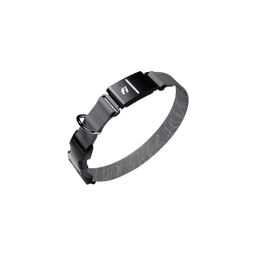
- Live GPS tracking on nationwide cellular, no range limit
- Wireless charging base and a built-in LED light, per Fi
- Manufacturer-stated up to 3 months of battery between charges
3-month battery life and real-time GPS tracking make it the best tracker for most dogs.
Our analysis of 672 buyer mentions on Fi Series 3: buyers consistently praised collar, functionality, gps tracking.
Also Great
Budget: Apple AirTag ($29) — No subscription for short-range Bluetooth finding via Find My network
On this page11 sections
Our Verdict
The Fi Series 3 wins on battery life (up to 3 months between charges, per Fi). Whistle is no longer an option: its trackers stopped working on August 31, 2025. Tractive is the budget pick with no-contract pricing.
Fi Series 3 4 Best overall | Tractive GPS 4.2 Best budget | |
|---|---|---|
| Price | $129Buy on Amazon | $47.40Buy on Amazon |
| Buyer sentiment | Collar Functionality Gps tracking Battery life Buyers praise collar, functionality, gps tracking and battery life. Based on 672 user mentions | Real Time Tracking Ease Of Use Health Monitoring Peace Of Mind Buyers praise real time tracking, ease of use, health monitoring and peace of mind. Mixed feedback on reliability and battery life. Based on 1,162 user mentions |
| Pros |
|
|
| Cons |
|
|
| Connectivity | GPS + AT&T LTE-M (per Fi) | GPS + LTE/4G, with Bluetooth and Wi-Fi (per Tractive) |
* Prices are approximate and may vary. Please check the latest price on Amazon.
GPS Dog Collar Spec Matrix
Battery, subscription, accuracy, and ruggedness at a glance
| Product | Battery Life | Subscription Cost | Connectivity | Range / Coverage | Location Accuracy | Geofence Alerts | Waterproof Rating | Weight |
|---|---|---|---|---|---|---|---|---|
| Fi Series 3 | Up to 3 months (standard use; shorter in Lost Dog Mode) | $99 per 6 months, $189/year or $339 per 2 years (per Fi) | GPS + LTE-M + Wi-Fi | Nationwide LTE-M coverage | Not stated by Fi | Yes — unlimited Safe Zones with instant alerts | IP68 | Not stated by Fi |
| Tractive GPS | Up to 14 days standard (fewer with Live tracking); up to 4 weeks on Dog XL model | $5–$13/mo depending on plan length | GPS + LTE (multi-network) | Global — works across 175+ countries per Tractive | Not stated by Tractive | Yes — Virtual Fence with live tracking | IP68 (per Tractive) | ~40 g (1.4 oz, per Tractive) |
Specs from manufacturer product pages and app documentation as of April 2026.

How PawBench is paid: we earn an Amazon Associates commission on qualifying purchases. We don’t accept sponsored placements, paid reviews, or free products in exchange for coverage. Picks are ranked on documented owner outcomes and primary-source research, never on commission rate. Read the full methodology.
A GPS dog collar provides something no amount of ID tags or microchips can: real-time location tracking when your dog escapes, slips their collar, or bolts after a deer. In the critical first hours after an escape, GPS tracking can mean the difference between a quick recovery and days of searching. According to the ASPCA, approximately 10 million pets are lost in the United States each year, and only about 15% of dogs without ID are reunited with their owners. A GPS tracker dramatically improves those odds.
The GPS dog collar market has matured significantly in 2026. Modern trackers combine GPS satellites, cellular networks, and WiFi positioning for pinpoint accuracy, while subscription plans and hardware costs have become more competitive. Whether you're concerned about an escape-prone Husky, want to monitor a hunting dog in the field, or simply want peace of mind during off-leash hikes, there's a GPS collar that fits your needs and budget.
Beyond location tracking, many 2026 GPS collars now double as pet health monitors — tracking daily activity levels, sleep patterns, and calorie burn. This health data can complement your dog's regular veterinary care and help you spot subtle changes that might indicate illness before obvious symptoms appear.
Our research team compared the leading GPS dog trackers — Fi Series 3 and Tractive GPS, plus Apple's AirTag — using manufacturer specifications, published support documentation and long-term owner reports for dogs ranging from small breeds like Beagles to large breeds like German Shepherds. We compared what those sources report on tracking accuracy in urban, suburban, and rural environments, battery life in everyday use, geofence reliability, app quality, and subscription value. For a detailed technical comparison, see our Fi vs Whistle vs Tractive deep dive. Here's our definitive 2026 comparison.
What to Look For in a GPS Dog Collar
Tracking accuracy matters most. A tracker that's off by 100 yards is useless in an emergency. Look for devices using multi-network positioning (GPS + cellular + WiFi) for the most precise location data.
Battery life determines reliability. A dead tracker is the same as no tracker. Daily-charge devices are easy to forget; weekly or monthly charging is more practical for real-world use.
Cellular subscription is unavoidable. GPS trackers require cellular data to transmit location. Every option on the market requires a monthly subscription ($5-$17/month) in addition to the hardware cost. Budget for this.
Geofencing prevents escapes. The best trackers alert you the instant your dog leaves a defined area (your yard, the dog park, etc.). Response time for these alerts varies significantly between brands.
Which Tracker Is Right For You?
- Best overall: Fi Series 3 ($129 + Fi membership from $99 per 6 months) — up to 3 months of battery life per Fi, GPS + LTE-M live tracking and escape alerts
- Budget pick: Tractive GPS ($79 + $5/month) — solid tracking at about half the Fi's hardware price, but its battery (Tractive rates up to 14 days, fewer with Live tracking) means more frequent charging
- Apple household: AirTag ($29, no subscription) — not a true GPS tracker, relies on nearby iPhones for location — works well in urban areas, unreliable on trails
Our Top Picks
#1 Best Overall: Fi Series 3 ($129 + membership)
Buy on Amazon · $129 →The Fi Series 3 is our top recommendation, and it's not close. The battery life is the headline feature — up to 3 months on a single charge in normal use, which demolishes every competitor. This means you charge it 4 times per year instead of daily or weekly.
Fi tracks over GPS and AT&T's LTE-M network and sends an Escape Alert when your dog leaves a safe zone. Fi does not publish a location-accuracy or alert-speed figure, so we don't quote one.
The Fi app is clean and intuitive, showing real-time location on a map with movement trail. The "Lost Dog" mode switches to rapid live location updates, per Fi (burning battery faster, but providing near-real-time tracking during an emergency).
Pros:
- 3-month battery life (industry-leading by a wide margin)
- GPS + LTE-M live location tracking
- Escape Alerts and geofencing
- Durable, waterproof (IP68) design
- Activity, sleep, barking, scratching, licking, eating and drinking tracking, per Fi
- LED light band for nighttime visibility
Cons:
- Membership required ($99 per 6 months, $189/year or $339 for 2 years, per Fi)
- Collar design limits compatibility (Fi-specific collar required)
Whistle GO Explore: No Longer Recommended
Whistle trackers stopped working on August 31, 2025, after Tractive bought Whistle from Mars Petcare, per GadgetBond's July 2025 report; whistle.com now redirects to tractive.com. Tractive offered Whistle owners a free replacement tracker, with remaining subscription time carried over, until September 30, 2025. Don't buy a Whistle, new or used.
#2 Best Budget: Tractive GPS ($79 + $5-$10/month)
Buy on Amazon · $47.40 →The Tractive GPS costs about half the Fi and offers no annual commitment — you can pay monthly. Tractive's LIVE mode updates location every 2–3 seconds, per Tractive; it publishes no accuracy figure, so we don't quote one. For owners who want basic GPS tracking without the premium price, Tractive delivers solid value.
The battery life (Tractive rates up to 14 days; expect fewer with Live tracking on) is the weakest in our comparison, and the tracker is noticeably bulkier than Fi. It's not the best tracker, but at $79 list (about $55 on Amazon when we last checked) + $5/month, it's the most accessible.
Pros:
- Lowest hardware cost ($79)
- No annual commitment — month-to-month subscription
- Adequate tracking accuracy for most needs
- Virtual fence and live tracking
- Waterproof (IP68, per Tractive)
Cons:
- Battery up to 14 days per Tractive, fewer with Live tracking
- Bulkier than Fi
- Less accurate in dense urban or forested areas
- Basic app with fewer features
#3 Best No-Subscription Option: Apple AirTag + Collar Holder ($30 + free tracking)
The Apple AirTag isn't a true GPS tracker — and that distinction matters. Instead of using GPS satellites and cellular networks to transmit its location, the AirTag uses Apple's Find My network: a mesh of hundreds of millions of iPhones, iPads, and Macs worldwide. When any Apple device passes near your dog's AirTag, it anonymously relays the AirTag's location to you.
In populated areas (cities, suburbs, busy parks), this is surprisingly effective. Updates arrive only when an Apple device passes nearby, so they are not real-time and Apple publishes no update interval, but in a busy area that can be enough to follow a dog's general location. The killer advantage: no subscription fee, ever. The $30 AirTag and a $10 collar holder is all you pay.
The critical limitation: in rural areas, trails, or less populated zones, the AirTag can go silent for hours. If no iPhone passes near your dog, you get no update. For a hiking dog in the backcountry, this is a dealbreaker. For an urban dog whose biggest escape risk is slipping out the front door, it's a remarkably cost-effective solution.
Pros:
- No subscription fee — ever
- Tiny and lightweight (0.39 oz)
- Replaceable battery lasts ~1 year
- Precision Finding with a compatible iPhone, via Apple's U1 Ultra Wideband chip
- Plays a sound to help locate nearby
Cons:
- Not real-time GPS — depends on nearby Apple devices
- Useless in areas without iPhone traffic
- No geofencing or escape alerts
- No health or activity monitoring
- Requires an iPhone (not compatible with Android)
Head-to-Head Comparison
| Feature | Fi Series 3 | Tractive GPS | Apple AirTag |
|---|---|---|---|
| Hardware Price | $129 | $79 | $30 |
| Annual Cost | $189/year ($99 per 6 months) | $60-120/year | Free |
| Battery Life | Up to 3 months | Up to 14 days | ~1 year |
| Tracking Method | GPS + LTE | GPS + LTE | Find My network |
| Tracking Accuracy | Not stated | Not stated | Varies by area |
| Geofence Alert Speed | Not stated | Not stated | None |
| Health Monitoring | Yes (per Fi) | Yes (per Tractive) | No |
| Waterproof | IP68 | IP68 | IP67 |
| Weight | Not stated | 1.4 oz | 0.39 oz |
| Min Dog Size | 10 lbs | 9 lbs | Any size |
Whistle is left out: its trackers stopped working on August 31, 2025. See "What Happened to Whistle?" below.
Manufacturer-Rated Performance
We don't field-test trackers. These are the figures each manufacturer states, and where a brand publishes no figure we give none.
Escape Alerts
No brand here publishes an alert-speed or location-accuracy figure. What each states:
- Fi: Escape Alerts when your dog leaves a safe zone, and a Lost Dog Mode that switches to rapid live location updates.
- Tractive: Virtual Fence escape alerts, and a LIVE mode that updates location every 2–3 seconds.
Suburban Accuracy
Neither Fi nor Tractive publishes a suburban accuracy figure, so there are no numbers to compare here. Both pair GPS positioning with a cellular connection.
Wooded/Rural Accuracy
Tree cover and distance from cell towers reduce accuracy for all trackers. None of the manufacturers publishes a figure for these conditions.
Rated Battery Life
- Fi Series 3+: up to 3 months, per Fi
- Tractive DOG 6: up to 14 days with Power Saving Zones and up to 6 days without, per Tractive; LIVE mode drains it faster
Which GPS Collar Should You Buy?
Choose Fi Series 3 if: You want the longest rated battery here and the convenience of charging only 4 times per year. The battery life alone makes it the practical choice for most dog owners.
Choose Tractive GPS if: You want basic GPS tracking at the lowest possible cost and prefer month-to-month billing flexibility.
Frequently Asked Questions
Do GPS dog collars work without cell service?
GPS trackers require cellular coverage to transmit location data to your phone. In areas without cell service (deep wilderness, remote rural areas), the tracker records location data but can't send it to you in real-time. Some trackers (including Fi) store location history and transmit once back in coverage. For true wilderness tracking, consider a satellite-based tracker like Garmin, though these are significantly more expensive.
Can GPS collars replace microchips?
No. GPS collars and microchips serve different purposes and both are important. A microchip is a permanent identification method that works even if your dog loses their collar. A GPS tracker provides real-time location but can be lost or broken. Use both — a microchip as permanent ID and a GPS tracker for active location monitoring.
Are GPS dog collars waterproof?
Both GPS trackers we recommend are waterproof: Fi rates the Series 3+ IP68 and Tractive rates the DOG 6 IP68. Both survive rain, puddles, and brief swims without issue.
What's the monthly cost of a GPS dog collar?
Expect to pay $5-$17 per month depending on the brand and plan. Fi costs $99 per 6 months or $189 per year, with a 6-month minimum. Tractive starts at $5/month for basic tracking. All trackers require an active subscription to function — without it, the hardware becomes an expensive paperweight.
How small can a dog be to use a GPS collar?
Most GPS trackers are designed for dogs 8-10 lbs and up. The tracker weight (1-2 oz) is negligible for medium and large dogs but can be noticeable on very small breeds. The Fi collar band is the sleekest option for smaller dogs. For dogs under 8 lbs (Chihuahuas, toy breeds), GPS trackers may be too bulky — consider a Tile or AirTag in a collar holder instead, though these aren't true GPS trackers.
What Happened to Whistle?
Whistle was one of the best-known names in pet GPS tracking, but the service is gone. Tractive bought Whistle from Mars Petcare, and every Whistle tracker stopped working on August 31, 2025, per GadgetBond's July 2025 report; whistle.com now redirects to tractive.com.
If you still own a Whistle, it no longer tracks. Tractive offered Whistle owners a free replacement tracker, with remaining subscription time carried over, but that offer closed on September 30, 2025. Fi Series 3 and Tractive are the natural replacements: Fi for the longest rated battery, Tractive for the lowest hardware cost.
For anyone buying in 2026, we do not recommend Whistle, new or used: without the Whistle service, the hardware no longer tracks.
Is Apple AirTag a real GPS tracker for dogs?
No — and understanding the difference is important. A true GPS tracker (like Fi or Tractive) uses GPS satellites to determine its location and a cellular connection to send that location to your phone in real time. An AirTag uses Apple's Find My network, which relies on nearby iPhones and other Apple devices to relay its position. In a busy city, this works surprisingly well because there are Apple devices everywhere. In a rural area, a state park, or anywhere with sparse foot traffic, the AirTag may not update for hours. AirTag also lacks geofencing (it can't alert you when your dog leaves your yard) and has no live tracking mode. Think of it as a "crowd-sourced locator" rather than a GPS tracker. It's a great budget supplement to a proper GPS collar, but it shouldn't be your only tracking solution for an escape-prone dog.
The Bottom Line
The Fi Series 3 is the best GPS dog collar available. The 3-month battery life eliminates the biggest practical barrier to GPS tracking (forgetting to charge), and it pairs that with GPS + LTE-M live tracking and escape alerts. It costs more upfront, but the annual subscription is competitive and the device reliability justifies the investment.
If your dog has ever escaped, you don't need convincing. If they haven't, a GPS collar is insurance you hope you never need — but you'll be profoundly grateful for if you do.
🏆 Bottom Line: Fi Series 3 is the best GPS dog collar for most people, primarily because of its ~3-month battery life. The best tracker is the one that's actually charged when your dog escapes — and Fi's battery advantage makes that far more likely than with weekly-charging competitors.
Related Reading
-
Pet Tech — GPS trackers, cameras, and smart gear
-
Leashes & Collars — Collars, harnesses, and leash picks
-
Dog Health — Activity tracking and wellness monitoring
-
Dog Exercise Guide by Breed — Know your dog's roaming tendencies by breed
-
How to Travel With a Dog — GPS collars are essential for travel safety
-
Best Dog Harnesses 2026 — Pair your GPS collar with the right harness
Sources
- Fi — Series 3+ product page: battery rating, waterproofing and LTE-M network details. fitracking.com.
- GadgetBond — report on Tractive's Whistle acquisition, the August 31, 2025 shutdown and the replacement offer (July 29, 2025). gadgetbond.com/tractive-whistle-pet-tracker-acquisition.
- Tractive GPS — DOG 6 battery, LIVE-mode and Virtual Fence specifications. tractive.com.
- American Kennel Club (AKC) — "Best GPS Dog Trackers: Reviews and Recommendations." akc.org.
- American Humane — Dog escape statistics and microchip vs. GPS tracking comparison data.
Frequently Asked Questions
- How accurate are GPS dog collars?
- Neither Fi nor Tractive publishes a location-accuracy figure for its dog tracker, so be wary of precise numbers. Accuracy decreases in dense urban areas with tall buildings, heavy tree cover, or deep valleys. Multi-network trackers that combine GPS, cellular, and WiFi positioning provide the best accuracy across varied environments.
- Do GPS dog collars require a monthly subscription?
- Most GPS dog collars require a cellular subscription plan to transmit location data to your phone. Fi costs $189/year or $99 per 6 months, Tractive offers the most affordable option at about $60/year with no contract commitment. The tracker hardware is a one-time purchase, but it won't function without an active subscription.
- How long do GPS dog collar batteries last?
- Battery life varies dramatically between models. The Fi Series 3 leads with up to 3 months between charges in normal use. Tractive rates the Tractive GPS at up to 14 days, with fewer when Live tracking is used. Battery life decreases significantly with frequent location updates (like during an active escape) and in areas with poor cellular coverage where the device works harder to maintain a connection.
- Can a GPS collar replace a microchip?
- No. A GPS collar and a microchip serve different but complementary purposes. A GPS collar provides real-time location tracking but requires battery power and cellular coverage. A microchip is a permanent, passive ID that works indefinitely without power — but only when scanned at a shelter or vet. Every dog should have both a microchip for permanent identification and a GPS collar for active tracking.
- What size dog can wear a GPS collar?
- Most GPS dog collars are designed for dogs 10 lbs and up. The tracker unit attaches to your dog's existing collar, so the main consideration is weight. Tractive rates the DOG 6 at 1.4 oz; Fi does not list a weight on its product page. For very small dogs under 10 lbs, the tracker may be disproportionately heavy. For toy breeds, consult your vet before adding a GPS tracker.
- Do GPS collars work in rural areas without cell service?
- GPS collars need cellular coverage to transmit location data to your phone in real-time. In areas without cell service, most trackers will store location data and upload it once the dog returns to coverage. Fi uses LTE-M networks, which often have broader rural coverage than standard LTE. Tractive also uses LTE-M for better rural performance. If you live in a very remote area, check each company's coverage map before purchasing.
- Are GPS dog collars waterproof?
- Fi and Tractive both rate their trackers IP68, meaning they can handle rain, puddles, and swimming. However, submersion depth and duration limits vary — check the specific rating for your model if your dog regularly swims in deep water. Salt water exposure should be rinsed off promptly to protect the charging contacts.
- How do GPS dog collar geofences work?
- Geofencing creates a virtual boundary on the map — like your yard or neighborhood. When your dog crosses outside the geofence, the collar sends an alert to your phone. You can set multiple geofences (home, dog park, friend's house). The alert speed depends on how frequently the collar checks its location, which varies by model and battery mode. Most trackers detect a geofence breach within 1-3 minutes.
- Is Fi or Whistle better for dogs?
- Fi. Whistle trackers stopped working on August 31, 2025, after Tractive bought Whistle, so Whistle is no longer an option. Fi also covers the health side Whistle was known for: Fi says the Series 3+ tracks scratching, licking, eating, drinking and barking.
- How long does the Fi dog collar battery last?
- The Fi Series 3 battery lasts up to 3 months on a single charge in normal use, per Fi; Lost Dog Mode's rapid live updates use it faster. This is dramatically longer than Tractive (up to 14 days) and means you only charge about 4 times per year.
- Is Tractive GPS worth it for dogs?
- Tractive GPS is worth it as a budget entry point at $79 list (about $55 on Amazon when we last checked) and $5/month with no annual commitment. Its LIVE mode updates location every 2–3 seconds, per Tractive, which is adequate for basic location monitoring. However, the battery (up to 14 days per Tractive, fewer with Live tracking) still needs charging far more often than the Fi, which creates a real risk of a dead tracker when you need it most.
- Do GPS dog collars work without cell service?
- GPS dog collars require cellular coverage to transmit real-time location data. In areas without cell signal, the trackers log GPS positions locally and transmit them once back in coverage. For true backcountry or wilderness tracking where there is no cell signal, you would need a satellite-based tracker like those from Garmin.
Research Sources
- How Many Pets are Lost? How Many Find Their Way Home? ASPCA Survey Has Answers — ASPCA, 2012
- Dog Microchip: Why Microchipping Your Dog Is a Major Safety Measure — American Kennel Club (AKC), 2023
- AKC Reunite Fast Facts — American Kennel Club (AKC), 2024
- What kind of battery life can I expect from a pet GPS tracker? — Tractive, 2026
- Meet The Lost Dogs Who Have Returned Home Thanks To Their Microchips — American Kennel Club (AKC), 2023

Hilly Shore Labs
Editorial teamIndependent product research team behind PawBench. Reviews are grounded in primary veterinary sources, aggregated buyer sentiment, and the lived ownership of Maggie, an Australian Labradoodle.
200+ dog products researched · 1.1M+ Amazon review-aspect mentions analyzed · cites AVMA, FDA, AAFCO, Cornell, WSAVA, AKC, ASPCA.
All product reviews are independently researched. Recommendations are based on published veterinary guidelines, manufacturer specifications, and verified customer feedback. See our editorial standards.