Best Slow Feeder Dog Bowls 2026: 5 Picks by Difficulty
Our #1 Pick
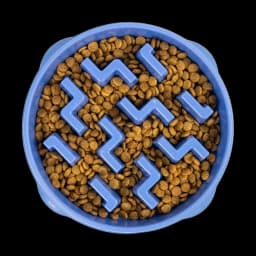
- Patented maze pattern slows gulping by up to 10x
- Non-slip base prevents skating across hardwood floors
- Dishwasher-safe (top rack), BPA/PVC/phthalate-free plastic
Extends meal time up to 10x and reduces bloat risk in fast eaters at an unbeatable price.
Our analysis of 16,664 buyer mentions on Outward Hound Fun Feeder Slo Bowl: buyers consistently praised slows down, ease of use, quality.
Also Great
Premium: LickiMat Wobble ($18.95) — Licking action releases calming endorphins while slowing consumption
On this page7 sections
Our Verdict
The Outward Hound Fun Feeder Slo Bowl at $10-15 is the best slow feeder -- it extends meal time 10x and reduces bloat risk in fast eaters.
Outward Hound Fun Feeder Slo Bowl Owner rating4.6 Best overall | Sted Ceramic Slow Feeder (Medium/Large) Owner rating4.8 Best for large dogs | LickiMat Wobble Owner rating4.5 Best puzzle-style | Leashboss Slow Feed Bowl Owner rating4.5 Best stainless steel | KONG Wobbler Owner rating4.5 Best interactive alternative | |
|---|---|---|---|---|---|
| Price | $12.71Buy on Amazon | $24.69Buy on Amazon | $18.95Buy on Amazon | $14.95Buy on Amazon | $24.94Buy on Amazon |
| Buyer sentiment | Slows Down Ease Of Use Quality Functionality Buyers praise slows down, ease of use, quality and functionality. Mixed feedback on ease of cleaning and size. Based on 16,664 user mentions | Quality Weight Durability Functionality Buyers praise quality, weight, durability and functionality. Based on 282 user mentions | Size Durability Engagement Ease of cleaning Chewability Value for money Buyers praise size, durability, engagement and ease of cleaning. Some flag chewability and value for money. Based on 440 user mentions | Ease of use Slow feeding Functionality Quality Buyers praise ease of use, slow feeding, functionality and quality. Based on 344 user mentions | Engagement Quality Ease Of Use Pet-Friendly Size Material Buyers praise engagement, quality, ease of use and pet-friendly. Mixed feedback on durability. Some flag size and material. Based on 5,376 user mentions |
| Pros |
|
|
|
|
|
| Cons |
|
|
|
|
|
| Material | — | Ceramic | — | Stainless steel | — |
* Prices are approximate and may vary. Please check the latest price on Amazon.
Slow Feeder Dog Bowls — Difficulty & Material Matrix
Pattern difficulty, capacity, material, anti-slip, and dishwasher compatibility compared across five top-reviewed slow feeders.
| Product | Pattern Difficulty | Capacity | Material | Dishwasher Safe | Anti-Slip Base | Kibble Size | Slowdown Claim |
|---|---|---|---|---|---|---|---|
| Outward Hound Fun Feeder Slo Bowl | Beginner–Intermediate (Slow, Slower, Slowest pattern options) | 2 cups (Medium), 4 cups (Large) | 90% polypropylene / 10% thermoplastic elastomer, BPA/PVC/phthalate/lead free | Yes — top rack | Yes — TPE non-slip base | All kibble sizes | Up to 10× slower (manufacturer claim) |
| JASGOOD Large Slow Feeder | Intermediate maze (8.8" inner diameter) | 5.2 cups (~42.4 oz wet food) | Food-safe high-strength PP (BPA/phthalate free) | Yes — top rack | Yes — six rubber feet | All kibble sizes; sized for large breeds | Up to 10× slower (manufacturer claim) |
| LickiMat Wobble | Beginner (lick-mat design for wet food/pastes, not kibble puzzle) | ~1 cup of wet food/paste spread surface (6.3"×6.3"×3.5") | 100% human-grade natural rubber, BPA/PVC/phthalate/silicone free | Yes — fully dishwasher safe (invert when washing) | Wobble-base design (weighted bottom); freezer & microwave safe | Wet food, yogurt, peanut butter, soft paste (not dry kibble) | — |
| Leashboss Slow Feed Bowl | Intermediate puzzle-maze | 1.5 / 2 / 4 cups (small to large breed sizes) | Food-grade stainless steel bowl with silicone base | Yes | Yes — geometric-print silicone base | Works with wet and dry food; fits elevated feeder holes 6"–9.25" | — |
| KONG Wobbler | Advanced (treat-dispensing wobble toy) | 1/2 cup (Small 9×5×6"), 1 cup (Large 10.25×7×6.5") | FDA food-approved high-strength polymer (Made in USA, BPA-free) | Yes — top shelf | No — intentional wobble for enrichment play | All dry kibble sizes | — |
Specifications from manufacturer product pages as of April 2026.
How PawBench is paid: we earn an Amazon Associates commission on qualifying purchases. We don’t accept sponsored placements, paid reviews, or free products in exchange for coverage. Picks are ranked on documented owner outcomes and primary-source research, never on commission rate. Read the full methodology.
If your dog inhales their food in 30 seconds flat and then looks at you like you've been starving them, you need a slow feeder bowl. Fast eating isn't just messy — it's a genuine health risk. Gastric dilatation-volvulus (GDV), commonly called bloat, kills more dogs than any condition except cancer, and rapid eating is a significant risk factor. Slow feeder bowls can extend meal times from seconds to 10-15 minutes, dramatically improving digestion and reducing bloat risk.
Why Fast Eating Is Dangerous
When dogs eat too fast, they swallow large amounts of air along with their food. This excess air, combined with rapid stomach expansion, can trigger bloat — a condition where the stomach fills with gas and sometimes twists on itself (volvulus), cutting off blood supply. GDV is a life-threatening emergency that requires immediate surgery.
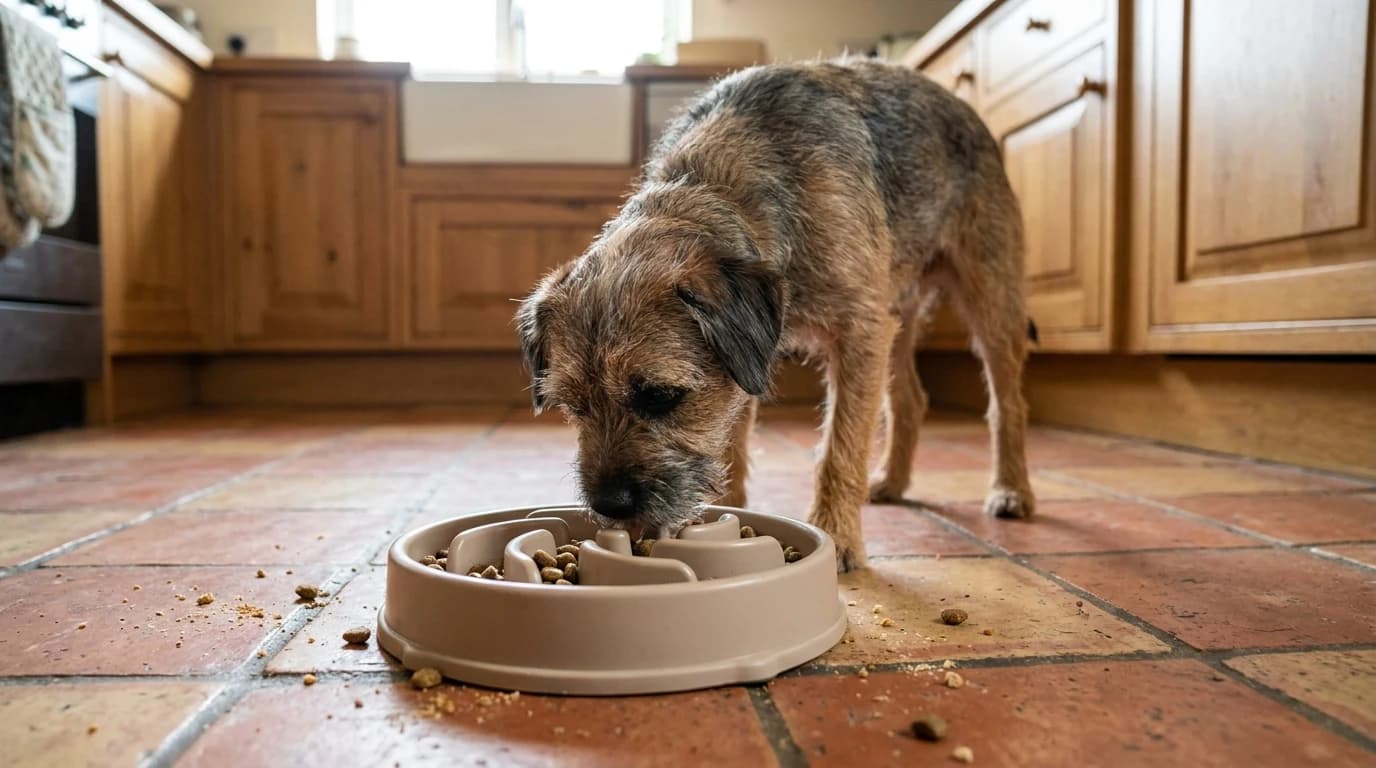
Breeds at highest risk for bloat:
- Great Danes, German Shepherds, Standard Poodles
- Golden Retrievers, Labrador Retrievers
- Boxers, Weimaraners, Irish Setters
- Any deep-chested breed
Beyond bloat: fast eating also causes vomiting, choking, excessive gas, and poor nutrient absorption. Slowing your dog down at mealtime is one of the simplest health interventions you can make.
The Best Slow Feeder Bowls
#1 Best Overall: Outward Hound Fun Feeder Slo Bowl (~$10-$15)
Buy on Amazon · $12.71 →Outward Hound Fun Feeder is the best-selling slow feeder for good reason. The maze-like ridge pattern forces dogs to navigate around obstacles to reach food, extending meal times by 10x or more based on extensive owner reports. It's available in multiple difficulty levels and sizes, and the non-slip base keeps it in place on hard floors.
Key features:
- BPA, PVC, and phthalate-free food-safe material
- Non-slip rubber base
- Dishwasher safe (top rack)
- Available in 4 pattern difficulties
- Holds up to 4 cups of kibble (large size)
- ~$10-15 depending on size
Sizing:
- Mini: Dogs under 15 lbs
- Small: 15-50 lbs
- Large: 50+ lbs
Best for: Most dogs. The variety of patterns means you can start with an easier maze and upgrade to harder patterns as your dog adapts.
#2 Best for Large Dogs: Sted Ceramic Slow Feeder (~$28)
Sted Ceramic Slow Feeder uses a heavy ceramic body and a maze pattern sized for medium and large breeds. The weight keeps it from sliding or flipping — important for strong dogs who try to push their bowls around — and the wide channels suit larger snouts that can't fit into tight maze patterns.
Best for: Large and giant breeds (50+ lbs), dogs with wide muzzles who struggle with narrow-channel slow feeders.
#3 Best Puzzle-Style: LickiMat Wobble (~$15-$18)
Buy on Amazon · $18.95 →LickiMat Wobble takes a different approach entirely. Instead of kibble maze channels, the textured surface is designed for spreading wet food, yogurt, pumpkin puree, or peanut butter. The licking action required to clean the mat releases calming endorphins — making it both a slow feeder and an anxiety-reduction tool.
Key features:
- Textured nub surface for spreading soft foods
- Wobble base (can't be flipped)
- Freezer-safe (freeze spread food for extended engagement)
- Dishwasher safe
- Also works as a calming enrichment tool
Best for: Dogs fed wet food, dogs who need calming enrichment, brachycephalic breeds (flat-faced dogs like Pugs and French Bulldogs) who struggle with maze-style bowls.
#4 Best Stainless Steel: Leashboss Slow Feed Bowl ($14.95)
Buy on Amazon · $14.95 →Leashboss Slow Feeder addresses the biggest complaint about plastic slow feeders: durability and hygiene. Stainless steel doesn't harbor bacteria like plastic can, it's virtually indestructible, and it's dishwasher safe. The center post design is simpler than maze patterns but still effectively doubles meal time.
Best for: Owners who prefer stainless steel for hygiene, power chewers who destroy plastic bowls, dogs who need moderate (not extreme) slow-feeding.
#5 Best Interactive Alternative: KONG Wobbler (~$24.96)
Buy on Amazon · $24.94 →The KONG Wobbler isn't technically a bowl, but it's the best slow-feeding solution for dogs who need maximum mental stimulation at mealtime. Fill it with your dog's entire kibble portion and let them bat it around to dispense food piece by piece. Meal times extend to 15-20 minutes, and the mental engagement tires dogs out.
Best for: High-energy dogs, dogs who get bored of stationary slow feeders, food-motivated dogs who need extra enrichment. See our full review in the interactive dog toys guide.
Comparison Table
| Bowl | Price | Material | Best For | Meal Extension |
|---|---|---|---|---|
| Outward Hound | $10-15 | Plastic | Most dogs | 10-15x |
| JASGOOD | $12-16 | Plastic | Large breeds | 8-10x |
| LickiMat Wobble | $15-18 | Rubber | Wet food/calming | 10-15x |
| Leashboss | $15-20 | Stainless steel | Hygiene-focused | 3-5x |
| KONG Wobbler | $15-20 | Plastic | Enrichment | 10-20x |
Tips for Introducing a Slow Feeder
Some dogs take to slow feeders immediately. Others get frustrated and give up. The difference is usually how easy you make the first few meals.
Set them up to win:
- Start with an easy pattern. If the maze is too complex, your dog may refuse to eat. Begin with wide-channel designs.
- Don't fill it completely at first. Less food means easier access, which means a better first experience.
- Mix in high-value food. A few pieces of chicken mixed with kibble increases motivation to work the puzzle.
- Stay nearby. Some dogs need reassurance during the first few meals that the food is actually accessible.
Drop back a difficulty level if you see:
- Pawing at the bowl
- Whining
- Walking away from a full bowl
When to See a Vet About Fast Eating
Fast eating is usually a behavioral issue (competition with other pets, food insecurity from previous environments, or just enthusiasm). But if your dog suddenly starts eating much faster than normal, it could indicate:
- Increased hunger from illness (diabetes, Cushing's disease, intestinal parasites)
- Medication side effects (steroids commonly increase appetite)
- Malabsorption issues (the body isn't getting nutrients despite eating)
If eating speed changes suddenly, consult your vet. For guidance on appropriate food portions, check our guide on how much to feed your dog.
The Bottom Line
The Outward Hound Fun Feeder is the best slow feeder for most dogs — effective, affordable, and available in multiple difficulty levels. For wet food or calming benefits, the LickiMat Wobble doubles as enrichment. For hygiene-focused owners, the Leashboss Stainless Steel is the cleanest option.
A $10-15 slow feeder bowl is one of the cheapest and most impactful health investments you can make for your dog. If your dog eats like every meal is their last, slow them down. Their digestive system will thank you.
Note: Links to Amazon may earn us an affiliate commission at no extra cost to you.
🏆 Bottom Line: For at-risk breeds (Great Danes, German Shepherds, Standard Poodles, Setters), a slow feeder bowl or maze feeder is one of the simplest bloat-risk reduction tools available. For dogs that just eat too fast and get hiccups, it's cheap peace of mind with no downside.
Related Reading
- Dog Health — Supplements, wellness, and health products
- Best Dog Water Bowls & Fountains — Hydration gear picks
- Best Interactive Dog Toys — Mental stimulation and enrichment
Frequently Asked Questions
- Do slow-feeder bowls actually help prevent bloat (GDV)?
- Veterinary consensus — including Cornell University and Washington State University's veterinary hospital — identifies fast eating as a recognized risk factor for gastric dilatation-volvulus in large, deep-chested breeds. Puzzle-maze bowls and food-dispensing toys slow ingestion rate, which may help reduce that risk, though GDV also depends on meal frequency, breed genetics, and other factors.
- Are plastic slow feeders safe?
- Reputable slow feeders (Outward Hound, JASGOOD) use polypropylene certified BPA, PVC, lead, and phthalate free. These meet human food-contact standards. Replace any feeder showing deep scratches or bite damage — scratches harbor bacteria and shards can be swallowed.
- How do I pick the right difficulty for my dog?
- AKC guidance for puzzle feeders is to start with the easiest pattern and increase difficulty as the dog masters it. Beginner dogs do best with wide channels (Outward Hound 'Slow'); experienced puzzlers can move to tight spirals or food-dispensing toys like the KONG Wobbler.
- Can slow feeders replace a meal for enrichment?
- Per ASPCA enrichment guidance, food-puzzle toys are an excellent everyday feeding format — they engage natural foraging instincts and reduce boredom-driven behavior. Veterinary behavior specialists commonly recommend feeding the full daily ration through puzzle feeders rather than a bowl for high-energy or anxious dogs.
Research Sources
- Gastric dilatation volvulus (GDV) or "bloat" — Cornell University College of Veterinary Medicine, 2025
- Bloat: Gastric Dilatation and Volvulus in Dogs — VCA Animal Hospitals, 2024
- Gastric dilation and volvulus (GDV) and bloat in dogs — Washington State University Veterinary Teaching Hospital, 2025
- Non-dietary risk factors for gastric dilatation-volvulus in large and giant breed dogs — Journal of the American Veterinary Medical Association (Glickman et al.), 2000
- Canine DIY Enrichment — ASPCA, 2024
Your next step
Fixing mealtime? The full upgrade is scheduling it.

PawBench Editorial
Published by Hilly Shore LabsPawBench’s editorial team researches dog products from primary veterinary sources, manufacturer specifications and aggregated buyer sentiment, alongside the lived ownership of Maggie, an Australian Labradoodle. We do not run hands-on product tests.
254 dog products scored · 1,160,091 buyer review-aspect mentions aggregated · cites AVMA, FDA, AAFCO, Cornell, WSAVA, AKC, ASPCA.
Recommendations are based on published veterinary guidelines, manufacturer specifications, and verified customer feedback. See our editorial standards.