Road Trip With Your Dog: Safety Plan and Packing List
Quick Answer
A safe dog road trip comes down to three pre-departure decisions: a restraint whose crash-test results are independently published (in Center for Pet Safety testing, all harnesses but one failed), a never-alone-in-a-parked-car rule (interiors rise about 19°F in 10 minutes per the AVMA, cracked windows or not), and a stop every 2–3 hours with a leash-first exit routine.
On this page7 sections
Our Verdict
A safe road trip with your dog is three decisions made before you load the car: a restraint whose specific model has published independent crash-test results (in the Center for Pet Safety's harness study, every product but one was deemed insufficient), a hard rule that the dog is never alone in a parked car (interiors climb about 19°F in 10 minutes whether or not windows are cracked, per the AVMA), and a stop every 2–3 hours with the leash clipped before any door opens. Pack by trip length using the matrix, and keep ID, microchip, and a GPS collar current for the rest-stop escape scenario.
Dog road-trip packing matrix, by trip length
Each tier includes everything in the tier before it. Build the bag the night before, not in the driveway.
| Product | Day trip | 2–3 nights | A week or more |
|---|---|---|---|
| Restraint | Crash-certified harness or anchored crate, fitted and tested on a short drive first | Same — plus the anchor hardware double-checked | Same |
| Water + food | Water bottle + collapsible bowl; skip the meal right before driving | Meals portioned per day + both bowls | Full supply of their regular food — never switch brands mid-trip |
| ID + tracking | Tags current, microchip registration up to date | + GPS collar charged | + temporary tag with your destination phone number |
| Health + records | Any daily medications | + vaccination proof (pet-friendly hotels often ask) | + copy of vet records + nearest emergency vet saved offline |
| Comfort + cleanup | Poop bags, towel, familiar blanket | + favorite toy + seat cover | + puzzle toy for hotel downtime + grooming basics |
| Heat margin | Shade plan + the never-alone-in-car rule | + cooling mat in summer | + pavement hand-check habit at every stop |
How PawBench is paid: we earn an Amazon Associates commission on qualifying purchases. We don’t accept sponsored placements, paid reviews, or free products in exchange for coverage. Picks are ranked on documented owner outcomes and primary-source research, never on commission rate. Read the full methodology.
A road trip with your dog goes wrong in three predictable ways:
- An unrestrained dog in a sudden stop
- A "quick" errand in a hot parking lot
- A bolt through an open door at an unfamiliar rest stop
All three are preventable with decisions you make before the car is loaded. This is that plan — what independent crash testing actually shows about restraints, the in-car heat math, a stop rhythm that works, and a packing list that scales with trip length.
Key Takeaways
- Most "crash-tested" harness claims didn't survive independent testing. In the Center for Pet Safety's foundational harness study, every product but one was deemed insufficient. Treat the box label as a claim to verify, not a certification.
- Cracking the windows does nothing. Per the AVMA, a car's interior climbs about 19°F in 10 minutes and 29°F in 20 — shade and cracked windows don't change it. The dog is never alone in a parked car, period.
- Stop every 2 to 3 hours, and run the same order every time: leash clipped before any door opens, then potty, water, and a short sniff walk.
- Pack by trip length, not by vibes. A day trip needs one small bag; a week away needs the records folder. The matrix below scales it.
Gear we would buy for this: the 4Knines Rear Seat Cover. A fitted cover with a split design keeps the dog on the seat and the seat clean; pair it with a crash-tested harness or a crate rather than treating the cover itself as a restraint.
The Restraint: Verify the Claim, Don't Trust the Label
"Crash-tested" on a harness box is a marketing phrase, not a regulated standard. When the Center for Pet Safety put manufacturers' crash-protection claims through instrumented crash testing in its foundational harness study, the results were blunt: with the exception of one product (the Sleepypod Clickit Utility), the harnesses tested were deemed insufficient in design, materials, and overall performance — and CPS stated outright that it does not agree with the crash-protection claims those manufacturers make. Several failures met CPS's "catastrophic failure" definition, meaning the test dog launched off the seat.
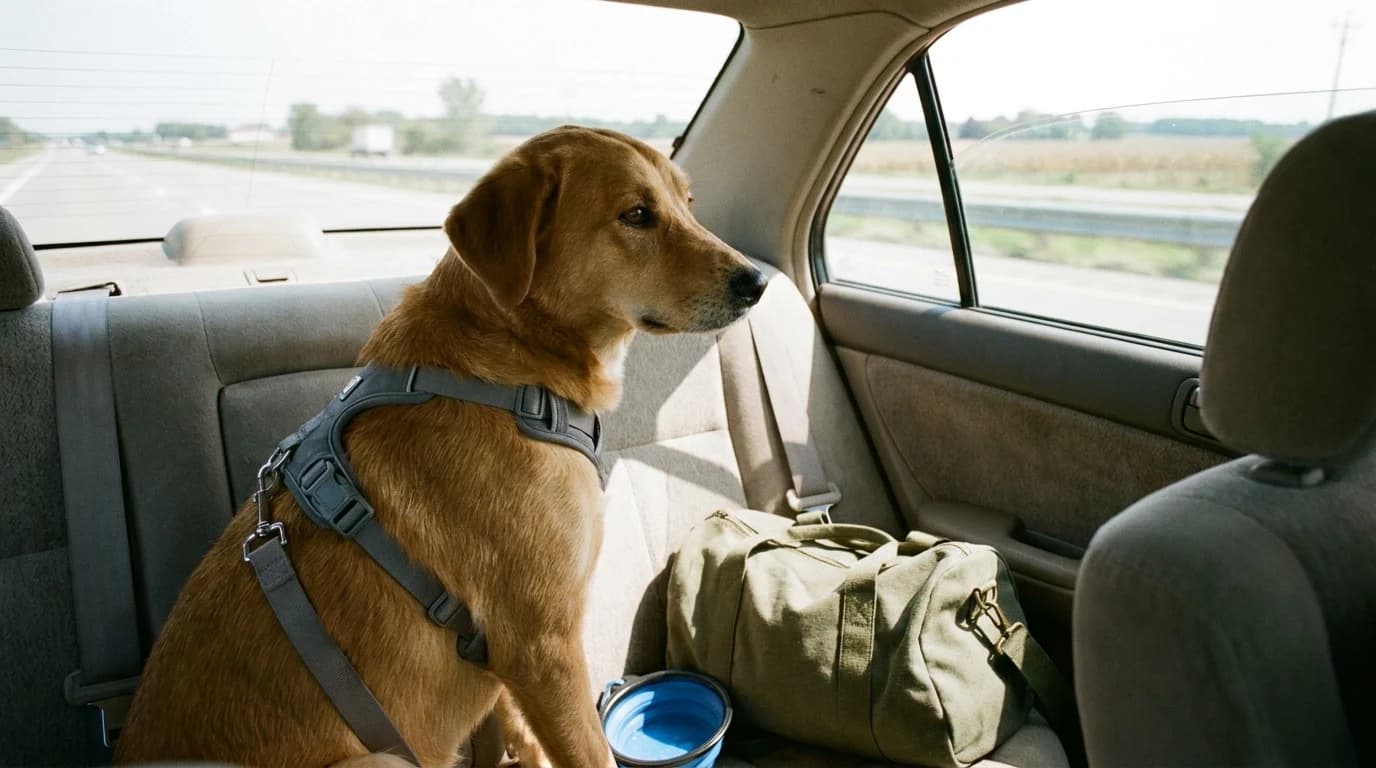
The practical rule: pick a restraint whose specific model has published independent crash-test results — CPS certification is the benchmark — rather than one whose packaging says "crash-tested." The AVMA's vehicle-safety guidance points the same direction: a car harness is a different product from a walking harness, and you want one that works with the seat belt and keeps the dog sitting upright. The stakes aren't only crash physics, either — the AVMA notes that unrestrained pets distract the driver, and in a collision can be crushed by a deployed airbag or thrown through the windshield.
Back seat, always.
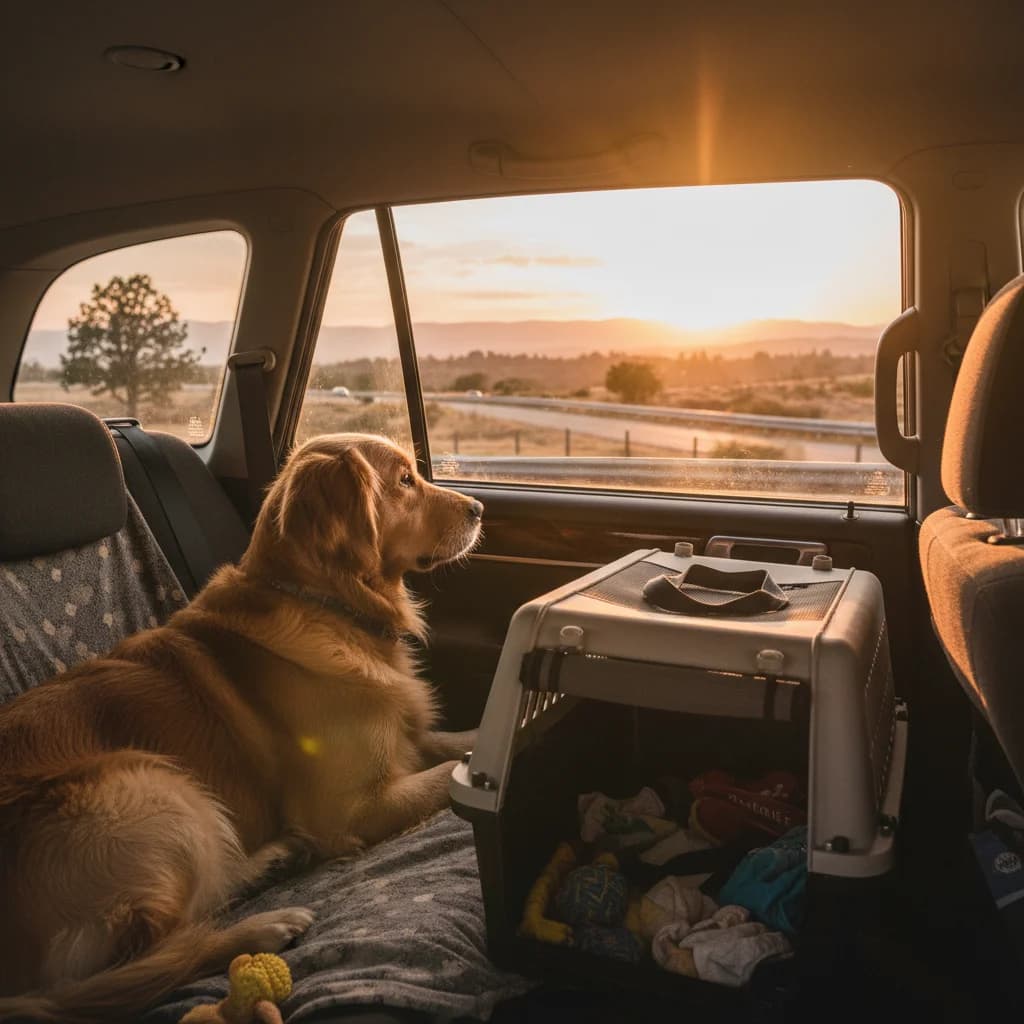
A crash-tested crate or carrier anchored to the vehicle is the other defensible option. Our dog harness rankings and travel carrier guide flag which picks carry real certifications rather than label claims.
The Heat Math That Should Shape Your Stops
The numbers the AVMA publishes on parked-car heating are worth memorizing, because the rise is basically identical whether it's 70°F or 110°F outside:
| Time parked | Interior temperature rise |
|---|---|
| 10 minutes | +19°F |
| 20 minutes | +29°F |
| 30 minutes | +34°F |
| 60 minutes | +43°F |
Cracking the windows does nothing. Even on a 70°F day, the cabin passes 110°F within the hour, and the AVMA is explicit that cracking the windows makes no difference.
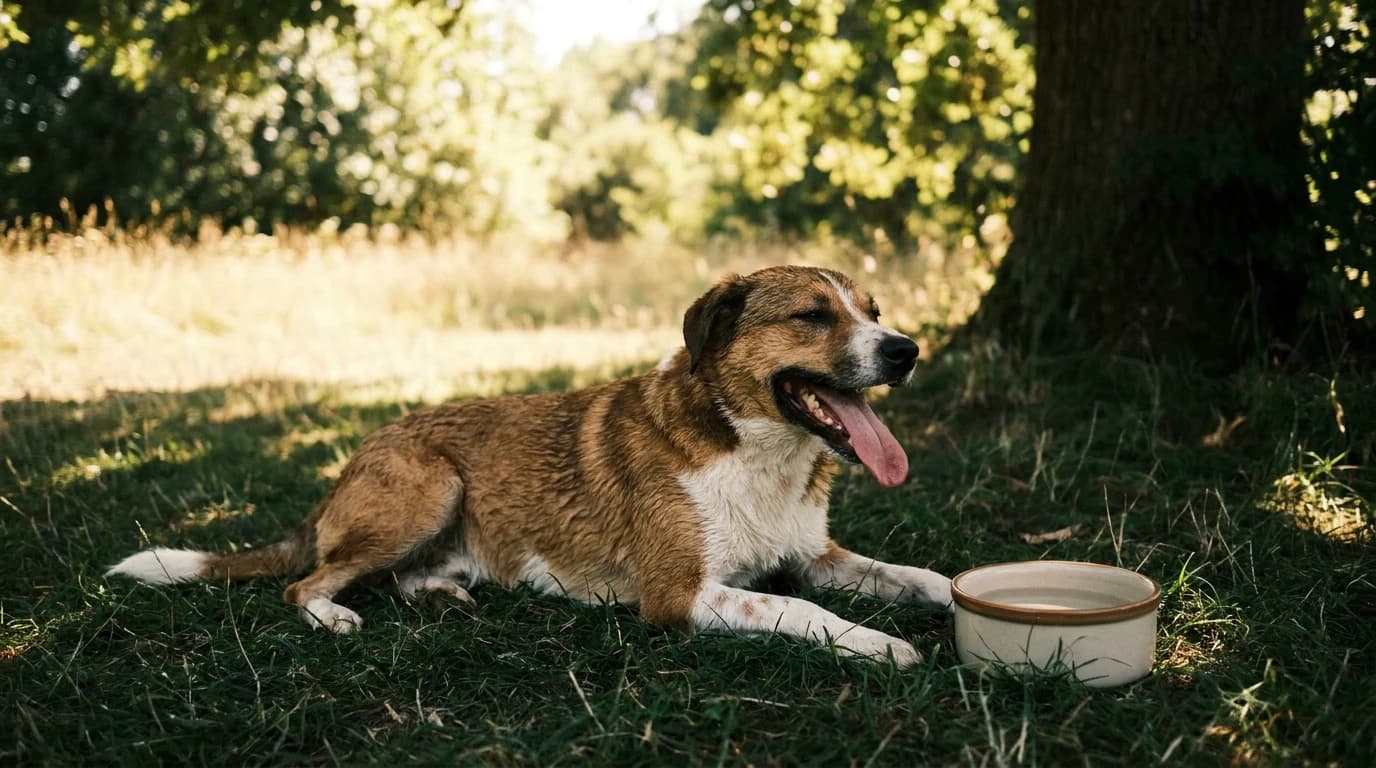
On a road trip, that means gas-station and food stops need a plan: with two adults, one stays in the running car with the dog; solo, you build the route around drive-throughs and pet-friendly stops. Learn the escalation signs before you leave — our heatstroke warning-signs guide covers what an emergency actually looks like — and for summer routes, cooling gear buys margin, not immunity. At every stop, give the pavement the 7-second hand test before the walk.
The Stop Rhythm: Every 2–3 Hours, Same Order Every Time
The AKC's travel guidance is to feed nothing right before departure (car sickness rides on a full stomach), keep water available throughout, and stop frequently for exercise and potty breaks. Our analyzed cadence for a healthy adult dog: every 2 to 3 hours, with puppies and seniors closer to 2.
The order at each stop matters more than the interval, because rest stops are the classic escape scenario — unfamiliar territory, interesting smells, and an opening door all at once:
- Leash clipped to the dog before any door opens
- Potty first, on whatever surface is there
- Water offered back at the car
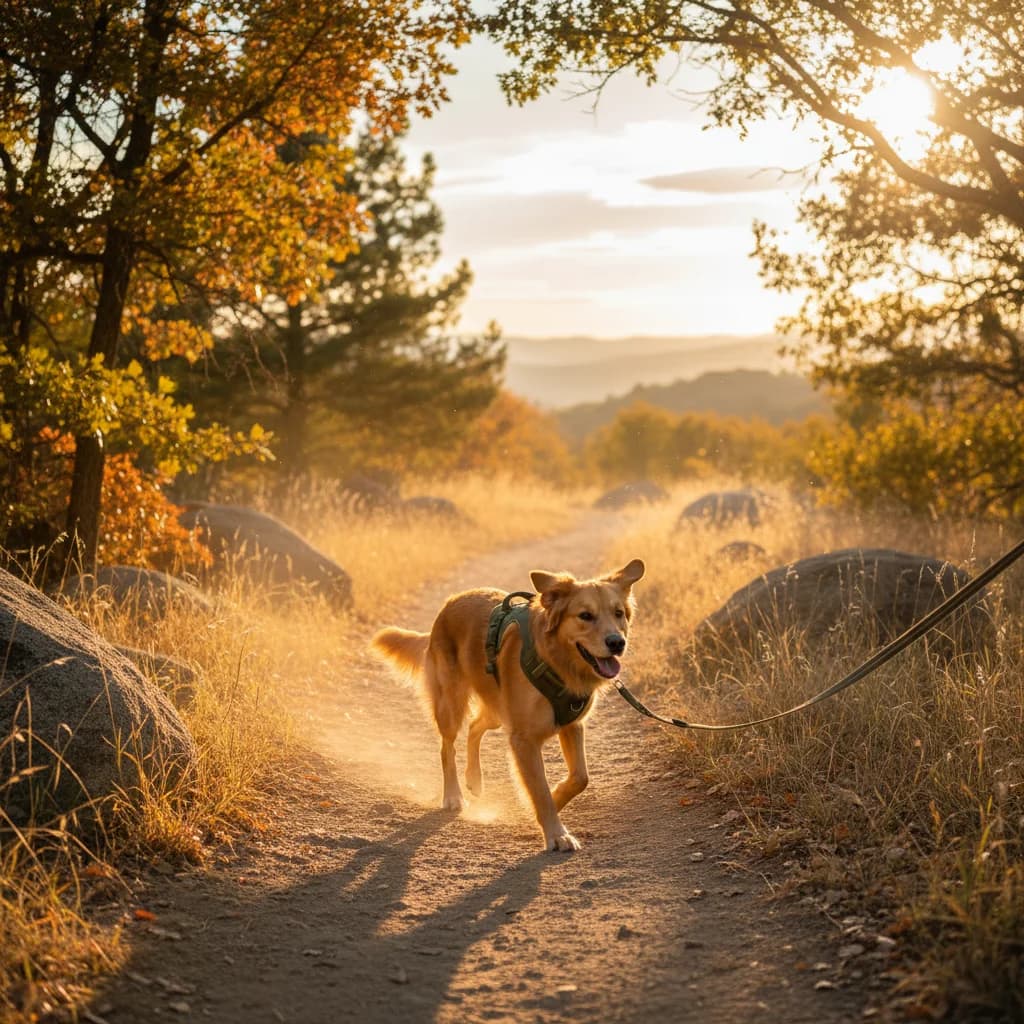
- Five-minute sniff walk to reset
- Back into the restraint before you buckle yourself
Keep ID tags and the microchip registration current, and for exactly this open-door failure mode, a GPS collar is cheap insurance on travel days.
Pack by Trip Length, Not by Vibes
If the dog is one traveler in a bigger family trip, sort the human logistics first — this budget family vacation planning guide is a solid framework for the route, lodging, and overall spend — then layer the dog's line items on top. The matrix below scales the dog packing by how long you'll be gone; each tier includes everything in the tier before it.
Two AKC-sourced details worth handling a week early rather than at the first stop:
- Teach the dog to relieve itself on multiple surfaces — concrete, gravel, mulch. Rest stops rarely offer perfect grass.
- Introduce collapsible travel bowls at home, so they're familiar before day one.
What Most People Get Wrong
"My dog is calm in the car, so a restraint doesn't really matter." Calm is irrelevant to physics. A restraint isn't for the dog's behavior — it's for the sudden stop the dog can't anticipate, and it protects mellow dogs and anxious ones identically. The companion mistake is trusting "crash-tested" text on a box when independent testing found nearly every such claim didn't hold up.
Verify the model, not the marketing.
The Bottom Line
A safe dog road trip is three pre-departure decisions:
- A restraint with published independent crash-test results.
- A hard never-alone-in-the-car rule, backed by the AVMA's heat numbers.
- A 2–3 hour stop rhythm with a leash-first exit routine.
Everything else is packing — and the matrix above scales that for you. For the full gear rundown including hotels and flying, see our complete dog travel gear guide, and if the back seat takes the brunt of the trip, a seat cover keeps the car resale-friendly.
Frequently Asked Questions
- How often should I stop on a road trip with my dog?
- Every 2 to 3 hours for a healthy adult dog, closer to every 2 for puppies and seniors. Run the same order each time: leash clipped before any door opens, potty break, water, then a five-minute sniff walk before the dog goes back into its restraint.
- Are dog car harnesses actually crash-tested?
- Mostly no — not in any verified way. “Crash-tested” is unregulated marketing language. In the Center for Pet Safety's independent harness study, every harness tested except the Sleepypod Clickit Utility was deemed insufficient in design, materials, and overall performance. Look for a specific model with published independent results or CPS certification.
- Can I leave my dog in the car with the windows cracked?
- No. Per the AVMA, a car's interior rises about 19°F in 10 minutes and 29°F in 20, and cracking the windows makes no difference. Even on a 70°F day the cabin can pass 110°F within an hour.
- Should my dog ride in the front seat?
- No — back seat, restrained. The AVMA warns that unrestrained pets distract drivers and can be crushed by a deployed front airbag or thrown through the windshield in a collision.
Research Sources
- 2013 Harness Crashworthiness Study Results — Center for Pet Safety
- Pets in Vehicles — American Veterinary Medical Association
- The Complete Guide to Traveling With Your Dog — American Kennel Club

PawBench Editorial
Published by Hilly Shore LabsPawBench’s editorial team researches dog products from primary veterinary sources, manufacturer specifications and aggregated buyer sentiment, alongside the lived ownership of Maggie, an Australian Labradoodle. We do not run hands-on product tests.
254 dog products scored · 1,160,974 buyer review-aspect mentions aggregated · cites AVMA, FDA, AAFCO, Cornell, WSAVA, AKC, ASPCA.
Recommendations are based on published veterinary guidelines, manufacturer specifications, and verified customer feedback. See our editorial standards.