
Best Gear for Goldendoodles
The Goldendoodle combines the Golden Retriever's warmth and the Poodle's intelligence into a low-shedding family dog that comes in toy, mini, and standard sizes — making it one of the most popular designer breeds in the country.
A cross between golden retriever × poodle
The Goldendoodle combines the Golden Retriever's warmth and the Poodle's intelligence into a low-shedding family dog that comes in toy, mini, and standard sizes — making it one of the most popular designer breeds in the country.
Weight
50-90 lbs
Lifespan
10-15 yrs
Energy
High
Shedding
Minimal
Trainability
Moderate
What changes your buying decision for a Goldendoodle
Most gear advice is breed-agnostic. These are the 5traits on this breed’s profile that actually change which product is the right one — each one read straight off the stats above.
Breed profile
Walk gear is a fit decision, not a brand decision
A harness that fits is the one that stays put and stops rubbing. Girth varies far more between individual dogs than between Goldendoodles and any other breed, so measure before you buy rather than ordering the size on the breed chart.
Weight · 50-90 lbs
Large sizing decides the bed and the crate
At 50-90 lbs a Goldendoodle sits in most brands' large band — but "Large" is a marketing word, not a measurement. Buy to the manufacturer's stated weight rating and the dog's measured length, because the same label covers very different sleeping surfaces from one brand to the next.
Shedding · Minimal
Low-shedding is not low-maintenance
Hair that does not fall out mats instead, so a minimal-shedding coat needs a slicker brush and a metal comb used more often — not an expensive vacuum. This is the buying decision people get backwards.
Energy · High
Buy toys for replacement cost, not novelty
High energy sets the toy budget: chase-and-fetch toys and chews get destroyed on a schedule, so durability per dollar matters more than the feature list. No toy substitutes for the exercise itself.
Trainability · Moderate
Spend on the reward, not the hardware
Trainability rated "Moderate" means most of the budget belongs in rewards and a plain fixed-length leash. Corrective hardware solves a problem this breed does not usually present.
The Goldendoodle gear checklist
These slots do different jobs, so this is a checklist rather than a comparison — each one links to the ranked picks for that slot, where products are compared against others of the same kind.
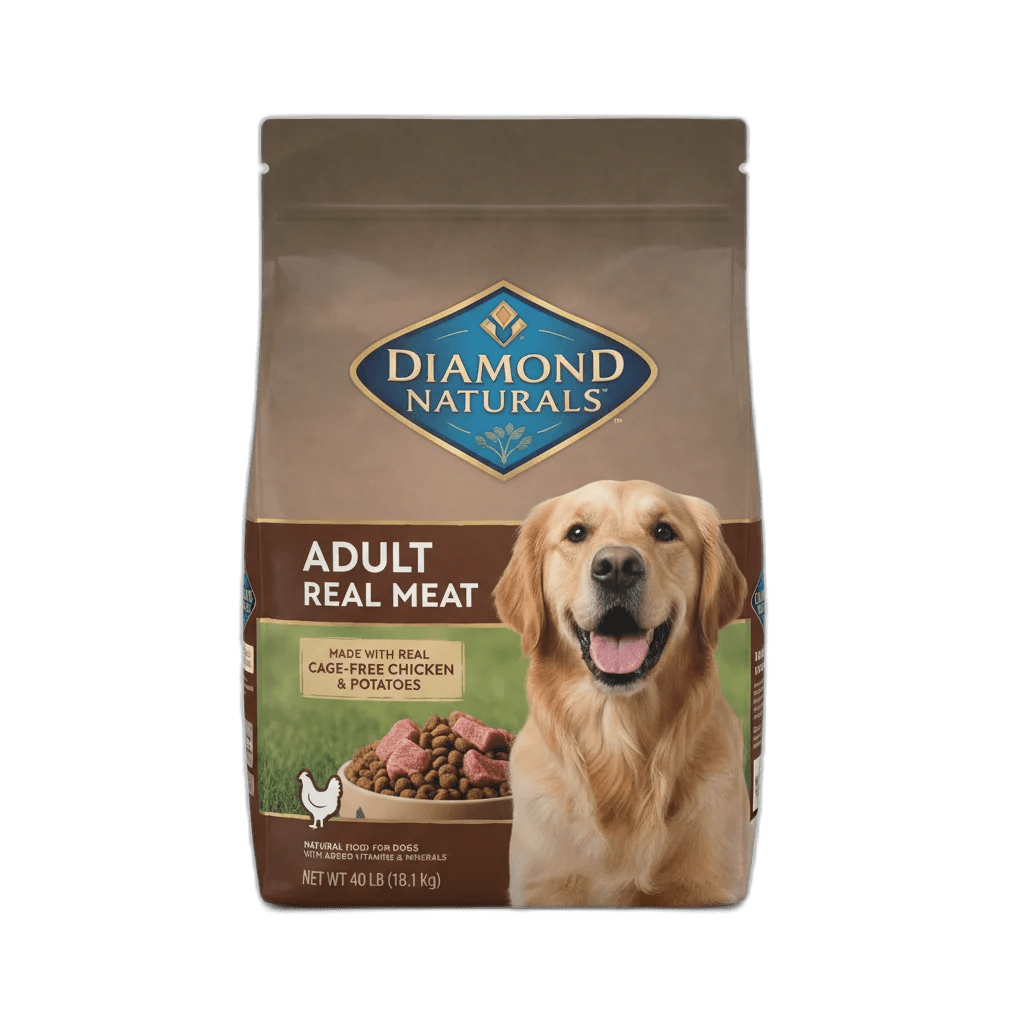
Dry Dog Food
Kibble picks ranked by ingredient quality, protein content, and value per pound.
Current top pick for this slot: Diamond Naturals Adult Real Meat
See all dry dog food picks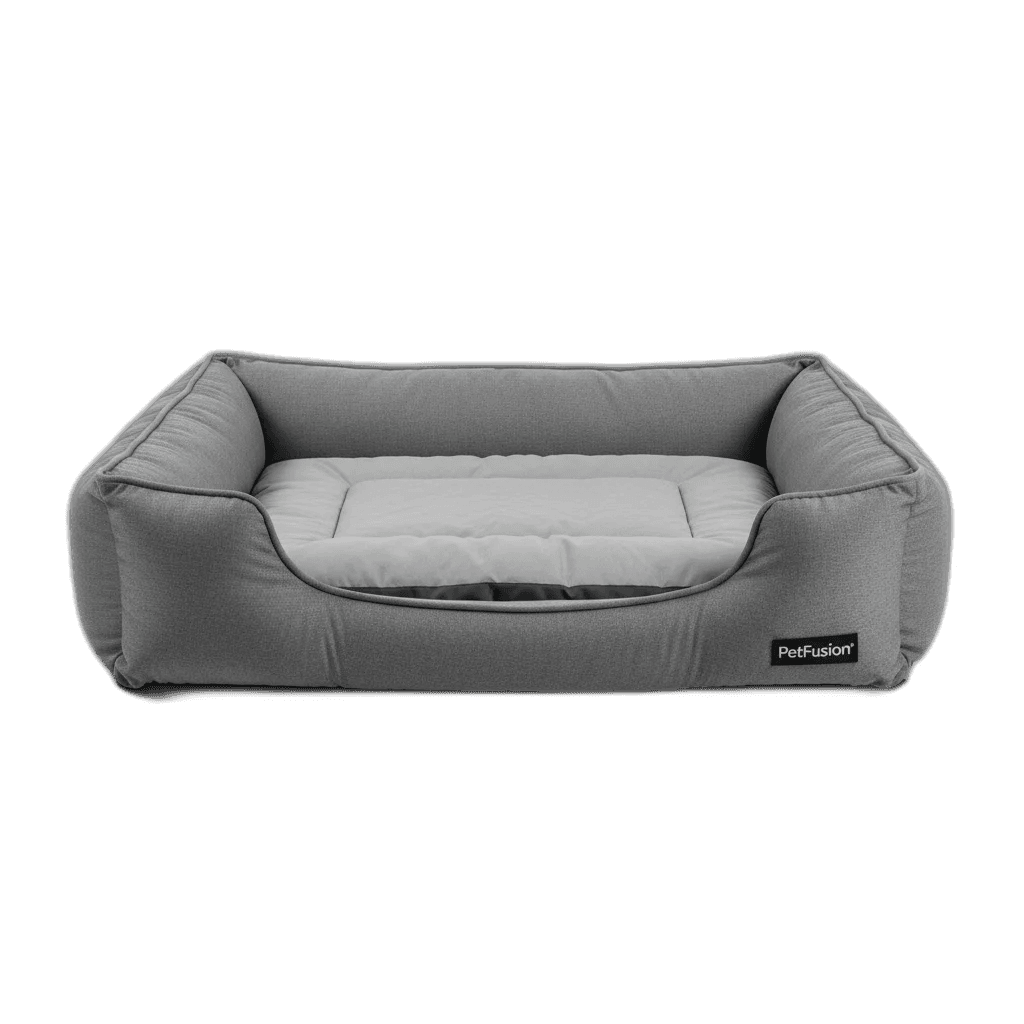
Orthopedic Dog Beds
Memory foam and supportive beds for seniors, large breeds, and dogs with joint issues.
Current top pick for this slot: PetFusion Ultimate Dog Bed
See all orthopedic dog beds picks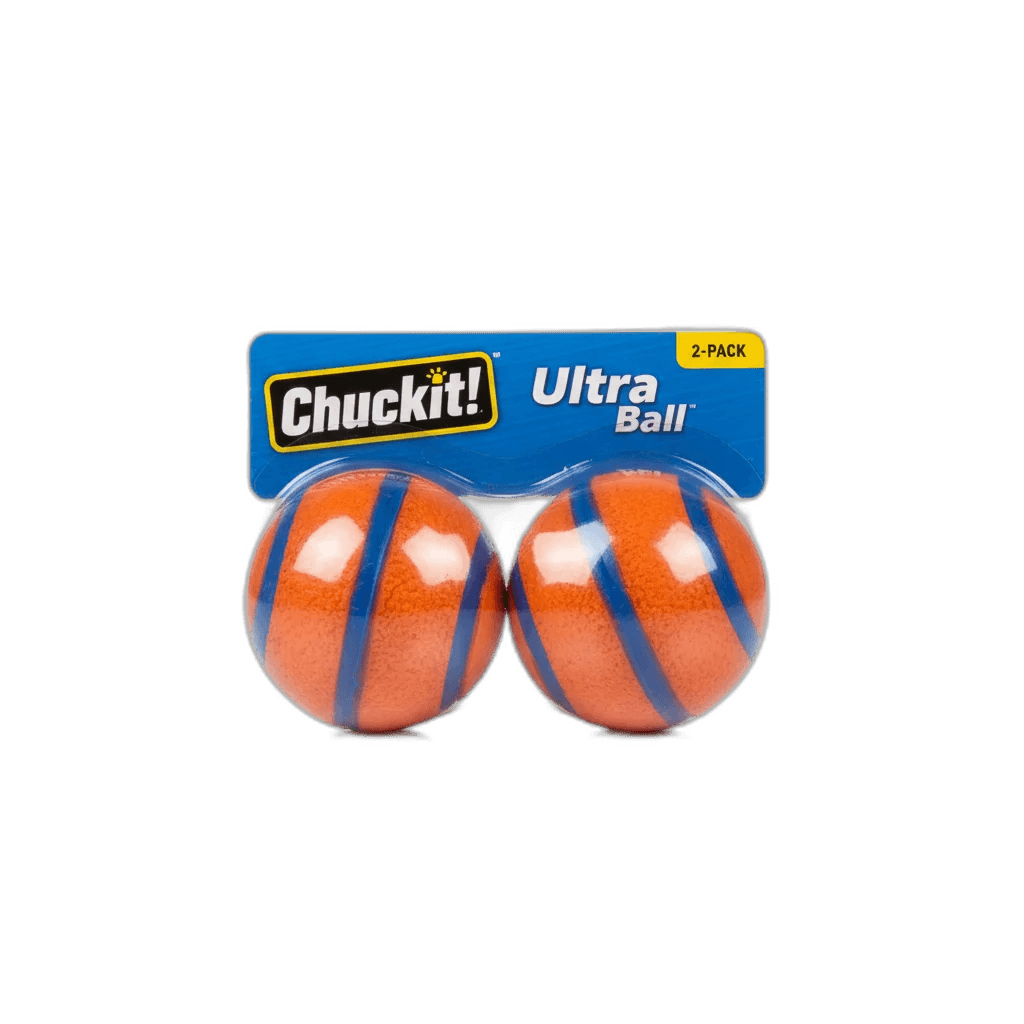
Fetch Toys
Balls, frisbees, and launchers for dogs who live to retrieve.
Current top pick for this slot: ChuckIt! Ultra Ball (2-Pack)
See all fetch toys picks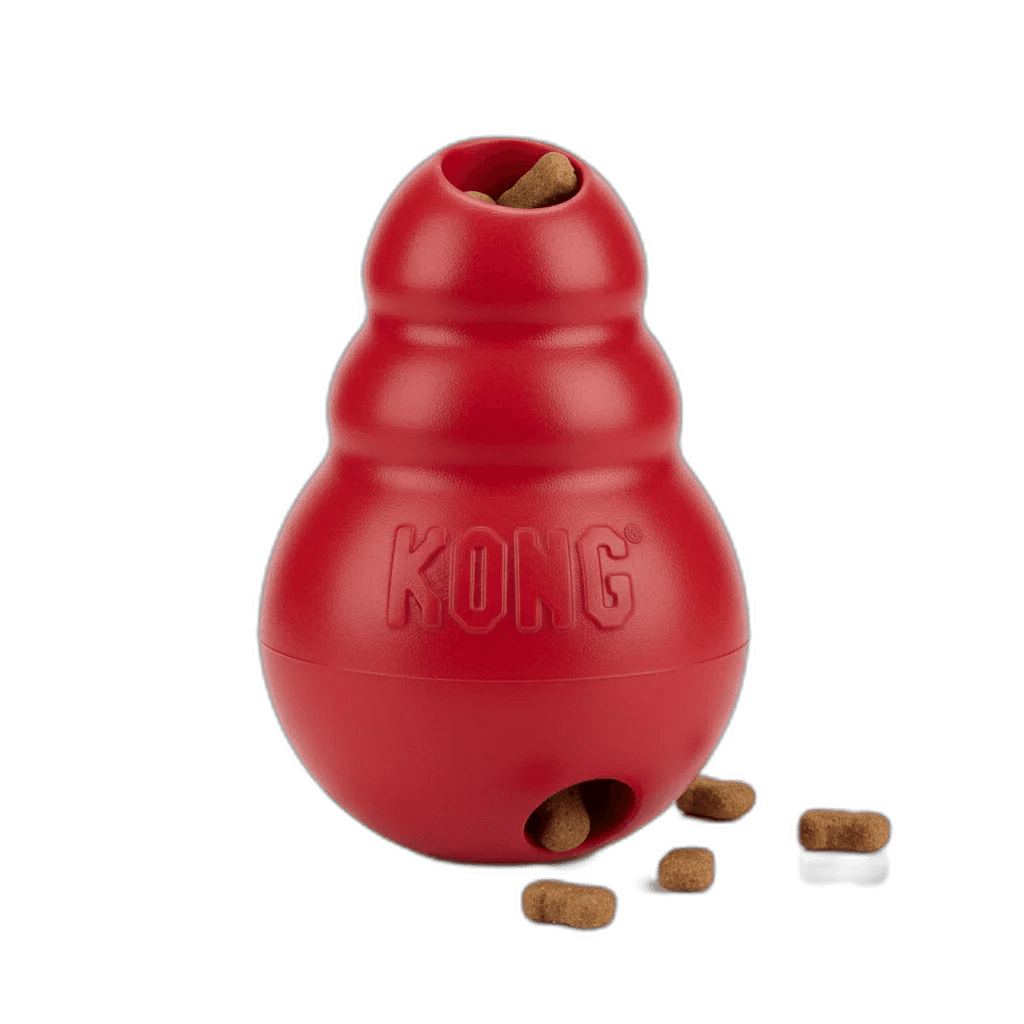
Puzzle & Treat Dispensing Toys
Interactive toys that challenge your dog's brain and slow down fast eaters.
Current top pick for this slot: Kong Wobbler Treat Dispensing Toy
See all puzzle & treat dispensing toys picks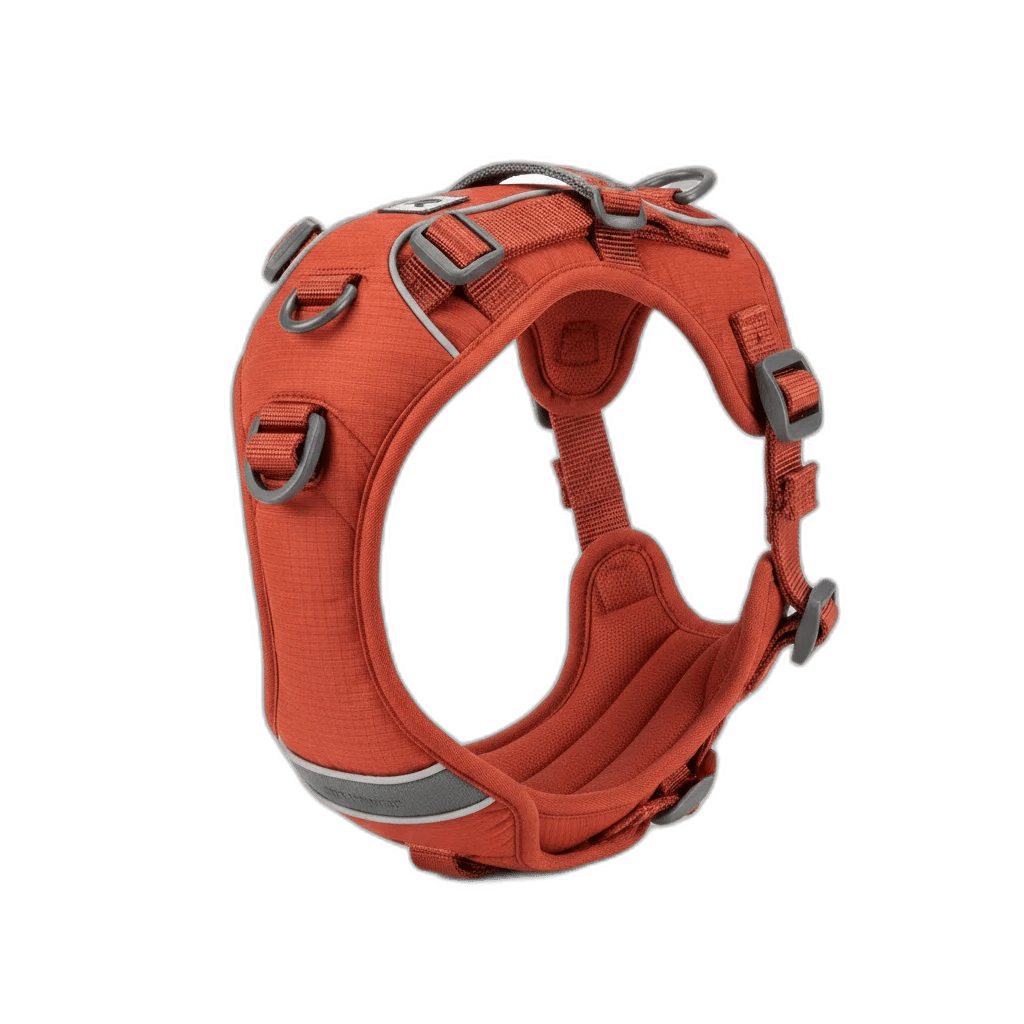
Dog Harnesses
No-pull, front-clip, and padded harnesses for every walking style.
Current top pick for this slot: Ruffwear Front Range Padded Harness
See all dog harnesses picks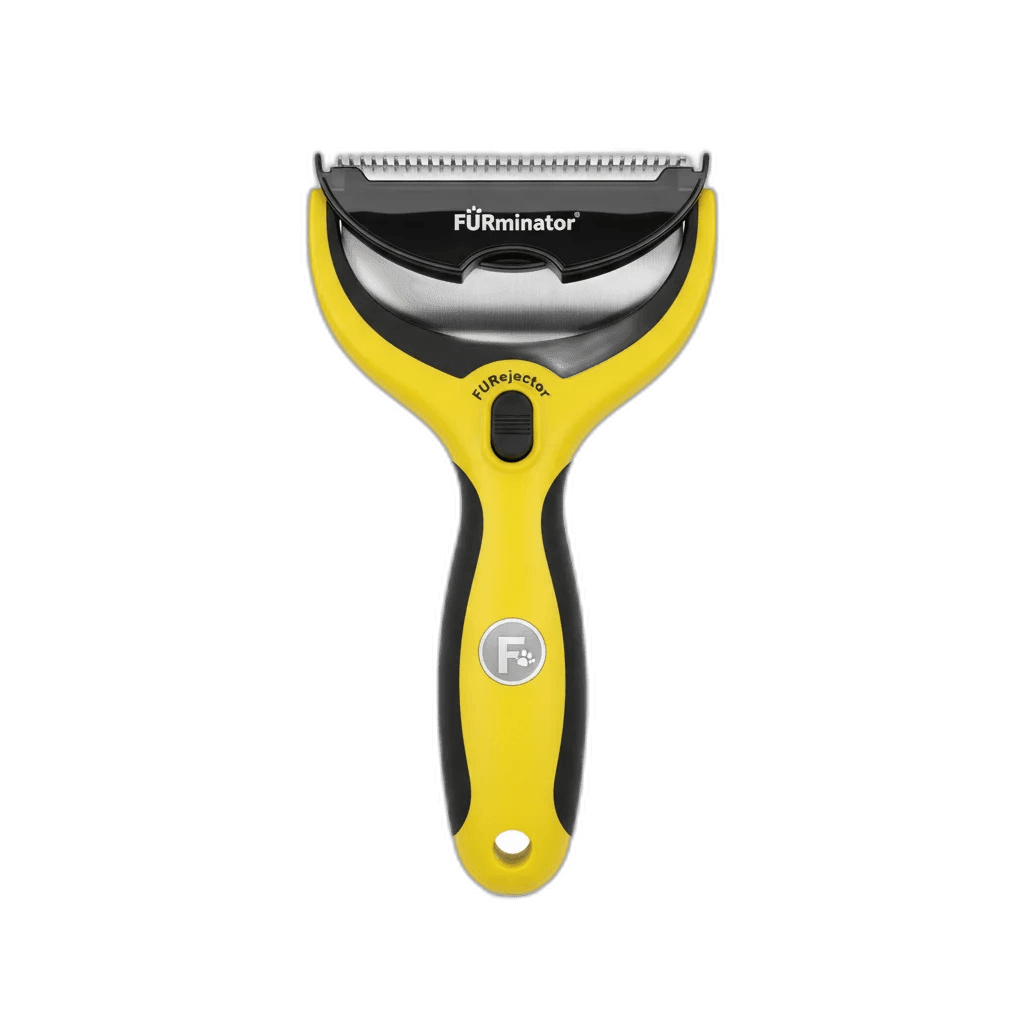
Dog Brushes & Deshedding Tools
Slicker brushes, undercoat rakes, and deshedding tools for every coat type.
Current top pick for this slot: FURminator Undercoat Deshedding Tool (Large)
See all dog brushes & deshedding tools picks
Prices are approximate and may vary. Please check the latest price on Amazon. As an Amazon Associate I earn from qualifying purchases.
Life with a Goldendoodle
Your Goldendoodle will sprint to greet every single person at the dog park as if they are the long-lost relative they've been searching for — retrievers don't do strangers, only future best friends.
You will spend more on grooming than you budgeted. Double it. The curly coat that prevents shedding on your couch creates a mat behind each ear every single week without fail.
Your Goldendoodle will stare at you with such intense, soulful Golden Retriever eyes while you eat that you'll feel genuinely guilty — they inherited that specific psychological weapon from the retriever side.
The Poodle brain means they figure out puzzle toys in about six minutes and then look at you expectantly, so keep a rotation of three or four going or they'll just rearrange your furniture instead.
Separation anxiety is real — your Goldendoodle has opinions about you leaving the house and will make those opinions known to your neighbors via sustained, operatic howling.
Editorial synthesis of r/goldendoodle discussions
Across r/goldendoodle discussions, one theme recurs: the grooming cost will shock you, the matting will humble you, but the temperament is so genuinely excellent that owners consistently say they'd do it all again — this is a breed people fall hard for and stay loyal to.
Paraphrased by PawBench from public discussion — not a quotation, and not a counted sample.
Games Goldendoodles Actually Love
Fetch Variations
Standard fetch taps the retriever instinct deeply — but mix it up with floating bumpers in a kiddie pool or hiding the ball before releasing them to find it, which
Hide and Seek
Hide yourself or a toy in another room while your Goldendoodle waits in a sit-stay, then call them to find you. The combination of obedience (Poodle trait) and find-the-human motivation
Agility Course
Even a simple backyard agility setup — a tunnel, a jump bar, some weave poles — gives Goldendoodles a physical and mental outlet that satisfies both the Poodle's performance drive
About the Goldendoodle
Origin & Build
- •The Goldendoodle was deliberately developed in the 1990s, following the success of the Australian Labradoodle program, as breeders
- •Monica Dickens is often credited as one of the first to intentionally breed them in 1969, though
- •The breed does not have AKC recognition but is registered by the Goldendoodle Association of North America (GANA)
- •They come in standard (50–90 lbs), miniature (25–45 lbs), and toy (under 25 lbs) sizes based on
Temperament
- •Goldendoodles inherit the Golden Retriever's open, warm-hearted sociability and the Poodle's playful intelligence, creating a dog that is
- •They are patient with children, friendly with strangers, and highly motivated to please — which makes training enjoyable
- •However, that same social drive means they struggle with isolation; separation anxiety is common in the breed,
- •Early socialization cements their naturally easy temperament
Exercise Needs
- •Standard Goldendoodles need 60 to 90 minutes of vigorous daily exercise — they inherited real working energy
- •Miniature and toy variants do well with 30 to 45 minutes of active play plus leash walks
- •Fetch is a natural fit given the retriever heritage, and they also excel at agility, swimming, and hiking
- •Mental stimulation through puzzle toys and training sessions is equally important — a Goldendoodle with pent-up mental energy
Health Watch
- •Hip dysplasia and elbow dysplasia are the primary joint concerns, particularly in standard-sized individuals
- •Progressive retinal atrophy (PRA) can cause vision loss and is hereditary from both parent breeds
- •Von Willebrand disease, a bleeding disorder from the Golden Retriever line, occurs in some individuals
- •Addison's disease — an adrenal gland condition — is seen more frequently in Poodle-influenced lines
Gear Tips
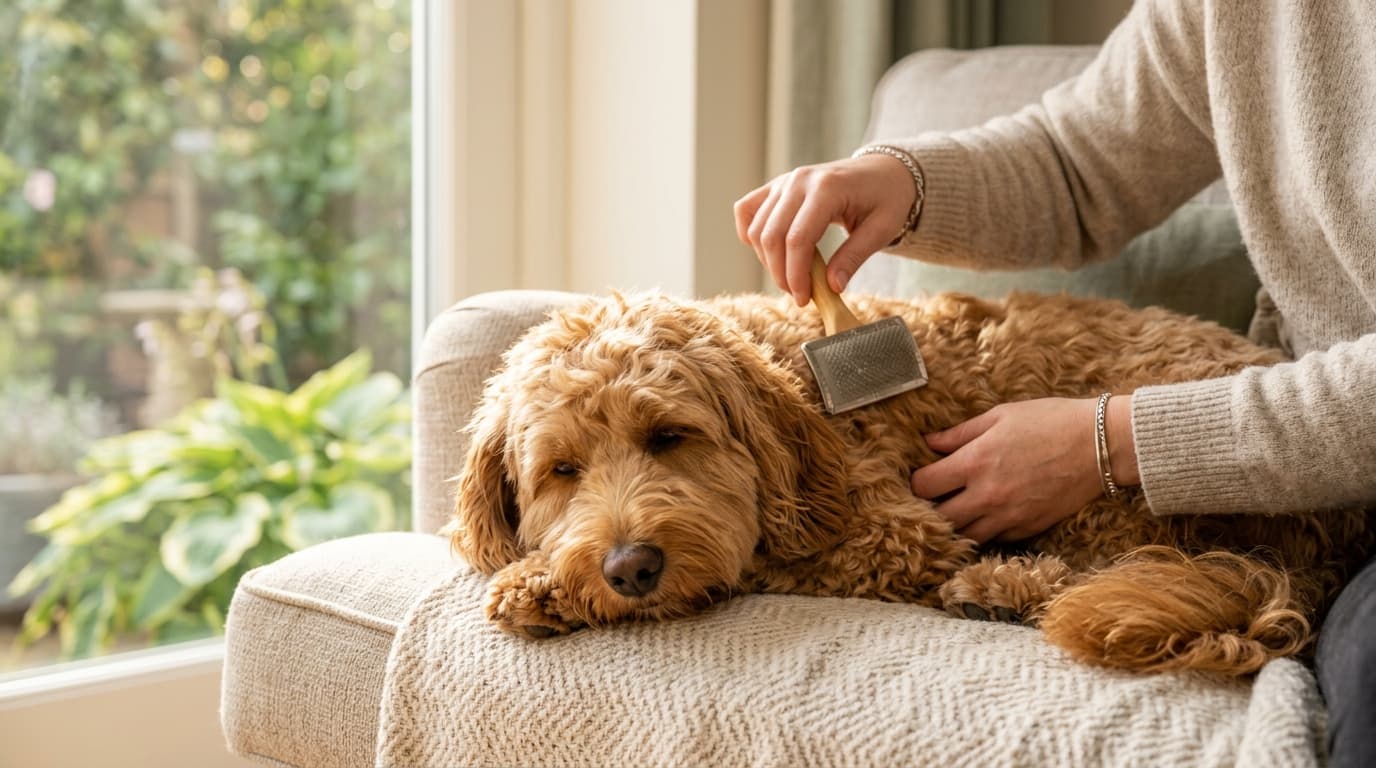
- A slicker brush and greyhound metal comb are non-negotiable — use them together every two to three days starting in puppyhood
- Use a front-clip no-pull harness rather than a collar; Goldendoodles are enthusiastic walkers who lean into their retriever instincts and will drag
- Invest in a durable interactive feeder or Kong for breakfast — the Poodle intelligence in this mix means they need mental challenges
- Get a quality orthopedic bed sized for the adult weight rather than the puppy — standard Goldendoodles grow to 50–90 lbs
- Keep a dematting spray and a fine-toothed comb for the collar and harness contact zones — those spots mat fastest and owners
Keep Them Happy
- Rotate enrichment toys weekly — Goldendoodles have the Poodle's quick pattern recognition and will lose interest in a puzzle toy that's been
- Train in short 10-minute bursts twice a day rather than one long session; they respond better to frequent repetition and their retriever
- Swimming is the ideal high-output exercise for this breed — the Golden Retriever side loves water and it burns twice the energy
- Start alone-time training at 8 weeks with a crate and short absences — the separation anxiety this breed is prone to is
Buying guides for this breed type
Goldendoodles share buying considerations with other breeds in these clusters:
Shop by category
Browse research-backed picks across every product category — not just for Goldendoodles.
Frequently Asked Questions
- Do Goldendoodles shed?
- It depends heavily on generation and coat type. F1 Goldendoodles (50/50) often shed lightly to moderately with a wavy coat. F1B Goldendoodles (75% Poodle) typically have tight curls and shed minimally, making them the better choice for allergy-sensitive households. No Goldendoodle is truly non-shedding,
- What is the difference between F1, F1B, and F2 Goldendoodles?
- F1 is a direct Golden Retriever × Poodle cross (50/50). F1B is an F1 Goldendoodle bred back to a purebred Poodle, making the offspring 75% Poodle and 25% Golden Retriever — curlier coat, less shedding. F2 is two F1 Goldendoodles bred together, resulting in more
- How big do Goldendoodles get?
- Size is determined by the Poodle parent used. Standard Goldendoodles (Standard Poodle parent) weigh 50 to 90 pounds. Miniature Goldendoodles (Miniature Poodle parent) weigh 25 to 45 pounds. Toy or Petite Goldendoodles (Toy Poodle parent) stay under 20 to 25 pounds. Even within the same
- Are Goldendoodles good for first-time dog owners?
- Generally yes — the combination of Golden Retriever eagerness-to-please and Poodle trainability makes them among the more forgiving breeds for novice owners. They respond very well to positive reinforcement training and are rarely aggressive. The main challenges are their grooming requirements (which are substantial