Dog DNA Tests: Which Results Actually Change Anything
Quick Answer
One result on a dog DNA report reliably changes what you do: MDR1 (ABCB1) drug-sensitivity status. Washington State University puts it at roughly 70% of collies, 50% of Australian shepherds and about 5% of mixed breeds, and dogs carrying it can react severely to certain drugs — most notably over-the-counter loperamide, which WSU says should be avoided in every MDR1 dog. Everything else is softer than it looks. Around two in five dogs carry at least one tested disease variant, carrier is not affected, and breed explains only about 9% of behavioural variation between individual dogs, so a report cannot explain your dog's personality.
On this page7 sections
Our Verdict
Buy a dog DNA test for the MDR1 result, not the pie chart. MDR1 status is the one line that changes real decisions — it is carried by roughly 70% of collies and 5% of mixed breeds, and it makes over-the-counter loperamide genuinely dangerous, while label-dose heartworm preventives remain fine per FDA and manufacturer testing. Read every other health marker as a risk flag rather than a diagnosis: about two in five dogs carry at least one tested disease variant, carrier status usually means nothing clinically, and a consumer result should be confirmed with your veterinarian before you act on it. If you are testing to explain a behaviour, save your money — breed accounts for just 9% of behavioural variation between individual dogs.
Match the test to the question you are actually asking
| If your situation is… | Pick | Why |
|---|---|---|
| You own a herding breed, a herding cross, or a rescue that looks like one | MDR1 testing, first and separately | Frequencies run from 5% in mixed breeds to about 70% in collies, and the result changes drug decisions permanently. |
| MDR1 status is the only thing you want to know | The single-gene test direct from WSU | Results in roughly a week from the lab that discovered the mutation, plus access to a veterinary pharmacologist for drug questions. |
| Mixed-breed rescue and you want breed ancestry plus the drug-safety line | A breed-focused kit that names MDR1 | You get ancestry and the one clinically useful marker without paying for a health panel you will mostly file away. |
| You want the widest health screen you can buy at home | A full health panel kit | Hundreds of markers give you a watch-list, as long as you read carrier status correctly and confirm anything alarming with your vet. |
| You are trying to explain a behaviour problem | No DNA test — a qualified trainer or behaviourist | Breed accounts for about 9% of behavioural variation between individual dogs, so the swab cannot answer the question. |
| Your dog already has neurological or mobility symptoms | Your veterinarian, before any kit | A consumer result on a symptomatic dog invites a decision it was never validated to support. |
Use this row to shortcut by situation — it is a starting point for your own research, not a separate recommendation.
What each part of a dog DNA report is actually worth
Section by section: the published evidence behind it, what to do with it this month, and how much weight it deserves.
| Product | What the evidence supports | What to do with it | Weight |
|---|---|---|---|
| MDR1 / ABCB1 status | WSU discovered the mutation, maintains a peer-reviewed problem-medication list, and publishes breed frequencies up to ~70% in collies | Put it on the chart. Flag before sedation, surgery or chemo; never give loperamide | High — the only clinically actionable line for most owners |
| Monogenic disease markers | Screen of 100,000+ dogs for 152 variants; ~2 in 5 dogs carry at least one copy, and the authors call for case-by-case follow-up | Separate carrier from at-risk, then ask your vet whether confirmation at a validated lab is warranted | Medium — a risk flag, not a diagnosis |
| Breed percentages | Accuracy figures are vendor-published; we found no independent peer-reviewed head-to-head validation | Enjoy it. Use it to know which breed-linked screening questions to raise | Low — an estimate, not a measurement |
| Behaviour and trait predictions | Science 2022, 18,385 dogs surveyed: most behaviours are heritable (h2 > 25%) but breed explains just 9% of variation between individuals | Do not plan training around it. A trainer who has met your dog beats a pie chart | Very low for individual prediction |
| Relative finder / ancestry map | No health or behavioural evidence base; it is a database-matching feature | Treat as entertainment | None clinically |
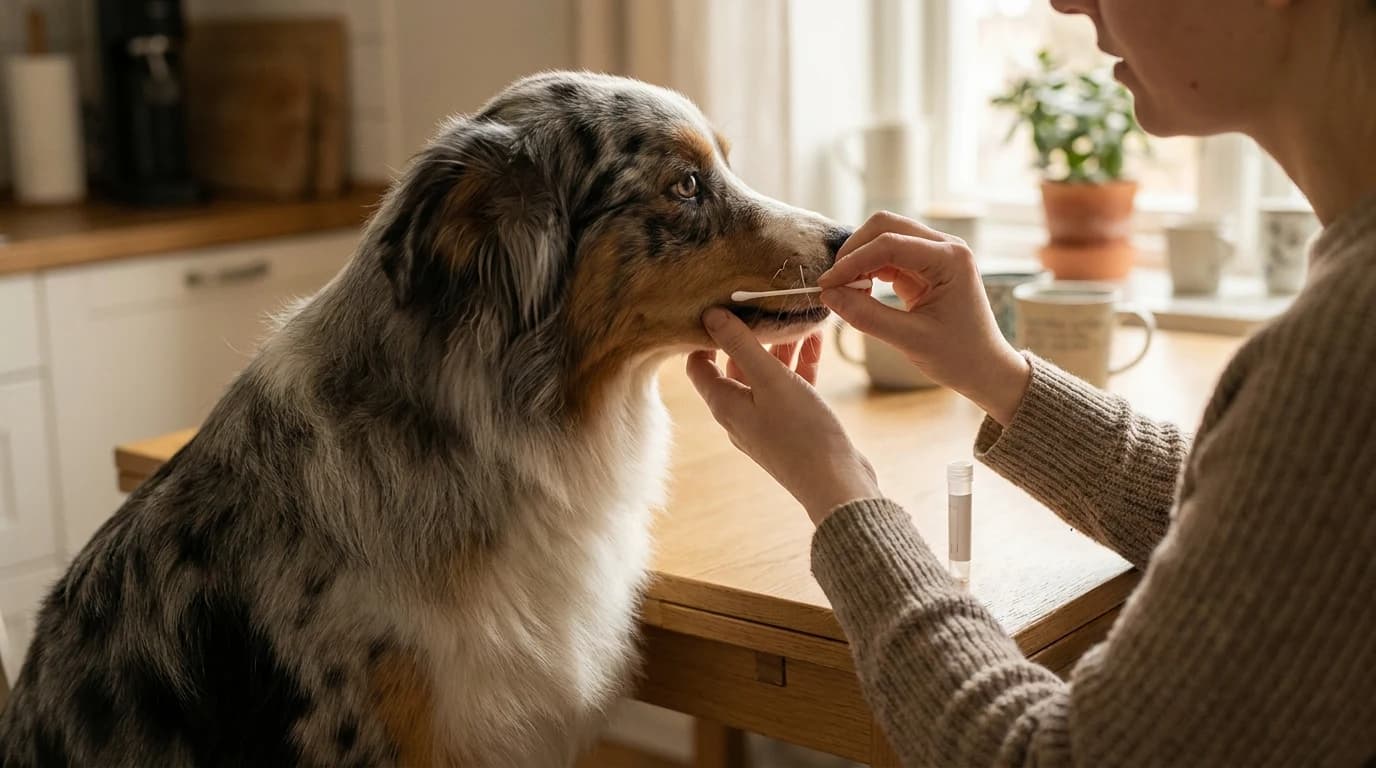
How PawBench is paid: we earn an Amazon Associates commission on qualifying purchases. We don’t accept sponsored placements, paid reviews, or free products in exchange for coverage. Picks are ranked on documented owner outcomes and primary-source research, never on commission rate. Read the full methodology.
The report arrives as a breed pie chart followed by a long scroll of health markers, and most owners read it in the wrong order. The pie chart is what you paid for and what changes least. Further down sits one line that belongs in your dog's file permanently — and a second that gets misread often enough to ruin someone's month.
The line that belongs in your dog's file: MDR1
The MDR1 gene (also written ABCB1) governs how well a dog keeps certain drugs out of the brain and clears them from the body. Dogs carrying the mutation can respond to ordinary medications with tremors, disorientation, blindness, severe muscle weakness or death, according to Washington State University's Program in Individualized Medicine — the group that discovered the mutation and built the first test for it.
It is not rare, and it is not confined to purebred herding dogs:
| Breed | Approximate MDR1 frequency |
|---|---|
| Collie | 70% |
| Australian Shepherd (standard and mini) | 50% |
| Long-haired Whippet | 50% |
| McNab | 30% |
| Silken Windhound | 30% |
| Shetland Sheepdog | 15% |
| English Shepherd | 15% |
| German Shepherd | 10% |
| Herding-breed cross | 10% |
| Mixed breed | 5% |
Frequencies from WSU's MDR1 in Dogs breed table, which also notes that roughly three of every four collies in the United States carry the mutant gene. If you live with a Border Collie or an Australian Shepherd, this is the single most useful thing a cheek swab can hand you.
The MDR1 advice you have already read is half wrong
Two claims circulate constantly. One is overstated, the other barely gets mentioned.
- Widely repeated: an MDR1 dog must avoid ivermectin, so skip the common heartworm preventives. What WSU's problem-medication list actually says: the manufacturers tested Heartgard, Interceptor, Revolution and the moxidectin products in dogs with the mutation, observed no adverse effects, and the FDA determined those products are safe for MDR1 dogs at label doses. Other, non-label formulations of ivermectin are a separate question.
- Rarely mentioned: the drug WSU flags hardest is loperamide — the active ingredient in over-the-counter Imodium. At the doses people reach for when a dog has diarrhoea, WSU states it "will cause neurological toxicity in dogs with the MDR1 mutation" and should be avoided in every dog carrying it.
The practical upshot: a positive MDR1 result changes your own medicine cabinet more than it changes your vet's prescription pad. Flag it before any sedation, surgery or chemotherapy, keep it on the chart, and never hand an MDR1 dog a human anti-diarrhoeal.
"Carrier" and "affected" are not the same word
This is where the health section of a report does its emotional damage. In the largest screen published — over 100,000 dogs across 330 breeds, tested for 152 known disease variants — roughly two in five dogs carried at least one copy of a tested disease variant. A scary-looking line is closer to normal than to news.
The same study found mixed-breed dogs were more likely to carry a common recessive disease while purebreds were more likely to be genetically affected by one, which is about as clean a piece of DNA-based evidence for hybrid vigour as exists. Read your report with three buckets:
- Clear — no copy of the variant detected.
- Carrier — one copy of a recessive variant. For most recessive conditions the dog will never develop the disease; the result matters for breeding, not for treatment.
- At risk / affected — two copies, or one copy of a dominant variant. This is the only bucket that warrants a veterinary conversation, and even then see the next section.
Breed percentages will not tell you who your dog is
The most common reason people test is temperament: I want to know why he does that. The largest study to pair owner-reported behaviour with genotypes — 18,385 dogs surveyed and 2,155 genotyped, published in Science in 2022 — found that most behavioural traits are heritable (h² greater than 25%), yet breed explains just 9% of behavioural variation between individual dogs.
Nine percent is not nothing, and it is nowhere near enough to explain your specific dog. If the reason you are buying a kit is to understand a behaviour, the honest answer is that the swab cannot tell you, and a trainer probably can.
Confirm before you act on a health result
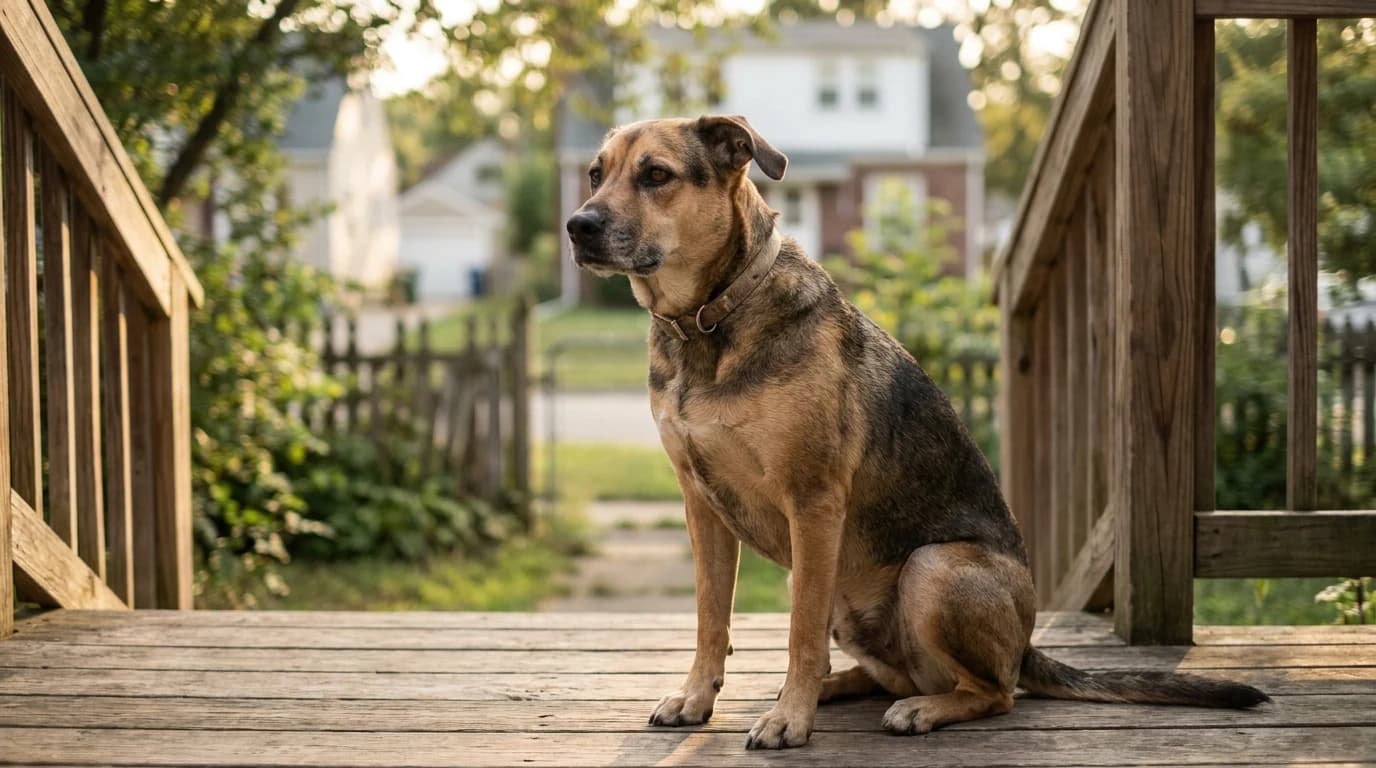
In a 2018 comment in Nature titled Pet genomics medicine runs wild, veterinarian Lisa Moses and geneticists Steve Niemi and Elinor Karlsson warned that it is "too easy for companies to sell false hope" in direct-to-consumer pet genetics, and called for regulation. Their opening case is a 13-year-old pug whose owners bought a US$65 direct-to-consumer test after she began losing bladder and bowel control; the result suggested a mutation linked to a neurodegenerative condition resembling ALS.
So, in order:
- Do not make an irreversible decision from a consumer report. Not a euthanasia decision, not a rehoming decision, not a diet overhaul.
- Take the report to your veterinarian and ask whether the specific variant is worth confirming through a validated diagnostic laboratory. The authors of the 100,000-dog screen made the same point — they explicitly emphasised the need for follow-up investigation in each case.
- Treat everything except MDR1 as a risk flag, not a diagnosis. Risk flags are useful for what to watch and when to screen, which is also the conversation worth having about pet insurance before a condition becomes pre-existing.
What the mainstream kits actually cover
Counts below are the manufacturers' own claims from their current listings — we have not verified them, and nobody outside the companies has published a head-to-head accuracy comparison we could find.
| Kit | Breeds claimed | Health screening claimed | Names MDR1 on the listing |
|---|---|---|---|
| Wisdom Panel Breed Discovery | 430+ | MDR1 only | Yes |
| Wisdom Panel Premium | 430+ | 265+ health tests | Not itemised |
| Embark Breed & Health | 400+ | 270+ health risks | Not itemised |
If MDR1 is the only reason you are testing, the most direct answer may not be a consumer kit at all: WSU sells the single-gene test on its own, returns results in about a week, and gives you access to a board-certified veterinary pharmacologist to ask what a positive result means for a specific drug.
What we could not settle
Every kit on the market advertises a breed-identification accuracy figure, and every one of those figures is the company's own. We looked for independent, peer-reviewed validation of consumer breed-ID accuracy and did not find it — which is precisely the gap the Nature authors were complaining about in 2018. Breed percentages are best read as an interesting estimate, not a measurement.
Frequently Asked Questions
- Are dog DNA tests accurate?
- It depends entirely on which part of the report you mean. Single-gene results like MDR1 rest on a well-characterised mutation with a validated test behind it. Breed percentages are a different matter: every accuracy figure advertised comes from the company selling the kit, and we could not find independent peer-reviewed head-to-head validation of consumer breed identification. Read breed results as a well-informed estimate and single-gene results as considerably firmer.
- What does it mean if my dog is a carrier of a disease variant?
- For most recessive conditions, carrier means one copy of the variant and no expected disease. The dog can pass the variant to offspring, which matters for breeding decisions, but it is not a prediction that your dog will get sick. This distinction matters because carrier results are common — a screen of more than 100,000 dogs found roughly two in five carried at least one copy of a tested disease variant.
- Can my dog with the MDR1 mutation take heartworm prevention?
- Washington State University's problem-medication list states that the manufacturers of Heartgard, Interceptor, Revolution and the moxidectin products tested them in dogs with the MDR1 mutation and observed no adverse effects, and that the FDA determined they are safe for MDR1 dogs at label doses. That is narrower than it sounds, though: other formulations of ivermectin are a separate question, and every medication decision for an MDR1 dog belongs with your veterinarian.
- Will a DNA test tell me why my dog behaves the way he does?
- No. The largest study to pair owner-reported behaviour with genotypes surveyed 18,385 dogs and genotyped 2,155 of them, and found that while most behavioural traits are heritable, breed explains just 9% of behavioural variation between individual dogs. Breed ancestry can hint at general propensities; it cannot account for the dog in front of you.
- Should I do anything before acting on a health result?
- Yes. Take the report to your veterinarian and ask whether the specific variant warrants confirmation through a validated diagnostic laboratory before any treatment or major decision. A 2018 comment in Nature by a veterinarian and two geneticists warned that direct-to-consumer pet genetics makes it too easy for companies to sell false hope, and the authors of the 100,000-dog variant screen likewise emphasised case-by-case follow-up rather than acting on a screening result alone.
Research Sources
- MDR1 in Dogs — breed frequency table and problem-medication list — Washington Animal Disease Diagnostic Laboratory, Washington State University
- MDR1 Testing for Dogs — Test Before You Treat — Program in Individualized Medicine, WSU College of Veterinary Medicine
- Frequency and distribution of 152 genetic disease variants in over 100,000 mixed breed and purebred dogs — PLOS Genetics (Donner et al., 2018)
- Ancestry-inclusive dog genomics challenges popular breed stereotypes — Science (Morrill et al., 2022) — abstract via PubMed
- Pet genomics medicine runs wild — Nature 559, 470-472 (Moses, Niemi & Karlsson, 2018)

Hilly Shore Labs
Editorial teamIndependent product research team behind PawBench. Reviews are grounded in primary veterinary sources, aggregated buyer sentiment, and the lived ownership of Maggie, an Australian Labradoodle.
200+ dog products researched · 1.1M+ Amazon review-aspect mentions analyzed · cites AVMA, FDA, AAFCO, Cornell, WSAVA, AKC, ASPCA.
All product reviews are independently researched. Recommendations are based on published veterinary guidelines, manufacturer specifications, and verified customer feedback. See our editorial standards.