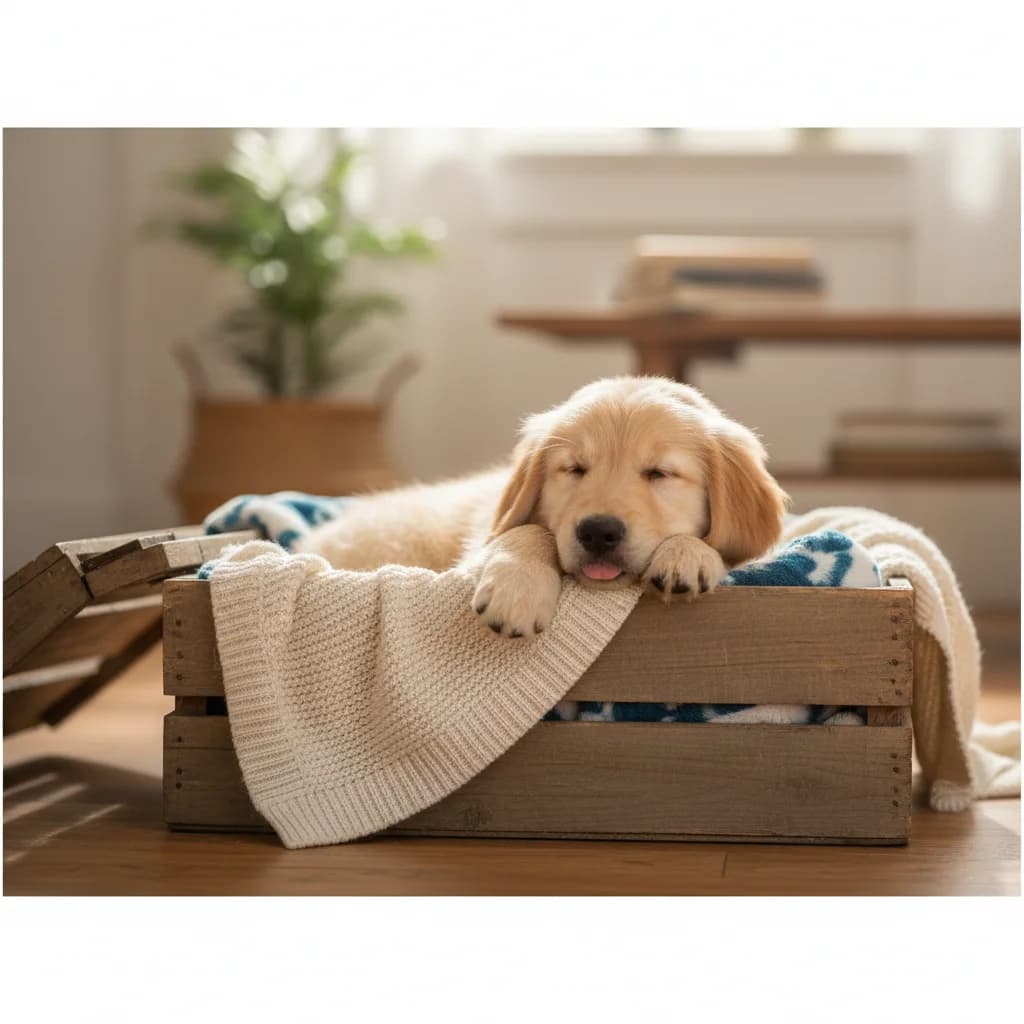
Puppy Training in the First Week: A Simple Starter Plan
Quick Answer
Start with a repeatable toilet and rest routine, reward voluntary attention, and practice one easy skill at a time. Adapt the pace to your puppy. A first-week plan is a starting sequence, not a deadline for trained behavior.
On this page6 sections
How PawBench is paid: we earn an Amazon Associates commission on qualifying purchases. We don’t accept sponsored placements, paid reviews, or free products in exchange for coverage. Picks are ranked on documented owner outcomes and primary-source research, never on commission rate. Read the full methodology.
Your puppy's first week needs a repeatable routine more than a room full of training gadgets. Start with toilet trips, a comfortable rest area, a name-response game and rewards for behavior you want to see again. Add one small challenge at a time. This is a starter plan to adapt to your puppy, not a promise that training finishes in seven days.
Before the first session: use what you already have
Put a few suitable rewards within reach, choose a quiet part of the home and agree on the same cues with everyone who cares for the puppy. If one person rewards jumping while another asks for four paws on the floor, the puppy gets two different lessons.
Start with:
- A portion of the puppy's usual food, if it works as a reward, or small suitable training treats.
- A correctly fitted harness and lightweight leash for supervised practice.
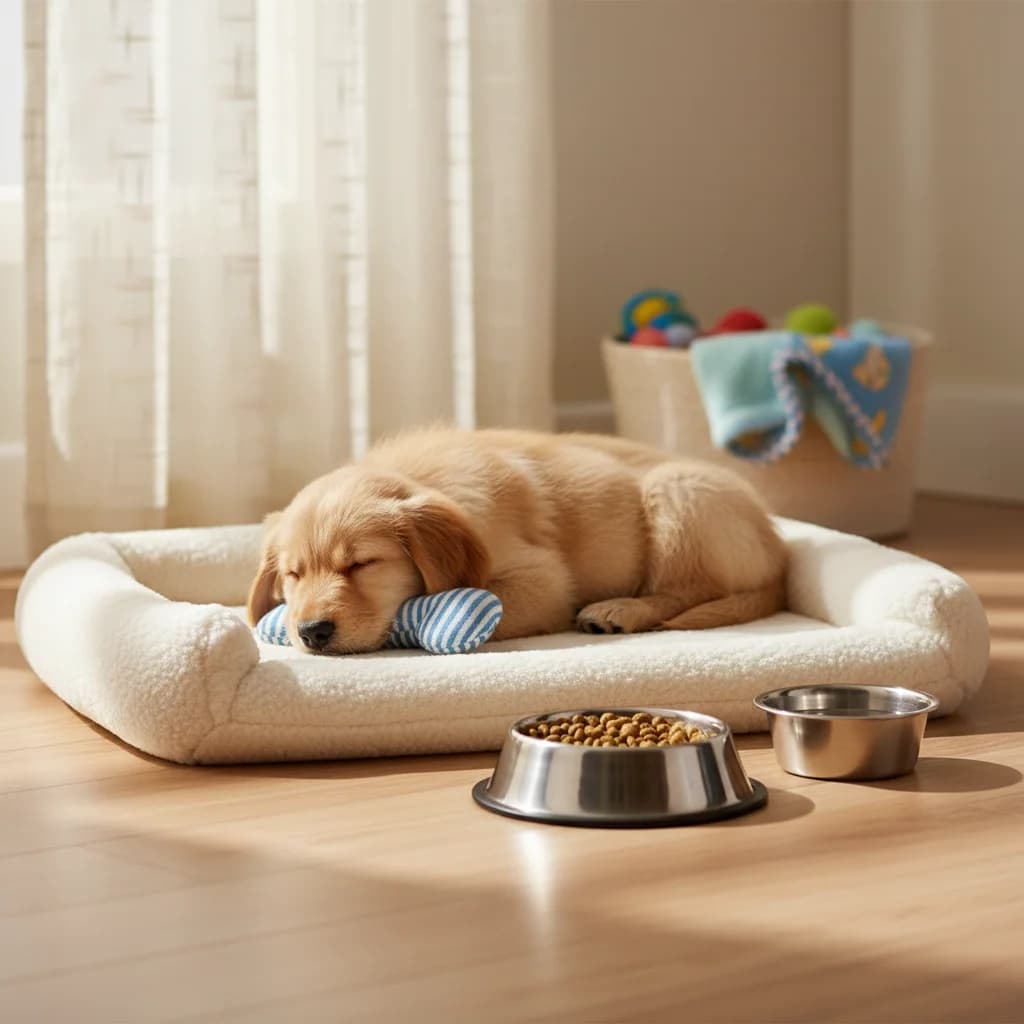
- A washable resting spot and a way to supervise or manage access to the room.
- A simple paper or phone log for meals, toilet trips and observations.
Wait before buying:
- Several puzzle toys before you know how your puppy plays.
- A larger crate without checking its dimensions and divider options.
- Training gadgets advertised as an instant answer to barking or accidents.
The new-dog kit builder helps organize the shopping. For food rewards, Cornell suggests setting aside part of the daily meal, rather than continually adding extras.
A first-week learning plan
Use the days as a sequence, not deadlines. Repeat a stage when the puppy needs more time; a busy household or a newly adopted, worried puppy may need a slower start.
| Stage | Practice | What to write in your log |
|---|---|---|
| Days 1–2: learn the household | Observe toilet timing, introduce the resting area and reward voluntary attention | When the puppy ate, slept and went outside |
| Days 3–4: repeat easy successes | Practice name response and reward calm moments in a quiet room | Which reward and setting helped the puppy engage |
| Days 5–6: add one distraction | Repeat a familiar cue with one small environmental change | Whether the puppy could still respond comfortably |
| Day 7: review, then repeat | Keep the parts that worked and simplify the parts that did not | One priority for next week, rather than five new commands |
Progress check: An easier successful repetition is more useful than repeating a difficult cue louder.
Teach attention before asking for tricks
Say your puppy's name in a quiet setting. When they turn toward you, mark the moment with a consistent word such as “yes,” then reward. Give them a break and try again later. Avoid repeatedly calling their name when they cannot disengage from something exciting; make the setting easier first.
A reward is whatever that puppy values in that moment. Food is convenient, but praise or a brief game may also work. AKC's reward-training guidance explains why both the reward and its timing matter. A clicker is optional; buying one does not make an inconsistent training plan consistent.
Keep toilet training and crate training separate
A crate is a resting space to introduce gradually, not a way to skip toilet trips. If your main problem is accidents, follow the step-by-step puppy toilet-training guide. Record the context of each accident instead of assuming the puppy is being stubborn.
For settling in a crate, use the crate-training guide and check the crate-size calculator before buying. Start with comfortable, voluntary exploration. A puppy that is distressed needs the plan adjusted; a stronger crate is not a training solution.
Add play that you can supervise
You do not need a whole enrichment collection in week one. Choose one activity, watch what the puppy does and put it away afterward. A puppy that tries to eat fabric needs a different setup from one that gently searches for food.
| What you observe | Next useful comparison |
|---|---|
| Enjoys finding food | Beginner puzzle choices |
| Prefers short interactive games | Toy types and play styles |
| Needs food rewards for practice | Training treats |
AKC's toy-shopping guidance emphasizes choosing an appropriate size and putting interactive toys away when the game is over. “For puppies” on a package is not a substitute for watching your individual dog.
When a class or individual trainer is the better purchase
If you're unsure how to read your puppy's behavior, a qualified reward-based trainer can be more useful than another item of equipment. Ask about methods, qualifications and whether the session suits your puppy. AKC's class-selection guide describes what to look for when observing an instructor.
Bring your log: it helps you ask a specific question such as “What should I change about this setup?” rather than “Why won't my puppy listen?” Discuss safe socialization arrangements with your veterinarian. Seek individual help for fear, guarding or distress rather than using a generic online timetable.
Buy for the next task: Choose the training step first, then the smallest amount of equipment that supports it.
Research Sources
- Basic Obedience Training for Puppies — American Kennel Club
- Tips for Training Your Dog Using Rewards — American Kennel Club
- A Guide to Toy Shopping for Your Pup — American Kennel Club
- Re-evaluating your dog’s diet — Cornell University

PawBench Editorial
Published by Hilly Shore LabsPawBench’s editorial team researches dog products from primary veterinary sources, manufacturer specifications and aggregated buyer sentiment, alongside the lived ownership of Maggie, an Australian Labradoodle. We do not run hands-on product tests.
254 dog products scored · 1,160,091 buyer review-aspect mentions aggregated · cites AVMA, FDA, AAFCO, Cornell, WSAVA, AKC, ASPCA.
Recommendations are based on published veterinary guidelines, manufacturer specifications, and verified customer feedback. See our editorial standards.