Best Dog Boots 2026: The Pairs That Actually Stay On
Ruffwear Grip Trex is the boot to buy if your dog keeps losing them: it cinches above the dewclaw, where the leg is narrowest, and comes as pairs so front and rear paws can be sized differently. Kurgo Blaze Cross takes the same two-fastener approach for less money, QUMY suits owners who want a volume buy, and Musher's Secret Paw Wax is the fallback for dogs that refuse boots.
Our #1 Pick
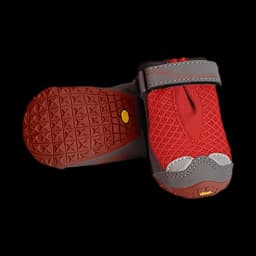
- Vibram outsole gives genuine grip on rock, scree, and wet roots — the only boot in this lineup with technical hiking traction
- Breathable mesh upper with hook-and-loop instep closure stays on through running, biking, and creek crossings
- Reflective trim for low-light hikes
The only pick whose closure cinches above the dewclaw on the narrowest part of the leg, and it ships in pairs so wider front paws can take a different size than the rear.
Our analysis of 1,031 buyer mentions on Ruffwear Grip Trex Dog Shoes: buyers consistently praised fit, quality, protection, with some flagging skin irritation, value for money.
Also Great
Budget: QUMY Dog Shoes ($28.99) — Two adjustable straps and a set of four at a price that makes replacing a lost boot painless
On this page6 sections
Our Verdict
Buy for the closure, not the sole. The Ruffwear Grip Trex cinches above the dewclaw on the narrowest part of the leg and ships in pairs so front and rear paws can take different sizes — the two design choices that decide whether a boot comes home. The Kurgo Blaze Cross applies the same two-fastener logic for less, QUMY is the sane volume buy, and Musher's Secret wax is the honest fallback for a dog that will not wear anything.
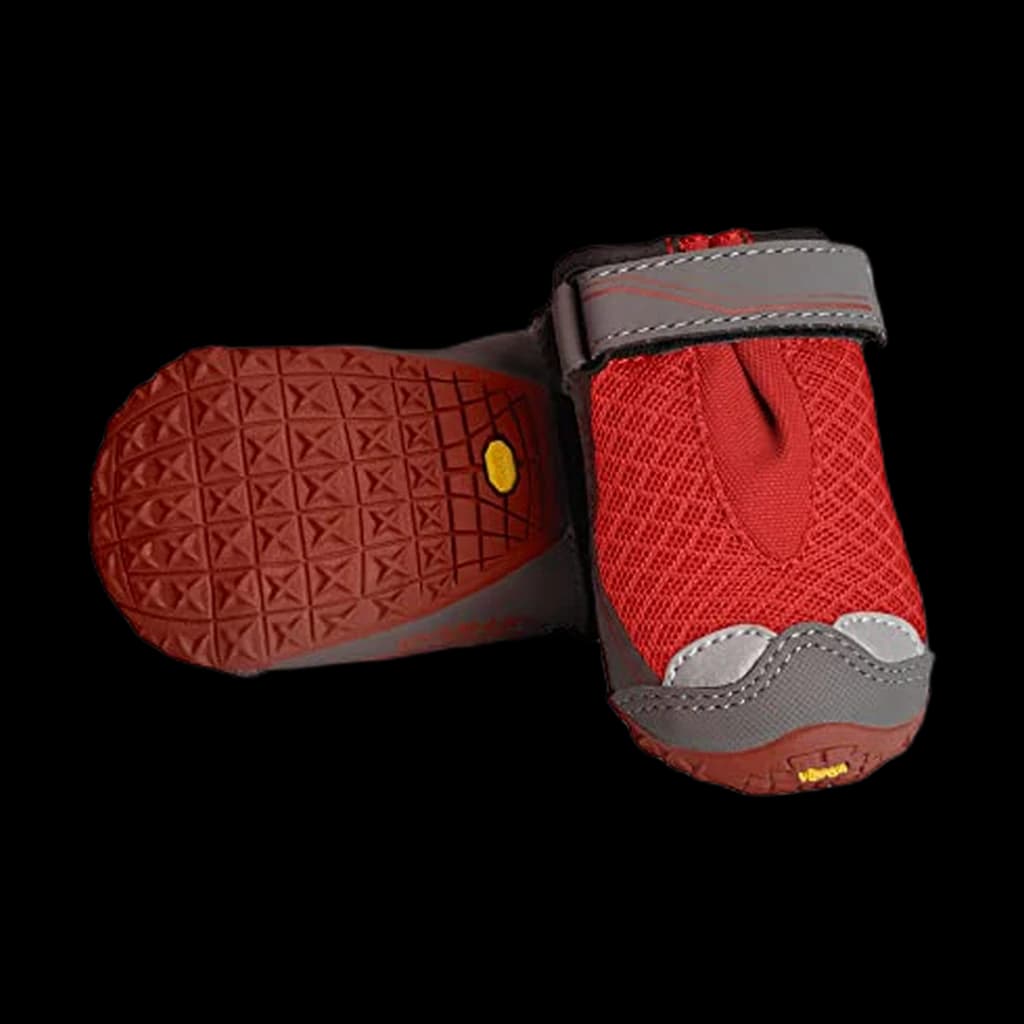 Ruffwear Grip Trex Dog Shoes Owner rating4.1 Best retention — the cinch closes on the leg, not the paw. | 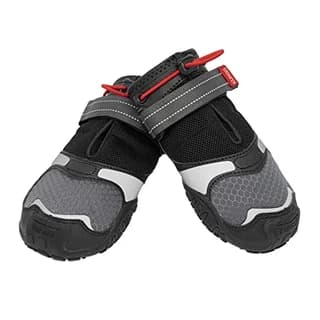 Kurgo Blaze Cross Dog Shoes Owner rating4.1 Same two-fastener principle, roughly ten dollars less. | 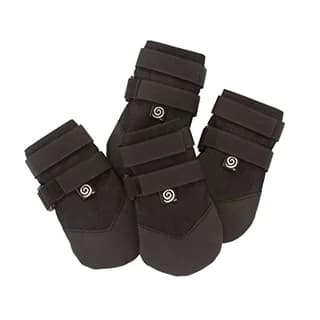 Ultra Paws Rugged Dog Boots Owner rating3.8 Widest strap surface, backed by foam that resists loosening. | 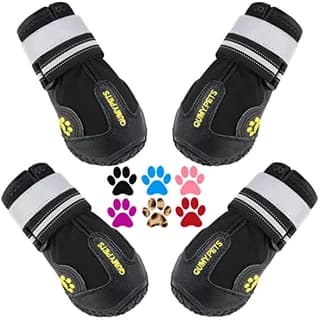 QUMY Dog Shoes Owner rating4 The volume pick — two straps, four boots, honest sizing copy. | 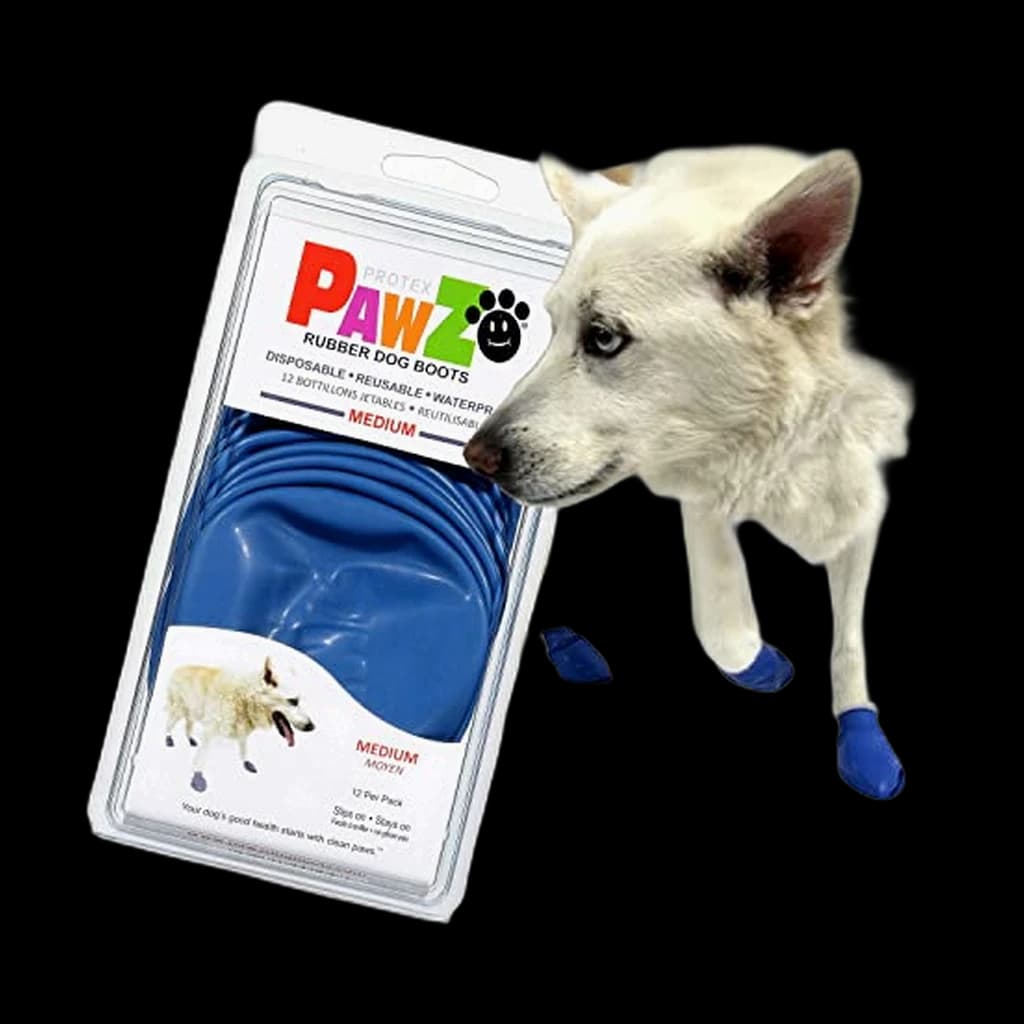 PawZ Rubber Dog Boots Owner rating3.6 No closure at all — friction fit, disposable, adds no bulk. | 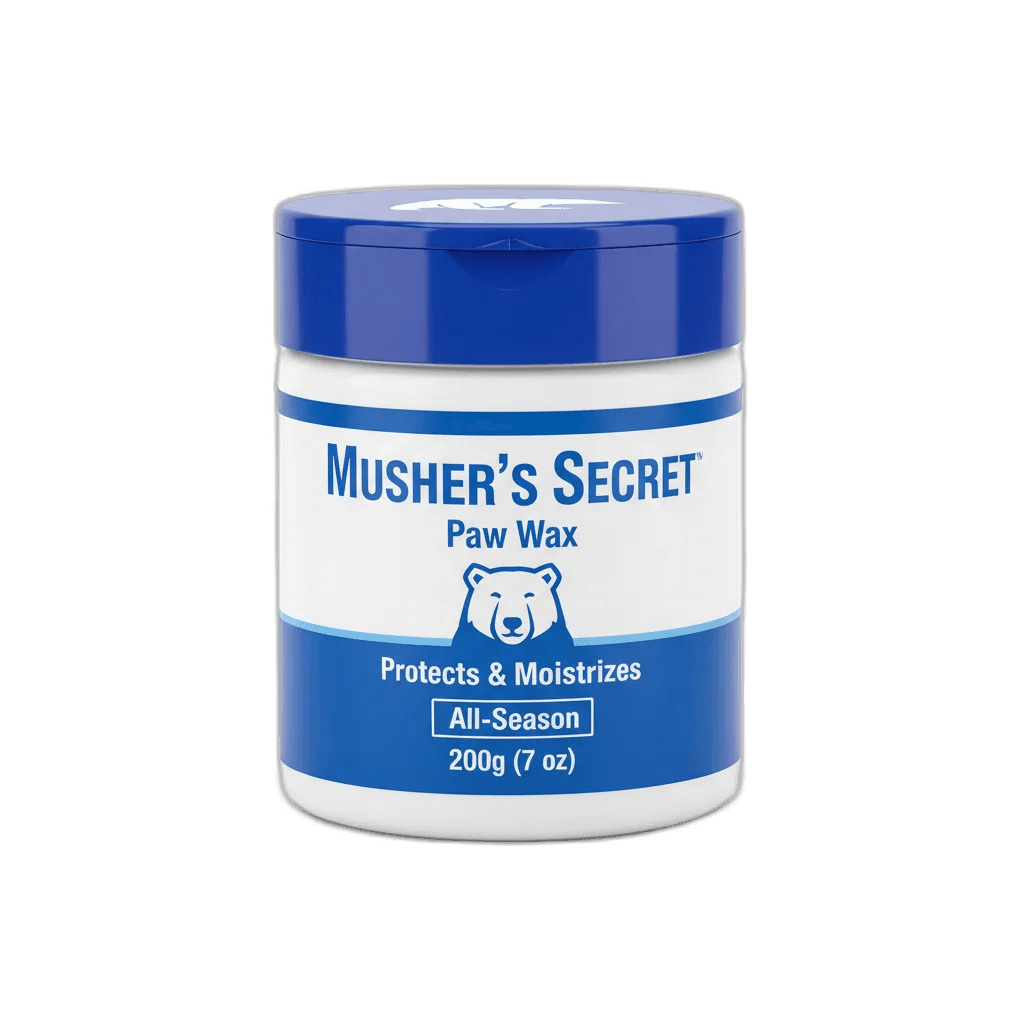 Musher's Secret Paw Wax Owner rating4.6 Not a boot — the fallback when nothing stays on a paw. | |
|---|---|---|---|---|---|---|
| Price | $49.99Buy on Amazon | $37.49Buy on Amazon | $23.90Buy on Amazon | $28.99Buy on Amazon | $20.99Buy on Amazon | $24.99Buy on Amazon |
| Buyer sentiment | Fit Quality Protection Durability Skin irritation Value for money Buyers praise fit, quality, protection and durability. Some flag skin irritation and value for money. Based on 1,031 user mentions | — | — | — | Quality Effectiveness Protection Ease of use Durability Size Buyers praise quality, effectiveness and protection. Some flag ease of use and durability. Based on 3,937 user mentions | Functionality Quality Paw protection Snow protection Buyers praise functionality, quality, paw protection and snow protection. Based on 3,802 user mentions |
| Pros |
|
|
|
|
|
|
| Cons |
|
|
|
|
|
|
| Closure | Hook-and-loop cinch above the ankle | Dual ankle closure | Wide hook-and-loop straps over foam | Two adjustable straps | None — pull-on rubber sleeve | Not applicable |
| Sole | Vibram, non-marking | Durable all-season grip sole | Recycled tire rubber | Slip-proof rubber | Natural rubber, no separate outsole | Not applicable |
| Sold as | Pair (2 boots) | Pair (2 boots) | Set of 4 | Set of 4 | Pack of 12 | 200 g tin |
| Sizing | Paw width, 1.50-3.25 in | Brand size chart | Paw width must be under boot width | Paw width chart, 1.8-3.0 in | Medium fits 2.5-3.0 in paws | One size |
* Prices are approximate and may vary. Please check the latest price on Amazon.
Closure type vs. retention
The fastener, not the sole, is what decides whether the boot comes home. Ratings are the average buyer rating on the exact listings linked above, read 2026-07-28.
| Product | Cinch above the ankle | Two straps | Wide strap over foam | No closure (rubber sleeve) |
|---|---|---|---|---|
| What holds it on | Hook-and-loop cinch on the narrowest part of the leg | Two independent straps across the ankle | Wide hook-and-loop straps backed by high-density foam | Friction against the paw only |
| Fastener position | Above the dewclaw | At and just above the ankle | Low on the ankle, broad contact patch | None |
| Average buyer rating | 4.1 stars (Ruffwear Grip Trex) | 4.1 stars Kurgo, 4.0 stars QUMY | 3.8 stars (Ultra Paws Rugged) | 3.6 stars (PawZ) |
| Sole | Vibram lug outsole | All-season grip sole / slip-proof rubber | Recycled tire rubber | The rubber sleeve is the sole |
| Maker's sizing tiebreak | Size DOWN between sizes | Use the width chart, not weight | Paw width must be under boot width | Size UP — runs small |
| Sold as | Pair, mix sizes front and rear | Kurgo pair, QUMY set of 4 | Set of 4 | Pack of 12 |
How PawBench is paid: we earn an Amazon Associates commission on qualifying purchases. We don’t accept sponsored placements, paid reviews, or free products in exchange for coverage. Picks are ranked on documented owner outcomes and primary-source research, never on commission rate. Read the full methodology.
Most dog boots do not fail on grip. They fail in the first mile, when one works loose on a rear paw and is left in the grass.
Boot fit is a retention problem, not a traction problem — the pair that stays on beats the pair with the better sole every time. Every pick below has a usable sole. What separates them is the closure: how many fasteners, where they sit, and whether they tighten above the dewclaw where the leg is narrowest.
Rank these six by average buyer rating and the order tracks closure design almost exactly. The no-strap rubber sleeve sits lowest at 3.6 stars; the two boots with a fastener above the ankle sit highest at 4.1. That is a correlation, not a controlled result — but it is the pattern you would expect if owners were mostly rating whether the boot came home.
The pavement gap is wider than the forecast admits
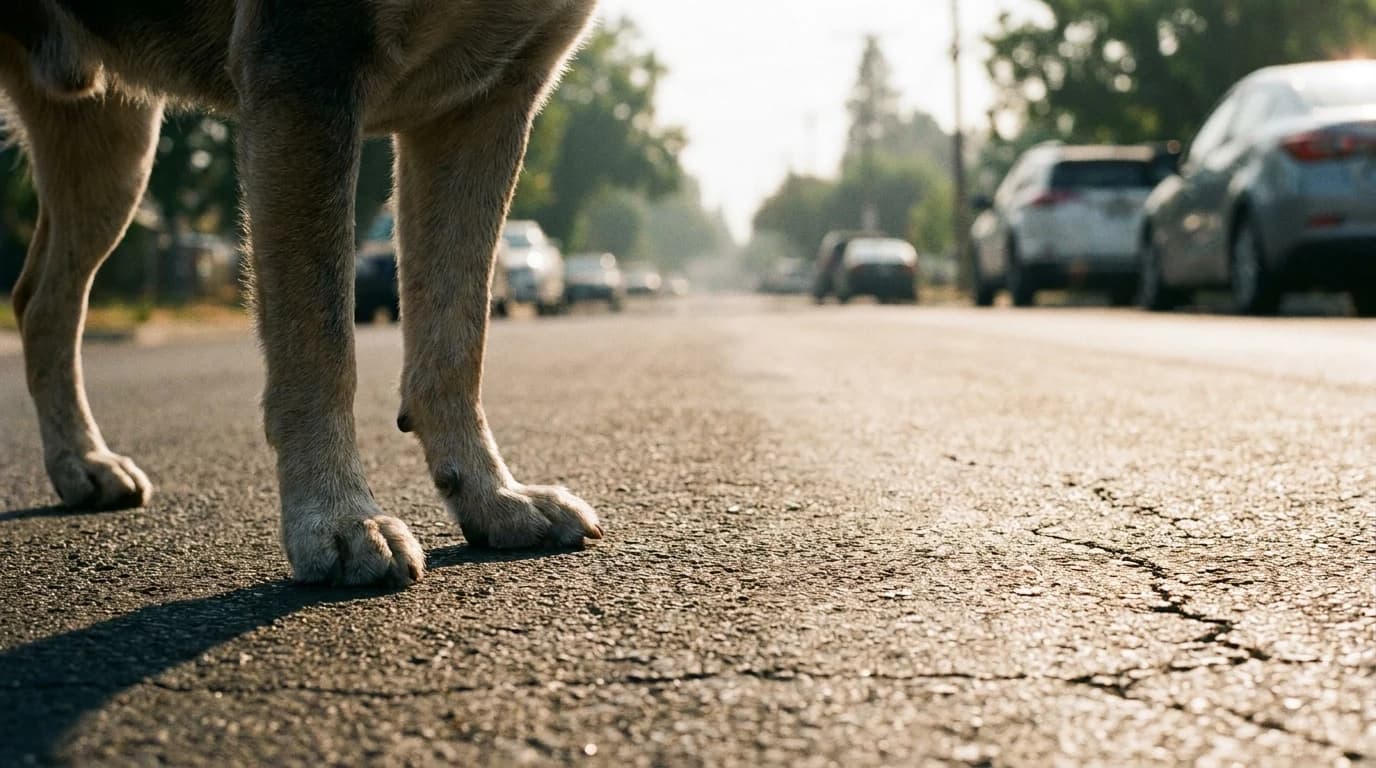
The American Kennel Club, citing a 1970 JAMA paper on thermal contact burns from streets and highways, reports that when air temperature is 86 degrees, asphalt registers 135. That 49-degree gap is the entire reason the hand test works and the forecast does not: your palm reads the surface, the thermometer reads the air. The AKC also puts a number on the test — hold your hand on the pavement for ten seconds, and if you cannot, neither can your dog.
Closure design predicts retention better than the sole does
The AKC's own boot guidance skips soles entirely and tells owners to look for wrap-around closures and full-foot grips. Worth being specific about why.
What actually keeps a boot on:
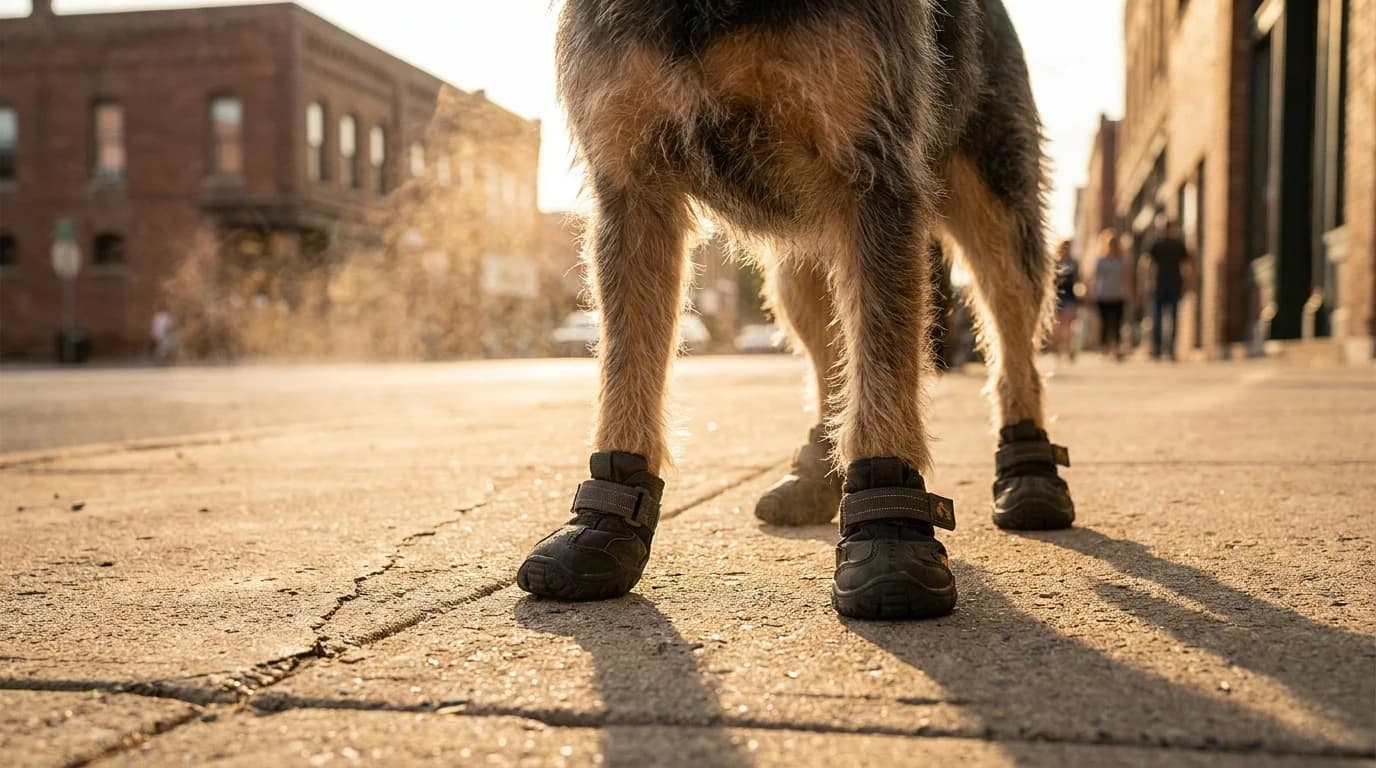
- A fastener that closes above the dewclaw, on the narrow part of the leg
- Two independent closures instead of one
- A size chosen from paw width, never body weight
- Different sizes front and rear when the dog needs them
What owners buy instead, and why it disappoints:
- A grippier sole, which is irrelevant once the boot is in the grass
- A tighter size across the paw, which the paw simply spreads out of under load
- Sizing off the weight column; QUMY's own listing says weight is a secondary reference behind paw width
- A thick household sock layered underneath, which adds bulk, holds meltwater and shortens the strap's purchase (a thin liner sized to the boot is a different thing; see winter fit below)
Fit cue: the strap belongs above the dewclaw, on the narrowest part of the leg — not cinched around the widest part of the paw.
How to measure a paw that spreads under load
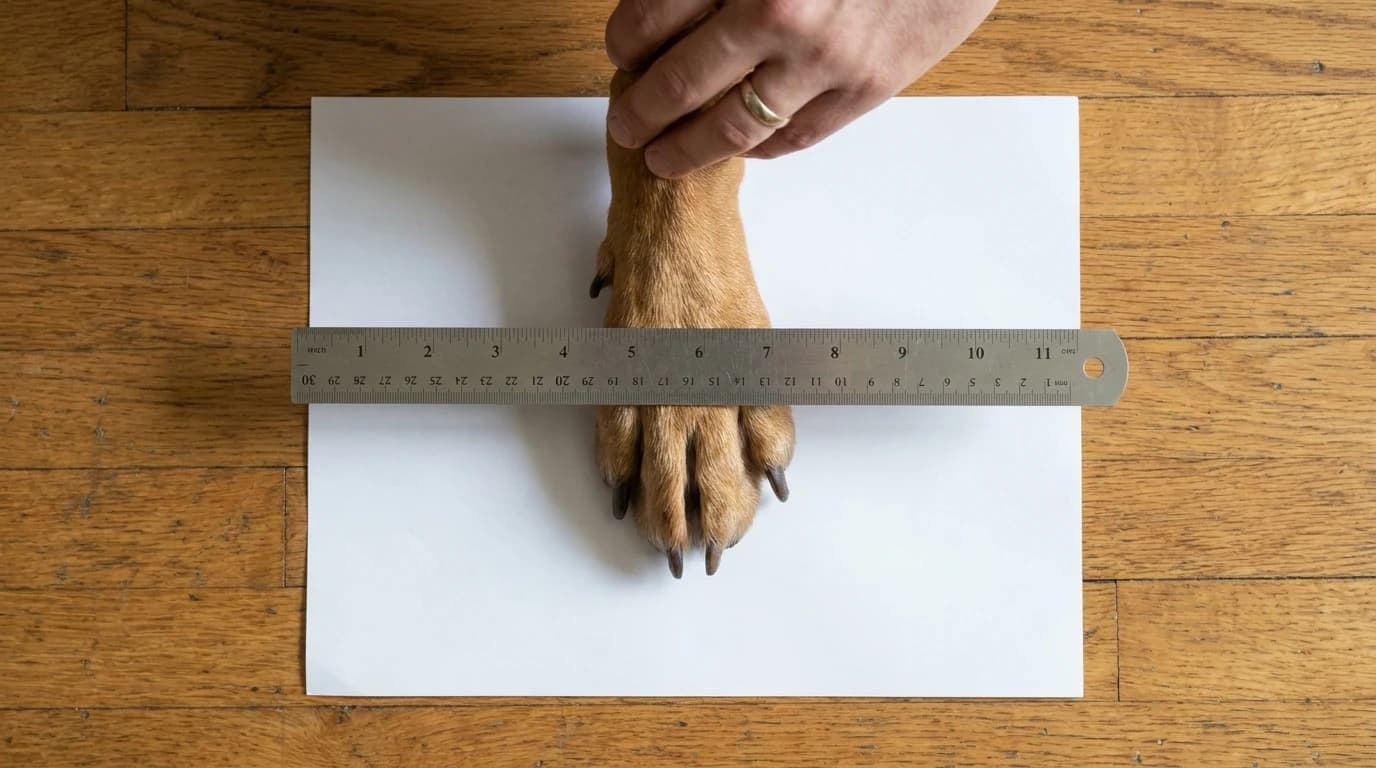
- Stand the dog on a sheet of paper on a hard floor. The paw must be bearing weight — it spreads under load, and a lifted paw measures narrow. This is the single reason boots "run small."
- Mark either side of the widest point, then measure between the marks. Ruffwear words it exactly this way: measure across the widest part of the paw when bearing weight.
- Measure all four. Ruffwear notes front paws can be larger than rear, which is why its boots ship in sets of two rather than fours.
- Read the chart's width column, not the weight column.
- Follow the brand's own tiebreak, not a general rule. Ruffwear says size down when you are between sizes; the PawZ listing says size up because they run small.
- Fit indoors over a few short sessions first; the AKC notes many dogs need time to adjust.
The six picks, and who each one is for
1. Ruffwear Grip Trex Dog Shoes
A hook-and-loop cinch closes around the narrowest part of the leg rather than the paw, and the Vibram outsole is the only genuinely technical sole in this group. Sold in pairs, so you can run a wider size up front — the fix for the rear boot that always goes missing.
2. Kurgo Blaze Cross Dog Shoes
Kurgo specifies a dual ankle closure, the same two-fastener principle for about ten dollars less, backed by a lifetime warranty. It ships as a 2-pack, so a mixed-size order costs no more than a matched one.
3. Ultra Paws Rugged Dog Boots
High-density foam behind wide hook-and-loop straps is Ultra Paws' patented answer to the strap that slowly works loose; the soles are recycled tire rubber. Its own listing calls the cheaper Durable model best for light use, so buy Rugged for trails.
4. QUMY Dog Shoes
Two adjustable reflective straps and a split-seam opening that widens enough to get a stiff paw through, at a price that makes replacing one boot painless. Its sizing note is the most honest of the six: measure width, treat weight as secondary.
5. PawZ Rubber Dog Boots
A natural-rubber sleeve that grips by friction alone, twelve to a pack, and the only option that adds no bulk under the paw. It carries the lowest rating here, and the listing itself tells you to size up.
6. Musher's Secret Paw Wax
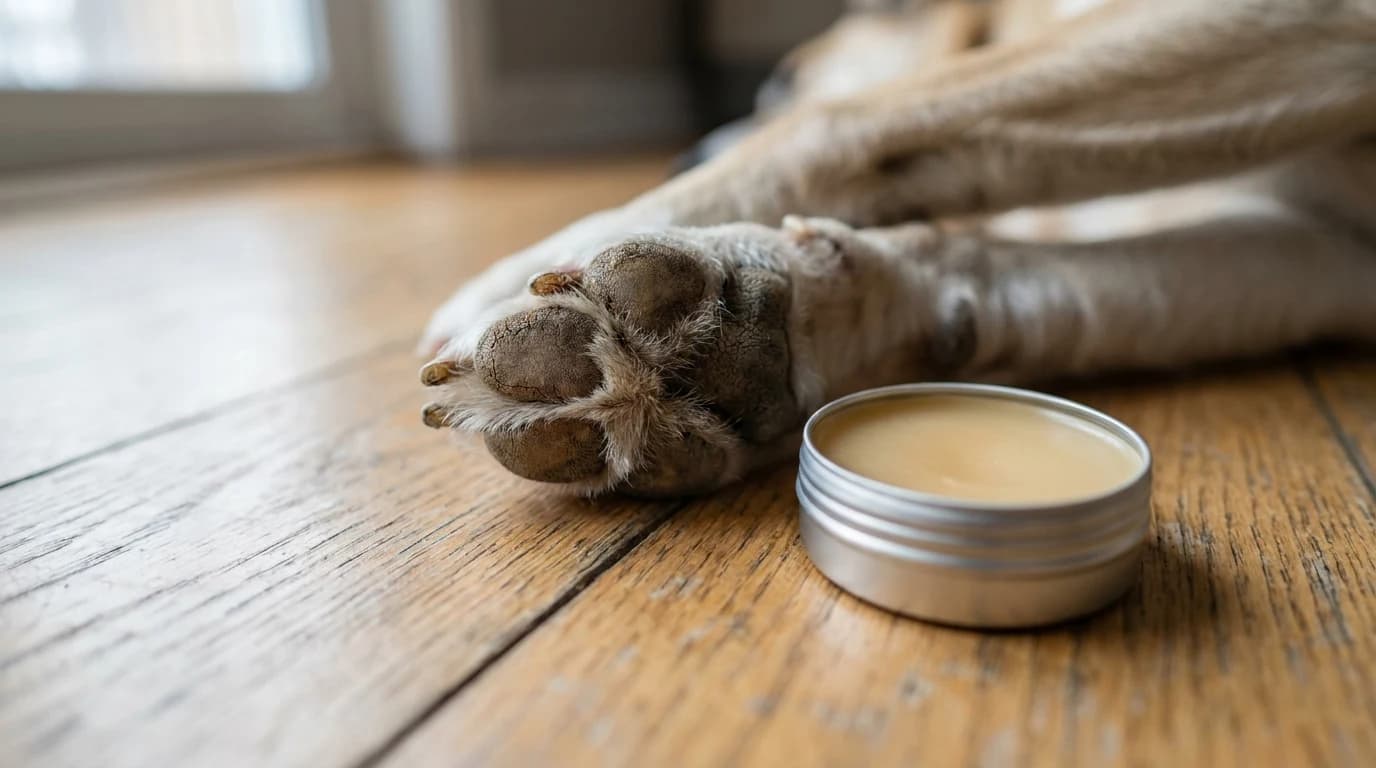
A food-safe, lick-safe wax barrier originally formulated for sled dogs, for the dog who tolerates nothing on their feet. It cannot be kicked off, but a wax film is a thinner barrier than a soled boot — on a failed hand test, change the walk time rather than trusting the wax.
Winter: when a dog actually needs boots
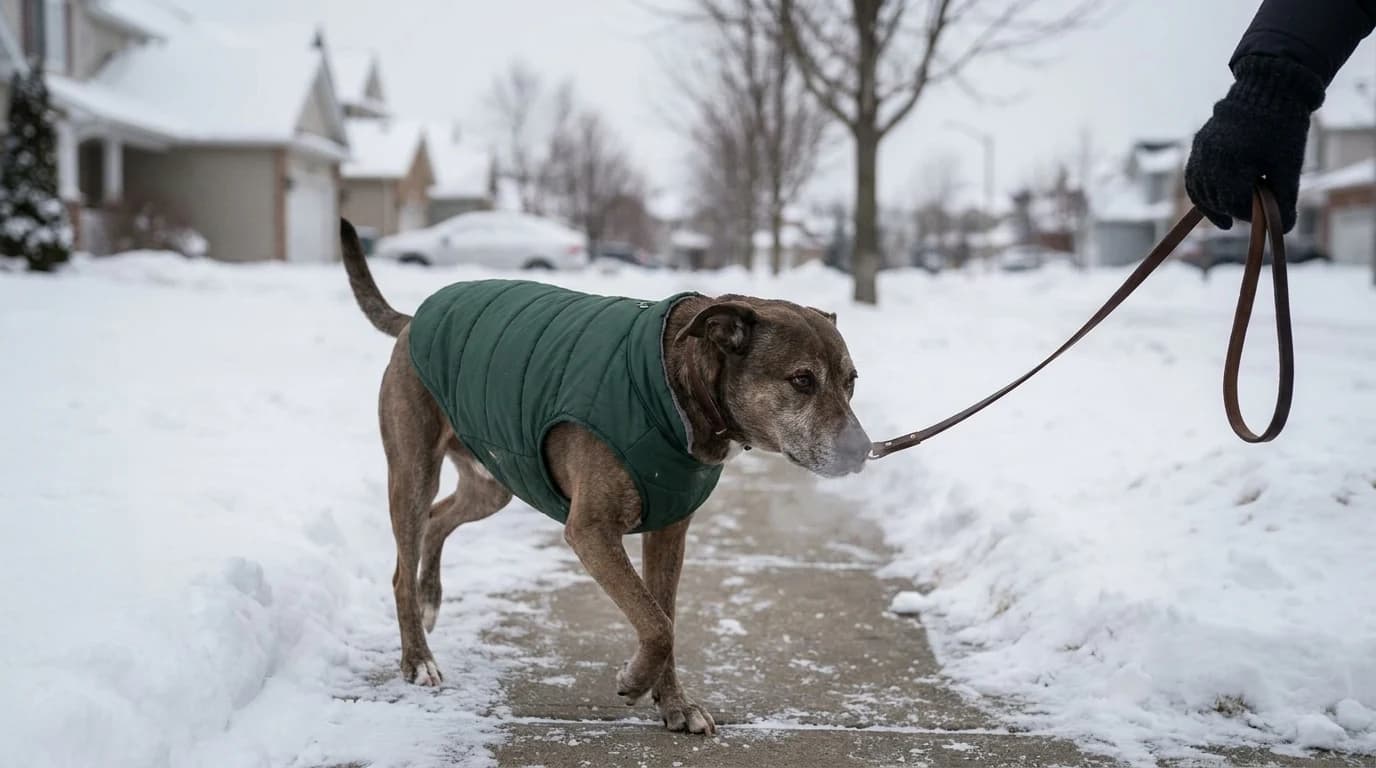
Most healthy adult dogs do not need boots for an ordinary snowy walk. Tufts veterinarian Jonathan Babyak's advice is to watch the dog, and add a jacket or booties only if it shows it needs them. The tells he lists are prancing in place, shifting weight from foot to foot, and biting at the ice packed between the toes.
Boots earn their place when one of these is true:
- Your sidewalks are treated every day. Pet Poison Helpline calls calcium salts the most severe irritants among ice-melt ingredients, on skin and paws as well as swallowed. A boot keeps the chemical off the pad; wax only thins the contact.
- Snow balls up between the toes. Hairy feet pack ice until the dog limps, which is exactly the prancing and toe-biting Babyak describes.
- The dog sits on the vulnerable end of the cold chart. Small, short-coated, senior and very young dogs lose heat fastest. Our how cold is too cold guide walks through the Tufts scale and its modifiers, and a dog that needs boots by that measure usually needs a coat or sweater too.
- The pads are already cracked or sore. VCA lists the paws among the usual frostbite sites, and notes a wet dog is more vulnerable. A split pad on salt is the worst combination.
- The outing is long. A ten-minute potty loop and a two-hour snowshoe are different exposures.
If none of those apply, a wax barrier before the walk and a wipe-down afterwards is the proportionate answer. The ASPCA describes the same routine, and our guide to what paw balm can and can't fix covers the tins.
Honest calibration: Babyak's view is that a dog licking a little salt off its pads risks, at worst, an upset stomach. The bigger winter hazards are a dog eating ice melt, antifreeze, and cold injury to wet feet. Boots only address the last one.
Winter fit: liners, snow and the closure
- Snow gets in from the top. That is why closure position matters even more in December. Ruffwear's own winter-specific boot uses a stretch gaiter whose hook-and-loop closure cinches at the narrowest part of the leg, the same principle this ranking is built on.
- A liner, not a household sock. Ruffwear recommends pairing its boots with its thin, paw-shaped Bark'n Boot socks, and sizes them off the same weight-bearing width measurement, sizing down between sizes. A thick cotton sock is the opposite: bulk that lifts the paw and holds meltwater against it.
- Fit with the liner on. Measure bare, pick the size, then run the indoor fitting sessions wearing the liner you will actually use. A boot that only closes over a bare paw is a size too small for winter.
- Dry everything afterwards. Take boots off as soon as you are inside, towel the feet, and check between the pads. Damp fur between the toes is exactly the condition VCA flags. An older dog coming in from a long cold walk also benefits from a warm, dry place to lie; see our heated dog bed guide.
Which of the six for winter:
- Ruffwear Grip Trex or Kurgo Blaze Cross for snow, because the closure above the ankle keeps it out
- QUMY when you want a full set of four for daily salted sidewalks on a budget
- PawZ for short potty trips on salt, where a thin rubber layer beats bare pads
- Musher's Secret for the dog who will not wear anything, applied before the walk and wiped off after
Retention matters more in snow than anywhere else. A boot lost on a summer trail turns up in the grass; one lost in a drift turns up in April.
Frequently Asked Questions
- Do dog boots actually stay on?
- The ones with a fastener above the dewclaw usually do. A boot that only grips the paw relies on friction, and the paw changes shape every step. Ruffwear and Kurgo both close on the narrow part of the leg above the ankle, which is the design detail that separates a boot you find at the end of the walk from one you find in the grass.
- How do I measure my dog's paw for boots?
- Stand the dog on paper on a hard floor so the paw is bearing weight, mark either side of the widest point, and measure between the marks. Ruffwear's own guidance is to measure across the widest part of the paw while it bears weight, and to measure all four because front paws are often larger than rear. Use the width column on the size chart, not the weight column.
- How hot is too hot for a dog's paws?
- The American Kennel Club, citing a 1970 JAMA study of contact burns from pavement, reports that 86-degree air corresponds to 135-degree asphalt. Its field check is to hold your hand on the pavement for ten seconds; if you cannot hold it there, the surface is too hot for paws. Air temperature alone will not tell you.
- Are boots or paw wax better?
- They solve different problems. Wax cannot fall off and is easy on a dog that hates footwear, so it suits salt, snowball buildup and dry cracking. A soled boot is the thicker barrier and the only one that puts real material between the pad and a hot or abrasive surface. Many owners end up keeping both.
- Do dog boots help with winter road salt?
- Yes, and this is the season most owners underrate. The ASPCA warns that winter walks become dangerous when ice-melting chemicals are licked off bare paws, and notes that booties prevent salt and sand from lodging between the toes in the first place. Pet-friendly ice melt at home plus boots on the walk covers both ends.
- Does my dog need boots in winter?
- Not always. Tufts veterinarian Jonathan Babyak's advice is to watch the dog: prancing in place, shifting weight between feet or biting at ice between the toes means it needs protection. Boots are most worth it on sidewalks treated daily with ice melt, for dogs whose feet pack with snow, for small, short-coated, senior or very young dogs, and for long outings. Otherwise a paw wax before the walk and a wipe afterwards is usually enough.
- Should dog boots go over socks?
- Only over a thin liner made for the boot, not a household sock. Ruffwear recommends its Bark'n Boot liners with its boots and sizes them by the same weight-bearing paw-width measurement. A thick cotton sock adds bulk, holds meltwater against the paw and shortens the strap's hold. Fit the boot with the liner you will actually use; if it only closes over a bare paw, it is too small for winter.
Research Sources
- How to Protect Dog Paws From Hot Pavement, Sidewalks — American Kennel Club
- Thermal Contact Burns From Streets and Highways — JAMA (Berens, 1970)
- Cold Weather Safety Tips — ASPCA
- Choosing the Right Dog Boots — sizing and sets of two — Ruffwear
- Grip Trex Dog Boots — paw measurement guidance — Ruffwear
- How do I protect my dog in winter from extreme cold, ice, salt, and deicers? — Tufts Now, Tufts University
- Ice melts and dogs: which ingredients irritate paws, and what 'pet safe' does not mean — Pet Poison Helpline
- Frostbite in Dogs — VCA Animal Hospitals
- Bark'n Boot Dog Socks — sizing by weight-bearing paw width — Ruffwear

PawBench Editorial
Published by Hilly Shore LabsPawBench’s editorial team researches dog products from primary veterinary sources, manufacturer specifications and aggregated buyer sentiment, alongside the lived ownership of Maggie, an Australian Labradoodle. We do not run hands-on product tests.
331 dog products scored · 1,222,724 buyer review-aspect mentions aggregated · cites AVMA, FDA, AAFCO, Cornell, WSAVA, AKC, ASPCA.
Recommendations are based on published veterinary guidelines, manufacturer specifications, and verified customer feedback. See our editorial standards.