How Cold Is Too Cold for Dogs? The Tufts Chart, Decoded
Quick Answer
No single temperature is too cold for every dog. On the Tufts weather safety scale, risk becomes potentially unsafe at around 40°F for dogs of every size, dangerous at about 25°F for small and medium dogs and about 15°F for giant breeds, and potentially life-threatening at 10°F or below for all of them. Rain or sleet adds two points, more than any other factor, and puppies, seniors and toy breeds add one each. The scale was built for dogs kept outdoors, so for a walk, Tufts and AKC veterinarians use time limits and the dog's own cues instead: a coat below about 15°F for dogs without thick fur, and short sessions when wind chill drops below 20°F.
On this page7 sections
Our Verdict
Use the Tufts scale as a map of where risk starts climbing, not as a pass or fail line. It was designed to screen dogs left outside, it has no wind term, and its most important modifier is wet weather, not temperature. For a walk, the practical rule from veterinarians is shorter outings as it gets colder, a coat for small, short-coated, lean, young or old dogs, boots or a paw protectant where sidewalks are salted, and a towel on the way back in. A dog that is shivering and heading for the door has already told you today's limit. Slow breathing, confusion or pale, grey skin on the ears, tail or paws is a vet call, not a wait-and-see.
Kuoser Reversible Waterproof Dog Coat (Small) 4.5 The default coat for a small, short-coated dog in wet cold. | Hurtta Extreme Warmer III ECO Dog Winter Coat 4.4 The sustained sub-freezing pick for short-haired dogs. | PawZ Rubber Dog Boots (Medium, 12-Pack) 3.6 Stretch-on salt and ice protection with no straps. | |
|---|---|---|---|
| Price | $22.99Buy on Amazon | $105.95Buy on Amazon | $20.99Buy on Amazon |
| Pros |
|
|
|
| Cons |
|
|
|
| Sizing | Small breeds | — | — |
| Outer | Waterproof shell | — | — |
| Inner | Fleece | — | — |
| Feature | Reversible, reflective trim | — | — |
| Lining | — | Heat-reflective foil | — |
| Shell | — | Water-resistant, windproof | — |
| Fit | — | Adjustable length, collar, waist | — |
| Best for | — | Sustained sub-freezing weather | — |
| Type | — | — | Natural rubber, disposable |
| Closure | — | — | None, pull-on |
| Count | — | — | 12-pack |
* Prices are approximate and may vary. Please check the latest price on Amazon.
The Tufts weather-scale adjustments for cold
The modifiers printed beside the TACC weather safety scale, which most reposted versions of the chart leave out. Add or subtract from the score read off the size bar. Source: the Tufts Animal Care and Condition scales, cited below.
| Condition | Adjustment | Why it matters in practice |
|---|---|---|
| Dog is out in rain or sleet | +2 | The largest cold-weather modifier on the scale; wet fur and skin also raise frostbite risk |
| Toy breed | +1 | Applied on top of the small-dog bar, which is already the most sensitive |
| Under 6 months old, or elderly | +1 | Applies in all weather, hot or cold |
| Northern or heavy-coated breed | -1 | The only coat-based adjustment; short or single coats get no credit |
| Good shelter and bedding available | -1 | Written for dogs kept outdoors, which is who the scale was designed to screen |
| Acclimated to cold | -1 | A dog that lives with cold tolerates it better than one that meets it once a year |

How PawBench is paid: we earn an Amazon Associates commission on qualifying purchases. We don’t accept sponsored placements, paid reviews, or free products in exchange for coverage. Picks are ranked on documented owner outcomes and primary-source research, never on commission rate. Read the full methodology.
There is no single temperature that is too cold for every dog. For a healthy adult dog out for a normal walk, Tufts veterinarian Jonathan Babyak puts it bluntly: there is "really no cut-off temperature", and the dog's own behaviour is the gauge. Risk climbs fastest for small, short-coated, lean, very young and old dogs, and wet weather counts for more than a few degrees.
The number people actually want comes from a chart, so start there.
The chart everyone shares was built for something else
The temperature chart reposted every winter is the weather safety scale from the Tufts Animal Care and Condition (TACC) scales, developed by the Tufts Center for Animals and Public Policy and published by Gary Patronek in a 1997 American Humane Association guide for veterinarians. Its audience was animal control officers and cruelty investigators. Its job was to screen a dog kept outdoors for neglect.
That changes how to read it:
- It scores exposure, not a walk. The chart's own instructions say common sense must account for how long the dog is out, and note that a brief cold exposure is not the emergency a brief heat exposure can be.
- It has no wind term. Wind chill is simply not on it.
- It carries modifiers most reposts crop off. Those adjustments matter as much as the temperature line.
- Its own disclaimer says it does not replace a veterinarian's assessment.
The honest use: treat the scale as a map of where risk starts rising for a dog left outside, then shrink the exposure time for a walk rather than trusting a single cut-off.
The scale, read off the chart
The original is a set of diagonal bars, one per dog size. This table turns them into rows; readings are approximate, rounded to the nearest 5°F.
| Air temperature | Small dog | Medium / large dog | Very large / giant dog |
|---|---|---|---|
| 55°F and above | 1 | 1 | 1 |
| About 45–50°F | 2 | 1–2 | 1 |
| About 40°F | 3 | 3 | 2–3 |
| About 30–35°F | 3 | 3 | 3 |
| About 25°F | 4 | 4 | 3 |
| About 20°F | 5 | 4 | 3 |
| About 15°F | 5 | 4–5 | 4–5 |
| 10°F and below | 5 | 5 | 5 |
What the scores mean, in the chart's own terms:
- 1: no evidence of risk.
- 2: risk unlikely, but evaluate the situation.
- 3: a potentially unsafe situation, depending on breed and time outdoors.
- 4: a dangerous situation developing; bring the dog in.
- 5: potentially life-threatening; act immediately.
The pattern is the useful part. A small dog hits "potentially unsafe" at roughly the same temperature as a giant breed, but reaches "dangerous" 5 to 10 degrees sooner.
Wet counts double, and the rest of the adjustments
The adjustments table on this page lists every modifier. The biggest is not about temperature at all: a dog out in rain or sleet gets two points added, more than being a toy breed (+1) or being under six months or elderly (+1). Northern and heavy-coated breeds, good shelter and bedding, and acclimation each take a point off.
Worked example: a short-coated senior terrier at 40°F in sleet. The small-dog bar gives 3, sleet adds 2, age adds 1. That is past the top of the scale, at a temperature most owners call merely chilly.
Water matters at the extremities too. VCA notes that paws, ears and tail are the usual frostbite sites, and that a wet or damp dog is more vulnerable there. Near freezing in rain, a waterproof layer beats a thicker one; see the dog raincoat guide.
Needs a coat, or probably doesn't
The AKC's winter-coat guidance, which quotes veterinarian Jolee Stegemoller, lines up closely with the scale's modifiers.
Likely to need a coat:
- Small and toy breeds, which the AKC says can't hold body heat well
- Hairless breeds, and dogs clipped short (Poodles included)
- Low-slung dogs whose bellies drag through snow: Dachshunds, Bassets, Corgis
- Short-coated, high-energy sporting dogs such as Vizslas and German Shorthaired Pointers
- Lean sighthounds: Greyhounds, Whippets
- Puppies, seniors, and dogs with arthritis or other chronic conditions
Probably doesn't:
- Large, thick, double-coated breeds bred for snow: Malamutes, Huskies, Newfoundlands, Bernese, Saint Bernards
- Healthy adult dogs who are out often and acclimated, the point the Tufts scale also subtracts
For a small dog on the first list, a reversible shell-and-fleece coat like the Kuoser Reversible Waterproof Dog Coat covers wet and cold in one garment. For a short-haired dog in sustained sub-freezing weather, the Hurtta Extreme Warmer III uses a heat-reflective lining and a hood.
Walks follow different rules
A walk is short, active and supervised, so vets give time limits rather than cut-offs:
| Source | What they say |
|---|---|
| Tufts, Dr. Elizabeth Rozanski | A dog without thick fur should wear a coat below 15°F |
| AKC, Dr. Jolee Stegemoller | If wind chill is below 20°F, keep play to 15–20 minutes, then warm up inside |
| Tufts, Dr. Jonathan Babyak | No cut-off; watch the dog and add a jacket or boots if it needs them |
Babyak's cue is the practical test: a dog shivering and pulling for the door after a few minutes has told you today's number. Winter or not, the exercise guide by breed covers how much each type needs.
Paws, salt and the walk home
Paws are where most winter damage actually happens. The ASPCA's cold-weather tips and Babyak's advice give a short routine:
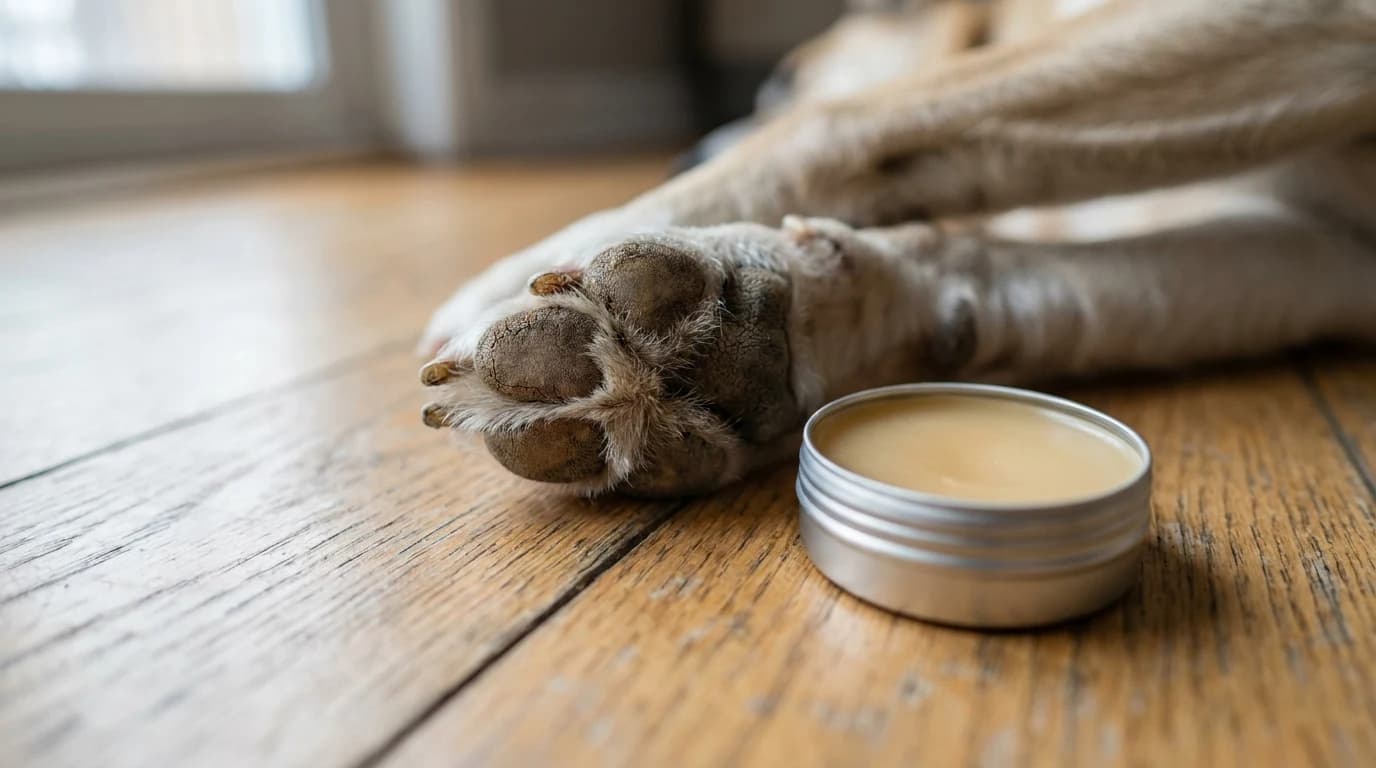
- Before the walk, work petroleum jelly or a vet-approved paw protectant into the pads
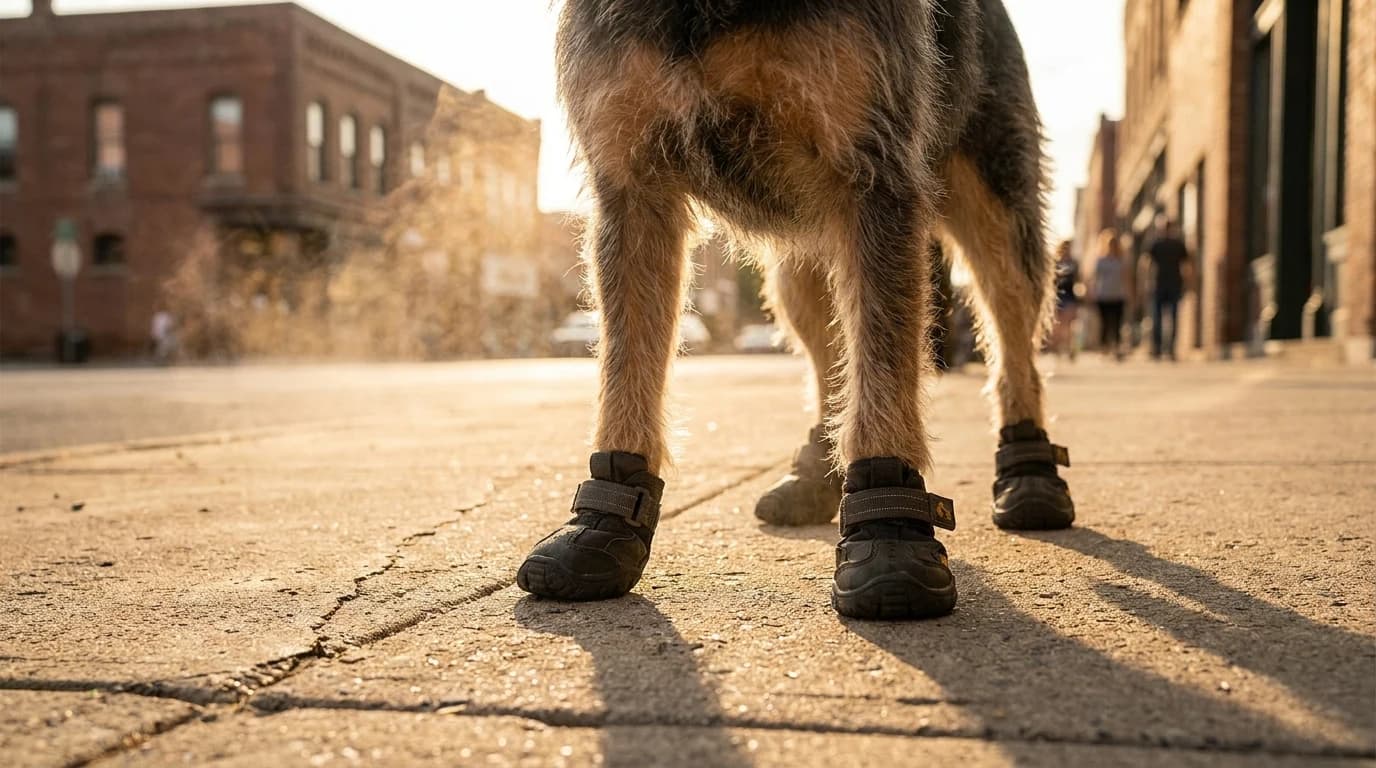
- Use booties for full coverage; stretch-on PawZ Rubber Dog Boots are the no-strap option
- Watch for prancing, shifting weight or biting between the toes, Babyak's signs of packed snow
- After the walk, wash and dry the feet and belly to remove salt and de-icer
- Check for cracked pads or redness between the toes
- Clean up antifreeze spills; the ASPCA calls it lethal
Babyak's calibration: a dog licking a little de-icer off its paws risks, at worst, an upset stomach; eating the product is the real danger. See the paw-protection roundup and what paw balm can fix.
When to go inside, and when to call the vet
| What you see | What it may mean | Do this |
|---|---|---|
| Shivering, lifting paws, heading for the door | Cold and uncomfortable | Go inside, towel dry |
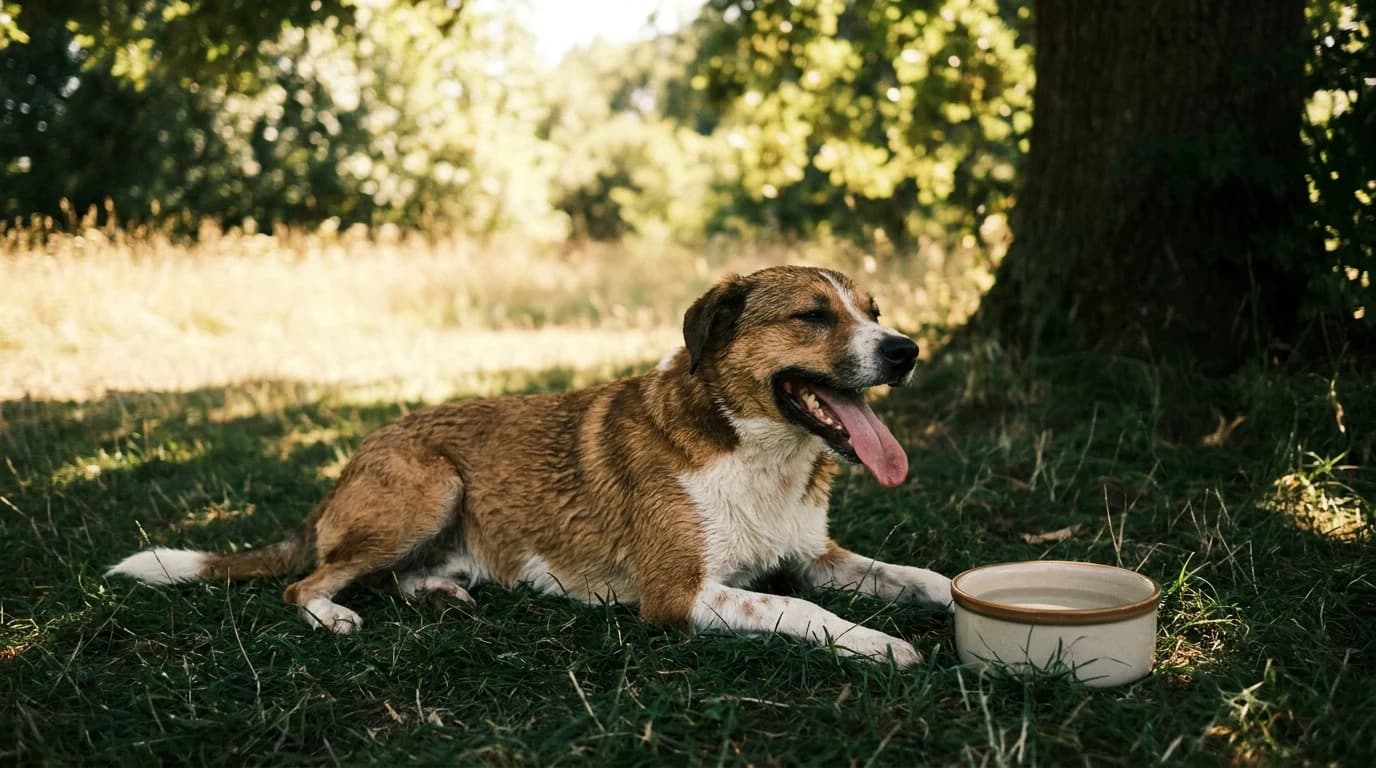
| Slow pulse, shallow breathing, confusion, collapse | Hypothermia, per Merck | Dry the dog, wrap warm (not hot) water bottles around it, call a vet |
| Pale, grey or bluish skin on ears, tail or paws; cold, painful or swollen | Possible frostbite, per VCA | Move somewhere warm, don't rub, seek care |
The trap: Merck warns that shivering is not a reliable sign of hypothermia, so a dog that has stopped shivering is not necessarily warming up. VCA adds that frostbite signs can take several days to appear.
The summer mirror of this post is heatstroke warning signs. Same principle: size, coat and condition set the limit; the thermometer only says when to start watching.
Frequently Asked Questions
- How cold is too cold to walk a dog?
- There is no fixed cut-off for a healthy adult dog on a normal walk; Tufts veterinarian Jonathan Babyak says to watch the dog's cues instead. As rough guides, a Tufts emergency and critical care specialist advises a coat below 15°F for dogs without thick fur, and an AKC-quoted veterinarian suggests keeping outdoor play to 15 to 20 minute sessions once wind chill falls below 20°F. Shorten walks further for small, lean, very young or elderly dogs, and in rain or sleet.
- Is 30 degrees too cold for a dog?
- At about 30°F the Tufts weather safety scale scores small, medium and large dogs alike at 3, which it describes as potentially unsafe depending on breed and time outdoors. That score is for a dog kept outside. A brisk, supervised walk at 30°F is fine for most healthy dogs, with a coat for small or short-coated dogs and a check of the paws afterwards.
- Do dogs need coats in winter?
- Some do. The AKC lists small and toy breeds, hairless and clipped dogs, low-slung breeds like Dachshunds and Corgis, short-coated sporting dogs, lean sighthounds, puppies, seniors and dogs with chronic conditions as the ones that benefit. Large double-coated breeds bred for snow, such as Huskies, Malamutes and Newfoundlands, generally do not need one.
- Can dogs get frostbite on their paws?
- Yes. VCA lists the paws, ears and tail as the most common frostbite sites, and notes a wet dog is more vulnerable. Signs include pale, grey or bluish skin, coldness, pain, swelling and later blistering or darkened skin, and they can take several days to show. Move the dog somewhere warm, don't rub the area, and see a vet.
Research Sources
- Tufts Animal Care and Condition (TACC) scales for dogs, including the weather safety scale — Tufts Center for Animals and Public Policy (chart hosted by the Oregon Veterinary Medical Association)
- How do I protect my dog in winter from extreme cold, ice, salt, and deicers? — Tufts Now, Tufts University
- Winter Hazards for Pets — Cummings School of Veterinary Medicine at Tufts University
- Does My Dog Need a Winter Coat? Choosing the Best Winter Coat for Your Dog — American Kennel Club
- Cold Weather Safety Tips — ASPCA
- What to Do in a Dog or Cat Emergency — Merck Veterinary Manual
- Frostbite in Dogs — VCA Animal Hospitals

Hilly Shore Labs
Editorial teamIndependent product research team behind PawBench. Reviews are grounded in primary veterinary sources, aggregated buyer sentiment, and the lived ownership of Maggie, an Australian Labradoodle.
200+ dog products researched · 1.1M+ Amazon review-aspect mentions analyzed · cites AVMA, FDA, AAFCO, Cornell, WSAVA, AKC, ASPCA.
All product reviews are independently researched. Recommendations are based on published veterinary guidelines, manufacturer specifications, and verified customer feedback. See our editorial standards.