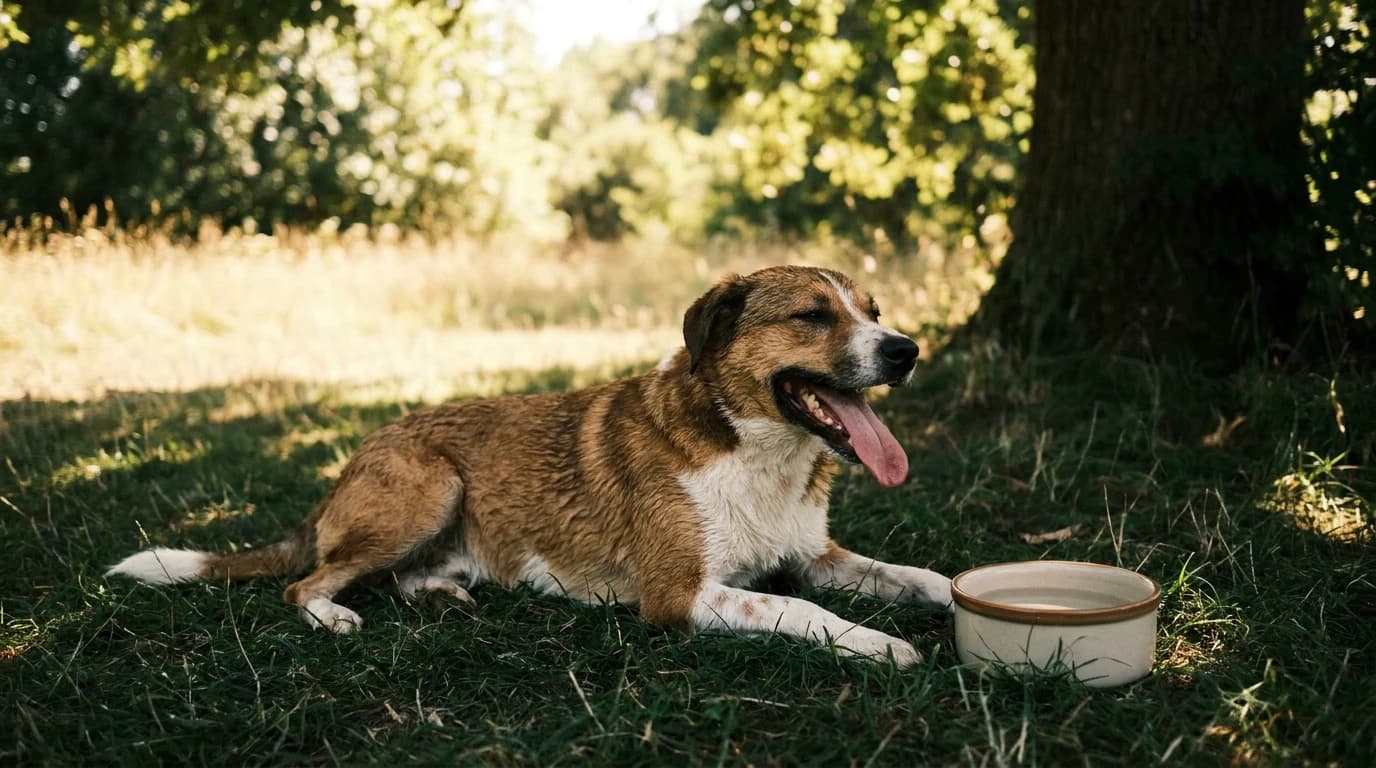
Can All Dogs Swim? Pool, Lake and Beach Water Safety
Quick Answer
No — the paddling reflex is nearly universal but competent swimming is not. Veterinary and kennel-club sources name three structural traits that make it harder: a flat, brachycephalic face, short legs or a long body, and a weight distribution that rides the hindquarters low. There is no Coast Guard certification or buoyancy rating for dog life jackets, so fit is the only test: the dog should float horizontal with the handle strong enough to lift it out. Then match the venue — teach a pool exit, avoid any lake water that is not clear, cool and moving, and pre-hydrate before the beach.
On this page6 sections
Our Verdict
Assume nothing from the paddling reflex. Fit a jacket that floats your dog horizontal with a handle you could actually lift them by, teach the pool exit before the first swim, refuse any lake water that is not clear, cool and moving, and pull the dog out every half hour so neither fresh-water nor salt-water overload has time to build.
Which builds make swimming harder, and what each one does in the water
Only traits named on veterinary-school, AKC or boating-safety pages. Body fat is deliberately absent — see the sourcing note in the article.
| Build | Typical of | What happens in the water | Named by |
|---|---|---|---|
| Flat-faced (brachycephalic) | Pugs, Bulldogs, French Bulldogs | Large head over a very short muzzle; keeping the nose clear means tipping the head back, which drops the rear | Texas A&M College of Veterinary Medicine |
| Short-legged or long-bodied | Dachshunds, Corgis, Basset Hounds | Less paddling reach for the body length being pushed through the water | American Kennel Club |
| Front-heavy weight distribution | Deep-chested, heavy-fronted builds | Weight sits forward of the paddling limbs, so the dog cannot hold a level line unaided | American Kennel Club |
| Any dog on its first swim | Every breed, including retrievers | "Front-wheel drive" — front paws paddle while the hind legs hang down searching for the bottom | American Kennel Club |
| Any dog, tired or surprised | Strong swimmers included | Fatigue and current both end swims; a jacket is the margin, not the propulsion | Cornell Riney Canine Health Center |
How PawBench is paid: we earn an Amazon Associates commission on qualifying purchases. We don’t accept sponsored placements, paid reviews, or free products in exchange for coverage. Picks are ranked on documented owner outcomes and primary-source research, never on commission rate. Read the full methodology.
Almost every dog paddles the moment its feet leave the bottom. That reflex is not swimming, and the gap between the two is where August afternoons go wrong. The veterinary sources agree on which physical traits widen it — and enthusiasm is not one of them.
The paddle reflex is not a stroke
A dog meeting deep water for the first time tends to run in like a cartoon character going off a cliff; the drop-off is a complete surprise. What follows, in the words of the dock-diving trainer quoted in the AKC's guide to teaching a dog to swim, is front-wheel drive — the front paws paddle hard while the back legs hang down still hunting for the bottom. That posture rides the hindquarters low and leaves the nose barely clear.
The failure mode is the first ten seconds, not the tenth minute. A dog with no flotation can panic and gulp water in the few seconds it takes the paddling reflex to organise itself into a stroke.
A jacket fixes the geometry, not the nerve: with the back held level, the dog discovers it has four paddling limbs instead of two.
Build beats enthusiasm
Three structural traits come up repeatedly in the authority material, and all are visible before the dog ever gets wet.
- Head shape. Texas A&M's veterinary college says outright that brachycephalic dogs with large heads and flat faces, like pugs and bulldogs, tend to have the most trouble swimming.
- Leg and body length. The AKC states that short-legged or long-bodied breeds can struggle in the water.
- Weight distribution. The same piece describes breeds whose weight distribution makes swimming well without a vest unrealistic.
The claim nobody could source for us
The most-repeated line in this niche is that lean, low-body-fat breeds sink because muscle is denser than fat. It may well be true; it is close to basic physics. But we could not trace it to a veterinary school, or even to the AKC's own canine hydrotherapy article, which raises buoyancy only as a property of the water and recommends a correctly fitting flotation jacket for every dog regardless. Skull, legs and weight distribution are what the sourced pages name. Treat the body-fat version as plausible folklore.
"Coast Guard approved" is not a thing for dogs
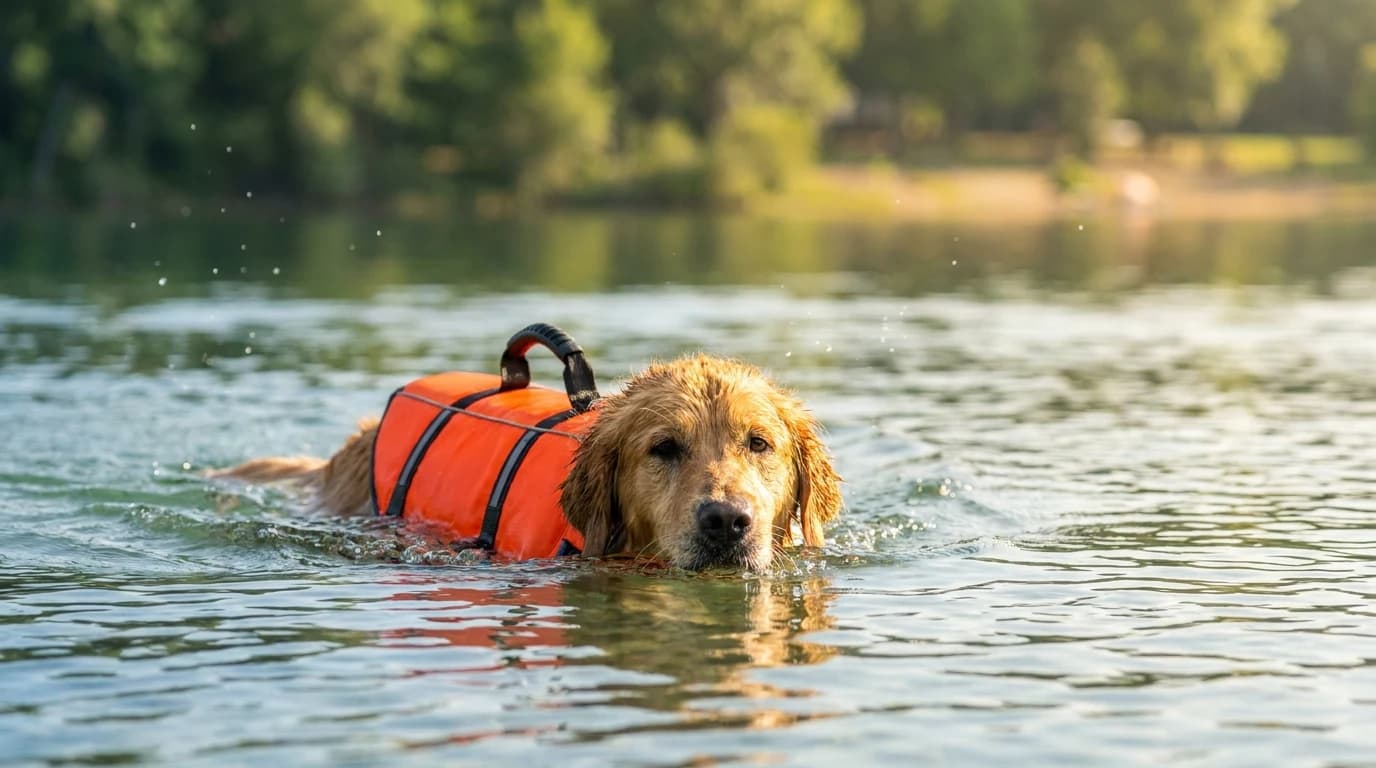
The BoatUS Foundation, which has run comparative dog-jacket tests for years, is blunt: there are no standards in life jacket design for dogs, and the Coast Guard doesn't certify them. Pet jackets carry no buoyancy ratings the way human PFDs do. Any listing claiming certification is claiming something that does not exist for this product category.
With no rating to compare, fit is the entire test — and it is checkable in a minute of shallow water.
| Check | Pass looks like |
|---|---|
| Float posture | The dog rides horizontal, hindquarters no lower than the front legs — not head-up and vertical |
| Lifting handle | Sturdy enough to actually haul the dog out of the water one-handed, not a decorative loop |
| Belly straps | Wide and padded; thin webbing digs in and stretchy fabric makes the dog hard to pull |
| Sizing | Fitted on the actual dog before purchase, by chest girth rather than weight |
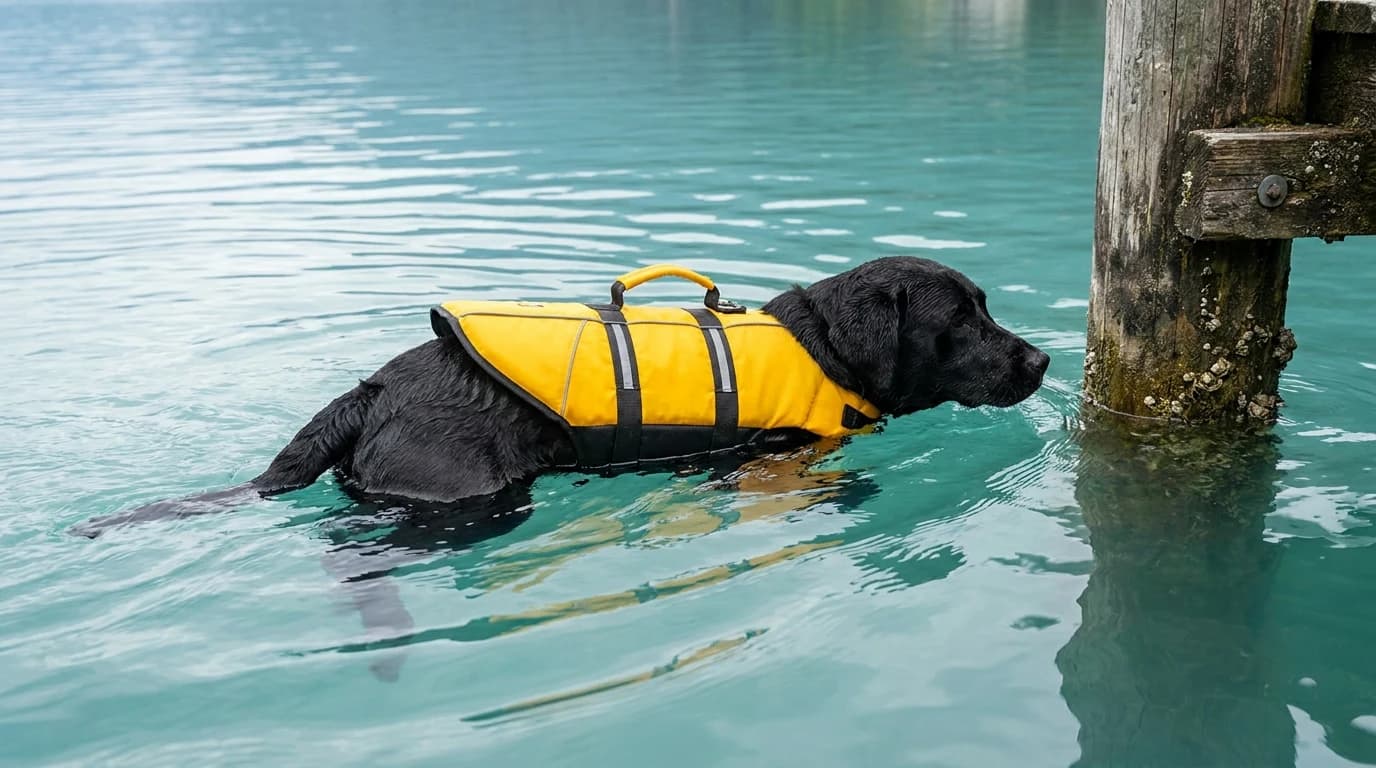
Two jackets in our outdoor and hiking gear lineup are built around that handle-and-posture standard — the Outward Hound Granby Life Vest for pool and lake days, and the reinforced-handle Ruffwear Float Coat for boating and bigger dogs. Neither is certified by anyone, because nothing in this category is.
Pool, lake and ocean fail in different ways
Generic water-safety advice flattens three genuinely different risk profiles into one.
| Venue | The specific hazard | The countermeasure |
|---|---|---|
| Pool | Getting in is easy; getting out is the panic. Dogs do not know the steps exist | Teach the exit deliberately, with a toy or treats, from every corner of the pool |
| Lake or pond | Cyanobacteria — sick and dead within hours, not days | Only clear, cool, moving water. Rinse immediately after any doubtful water |
| Ocean | Salt, plus magnesium's laxative effect, plus stinging debris on the sand | Pre-hydrate before you leave, offer fresh water constantly, walk before driving home |
Blue-green algae is the one that actually kills dogs in numbers. The CDC's guidance on preventing pet illnesses from harmful algal blooms notes that animals can sicken and die within hours of swallowing the toxins, and that a dog which has been in a suspect bloom should be washed with clean water immediately so it cannot lick the cyanobacteria off its coat. Cornell's Riney Canine Health Center sets the rule even tighter: never anything but clear, cool, moving water.
Two water poisonings that look nothing alike
Both are dose problems, and they run in opposite directions.
Too much fresh water — a dog biting at a hose, or repeatedly retrieving from a lake, dilutes its blood sodium. The ASPCA's poison-control write-up on acute water intoxication lists nausea, vomiting, lethargy and a distended abdomen early, progressing to loss of coordination, weakness, seizures and coma.
Too much salt water — the reverse: fluid is pulled out of brain cells, producing tremors, disorientation and seizures. Cornell also notes seawater's magnesium content acts as a strong laxative, which is why a beach dog should be walked for twenty to thirty minutes before it goes in the car.
The countermeasure for both is the same and it is boring. Half-hour breaks out of the water through the day, with fresh water constantly available and drunk before you arrive.
Any neurological sign after a water day is a same-day veterinary call.
The ten minutes after they get out
- Rinse with clean water — pool chemicals, lake debris and salt all come off here.
- Dry the skin folds and the ears. Texas A&M is specific about both; swimming is a common route to ear inflammation and infection, and a dog with recurrent ones is worth asking your vet about a drying cleanser for.
- Check the paws and the ground. If the sand or the deck is too hot for your hand it is too hot for their pads — the same test as hot pavement.
- Offer fresh water, not more swimming. Chlorine at pool concentrations is generally not the problem; a dog drinking pool water instead of its own is.
- Watch for overheating on the walk back. Swimming masks the early signs of heatstroke because the coat is already wet.
None of this needs a certified anything. It needs a jacket that holds the back level, a taught exit, water you would put your own hand in, and a dog that comes out every half hour.
Frequently Asked Questions
- Can all dogs swim?
- Nearly all dogs paddle instinctively, but that is not the same as swimming safely. Texas A&M's veterinary college names brachycephalic dogs with large heads and flat faces, such as pugs and bulldogs, as having the most trouble, and the AKC adds short-legged or long-bodied breeds and dogs whose weight distribution keeps them from riding level. With a correctly fitted flotation device and gradual lessons, most dogs can still get around water safely.
- Are dog life jackets Coast Guard approved?
- No. The BoatUS Foundation states there are no standards in life jacket design for dogs and the Coast Guard does not certify them, which is also why pet jackets carry no buoyancy ratings the way human PFDs do. Any product advertised as Coast Guard approved for a dog is describing a certification that does not exist. Judge the jacket on fit instead: horizontal float, a handle strong enough to lift the dog, and wide padded belly straps.
- How much water is too much when a dog is swimming?
- There is no published volume threshold, so the practical control is time rather than quantity. Cornell's Riney Canine Health Center advises frequent half-hour breaks out of the water across the day. The ASPCA's poison-control guidance describes early water intoxication as nausea, vomiting, lethargy and abdominal distension, progressing to loss of coordination, weakness, seizures and coma — any of which after a water day is a same-day veterinary call.
- How do I know if lake water is safe for my dog?
- Cornell's rule is to allow nothing but clear, cool, moving water. Cyanobacterial blooms can discolour the water or sit on the surface as foam, scum, mats or a paint-like film, and the CDC notes that pets can get very sick and die within hours of swallowing the toxins. If your dog has already been in doubtful water, wash them with clean water straight away so they cannot lick it off their coat, and call a veterinarian at the first sign of stumbling, drooling, vomiting or seizures.
- What should I do right after my dog swims?
- Rinse with clean water to remove chlorine, salt and debris, then dry the dog well — Texas A&M highlights the skin folds and the ears in particular, because swimming is a common route to ear inflammation and infection. Offer fresh drinking water rather than another swim, check the sand or decking against the back of your hand before walking, and at the beach walk for twenty to thirty minutes before driving, since seawater's magnesium content acts as a strong laxative.
Research Sources
- Can All Dogs Swim? How to Teach a Dog to Swim — American Kennel Club
- Keep It Cool This Summer: Tips For Taking Dogs Swimming — Texas A&M College of Veterinary Medicine & Biomedical Sciences
- Summer safety tips — Cornell University College of Veterinary Medicine — Riney Canine Health Center
- Preventing Pet and Livestock Illnesses Caused by Harmful Algal Blooms — U.S. Centers for Disease Control and Prevention
- Treating Acute Water Intoxication in Pets — ASPCA Animal Poison Control Center
- Doggie Life Jacket Tests — BoatUS Foundation for Boating Safety and Clean Water

PawBench Editorial
Published by Hilly Shore LabsPawBench’s editorial team researches dog products from primary veterinary sources, manufacturer specifications and aggregated buyer sentiment, alongside the lived ownership of Maggie, an Australian Labradoodle. We do not run hands-on product tests.
254 dog products scored · 1,160,974 buyer review-aspect mentions aggregated · cites AVMA, FDA, AAFCO, Cornell, WSAVA, AKC, ASPCA.
Recommendations are based on published veterinary guidelines, manufacturer specifications, and verified customer feedback. See our editorial standards.