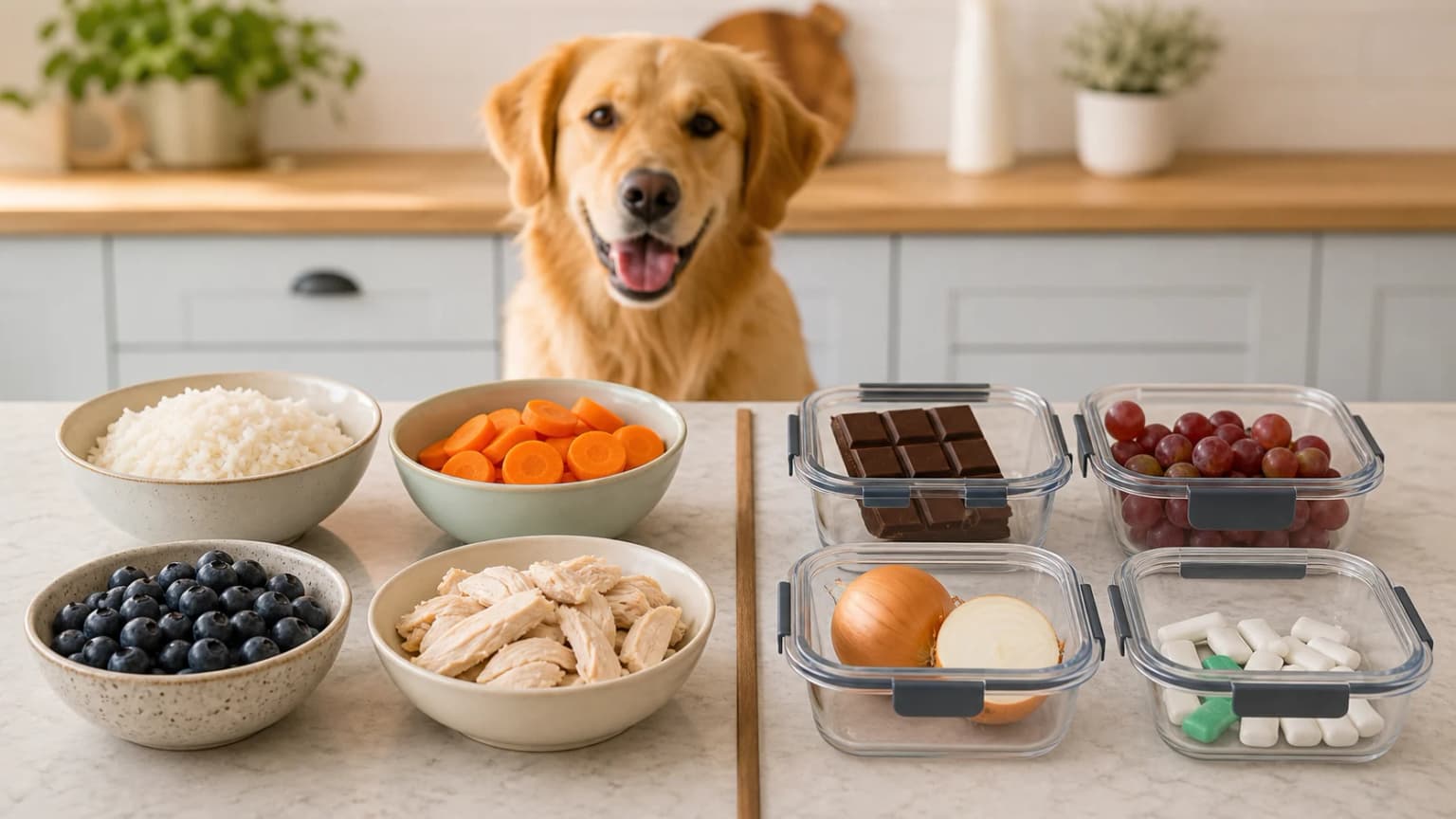
Dog Ate Chocolate? What to Do Now and How Much Is Too Much
Call your vet or a poison line now, with the wrapper, the amount missing and your dog's weight, and do not induce vomiting at home. Danger depends on chocolate type and dog size: baking chocolate and cocoa powder are the most potent, white chocolate the least.
Quick Answer
Call your vet, an emergency clinic, ASPCA Animal Poison Control at (888) 426-4435 or Pet Poison Helpline at (855) 764-7661 now, with the wrapper, an estimate of how much is missing, and your dog's weight. Do not make your dog vomit at home. Darker means worse: by the Merck Veterinary Manual's figures, about half an ounce of dark chocolate can reach the dose for mild signs in a 10 lb dog, against about 1.4 ounces of milk chocolate.
On this page4 sections
Our Verdict
Treat any chocolate raid as a phone call, not a wait-and-see. Signs usually start 6 to 12 hours after eating, so a normal-looking dog tells you little, and a vet can only decontaminate early. The ounce table here shows why type matters so much: cocoa powder and baking chocolate reach dangerous doses in fractions of an ounce, while milk chocolate takes several ounces for a mid-sized dog. Use it to understand the risk, then let the vet or poison line make the call.
How much stimulant each chocolate carries
Methylxanthine content (theobromine plus caffeine) as listed by the Merck Veterinary Manual. Actual content varies by bean and brand. These per-ounce figures drive the dose table in this post.
| Chocolate type | Per gram | Per ounce | What it means |
|---|---|---|---|
| Cocoa powder | 28.5 mg | 807 mg | The most concentrated form on Merck's list |
| Unsweetened baking chocolate | 15.5 mg | 440 mg | Fractions of an ounce matter for a small dog |
| Semisweet and sweet dark | 5.3–5.6 mg | 150–160 mg | High-percentage bars can run higher; Merck puts a 65% bar near 286 mg/oz |
| Milk chocolate | 2.3 mg | 64 mg | The most common Halloween candy, and the least potent dark-brown option |
| White chocolate | 0.04 mg | 1.1 mg | Merck calls it a negligible source; fat can still trigger pancreatitis |
How PawBench is paid: we earn an Amazon Associates commission on qualifying purchases. We don’t accept sponsored placements, paid reviews, or free products in exchange for coverage. Picks are ranked on documented owner outcomes and primary-source research, never on commission rate. Read the full methodology.
Do these three things before you read anything else:
- Call your vet, an emergency clinic, or a poison line now. ASPCA Animal Poison Control is (888) 426-4435, and the ASPCA says a consultation fee may apply. Pet Poison Helpline is (855) 764-7661, and it states a $99 per-incident fee.
- Have three facts ready: what your dog ate (keep the wrapper), roughly how much is missing, and your dog's weight. Pet Poison Helpline asks for exactly these, and says a rough estimate is fine.
- Do not make your dog vomit or give a home remedy. Pet Poison Helpline's emergency instructions say not to induce vomiting without consulting a vet or the helpline, and not to give home antidotes.
Why speed matters: Pet Poison Helpline puts it plainly: the sooner an exposure is addressed, the easier, less expensive and safer it is to treat. The Merck Veterinary Manual adds that early decontamination can decrease how severe the signs get.
Call even if the numbers below look reassuring; the table helps you understand the answer, it does not replace it.
How much chocolate is dangerous: the ounces, by dog weight
The toxic compounds are methylxanthines: theobromine plus some caffeine. Merck gives three dose bands: mild signs (vomiting, diarrhea, heavy drinking) may occur at 20 mg/kg, cardiotoxic effects at 40–50 mg/kg, and seizures at 60 mg/kg or more. Merck also lists how much methylxanthine each chocolate type carries per ounce (summarized in the panel above). Crossing the two gives the ounces below.
| Chocolate type (Merck mg per oz) | Dog weight | Mild signs (20 mg/kg) | Heart effects (40 mg/kg) | Seizures (60 mg/kg) |
|---|---|---|---|---|
| Milk (64) | 10 lb | 1.4 oz | 2.8 oz | 4.2 oz |
| Milk (64) | 30 lb | 4.2 oz | 8.5 oz | 12.7 oz |
| Milk (64) | 60 lb | 8.5 oz | 17.0 oz | 25.5 oz |
| Semisweet or dark (160) | 10 lb | 0.5 oz | 1.1 oz | 1.7 oz |
| Semisweet or dark (160) | 30 lb | 1.7 oz | 3.4 oz | 5.1 oz |
| Semisweet or dark (160) | 60 lb | 3.4 oz | 6.8 oz | 10.2 oz |
| Baking, unsweetened (440) | 10 lb | 0.2 oz | 0.4 oz | 0.6 oz |
| Baking, unsweetened (440) | 30 lb | 0.6 oz | 1.2 oz | 1.8 oz |
| Baking, unsweetened (440) | 60 lb | 1.2 oz | 2.4 oz | 3.7 oz |
| Cocoa powder (807) | 10 lb | 0.1 oz | 0.2 oz | 0.3 oz |
| Cocoa powder (807) | 30 lb | 0.3 oz | 0.6 oz | 1.0 oz |
| Cocoa powder (807) | 60 lb | 0.6 oz | 1.3 oz | 2.0 oz |
The arithmetic, so you can check it: ounces = threshold (mg/kg) × dog weight in kg ÷ mg per ounce, where kg = lb × 0.4536. Example: a 30 lb dog is 13.6 kg; 13.6 × 20 = 272 mg; 272 ÷ 64 = 4.2 oz of milk chocolate for mild signs.
Where we leaned conservative:
- Dark chocolate uses 160 mg/oz, the top of Merck's 150–160 range, which gives the smaller ounce figure.
- Heart effects use 40 mg/kg, the low end of Merck's 40–50 band.
- Every figure is rounded down, never up.
Read this before trusting the table: This is an estimate, and it does not replace a vet's judgement. Merck says severe signs and death may occur at much lower doses, that individual sensitivity varies, and that methylxanthine content varies between cocoa beans and brands. Bars labelled by cocoa percentage can run higher than "dark": Merck's worked example puts a 65% bar at about 286 mg per ounce.
White chocolate is the exception. Merck lists it at 1.1 mg per ounce and calls it a negligible source, so the poisoning maths barely applies. The fat still matters: Merck notes the high fat content of chocolate products may trigger pancreatitis in susceptible dogs.
What to watch for, and when
- First 6–12 hours: Merck says signs usually appear in this window. Early signs include heavy drinking, vomiting, diarrhea, a swollen belly and restlessness.
- As it progresses: hyperactivity, frequent urination, wobbliness, stiffness, tremors and seizures, alongside a racing or irregular heart.
- Why it lingers: theobromine has a half-life of 17.5 hours in dogs, according to Merck, and signs can persist for up to 72 hours in severe cases.
Pet Poison Helpline makes the same point from the owner's side: signs may not appear for several hours, so a dog who seems fine may still need veterinary care. For general stomach upset that is not linked to a toxin, our guide to vomiting and diarrhea and when to call the vet covers the thresholds.
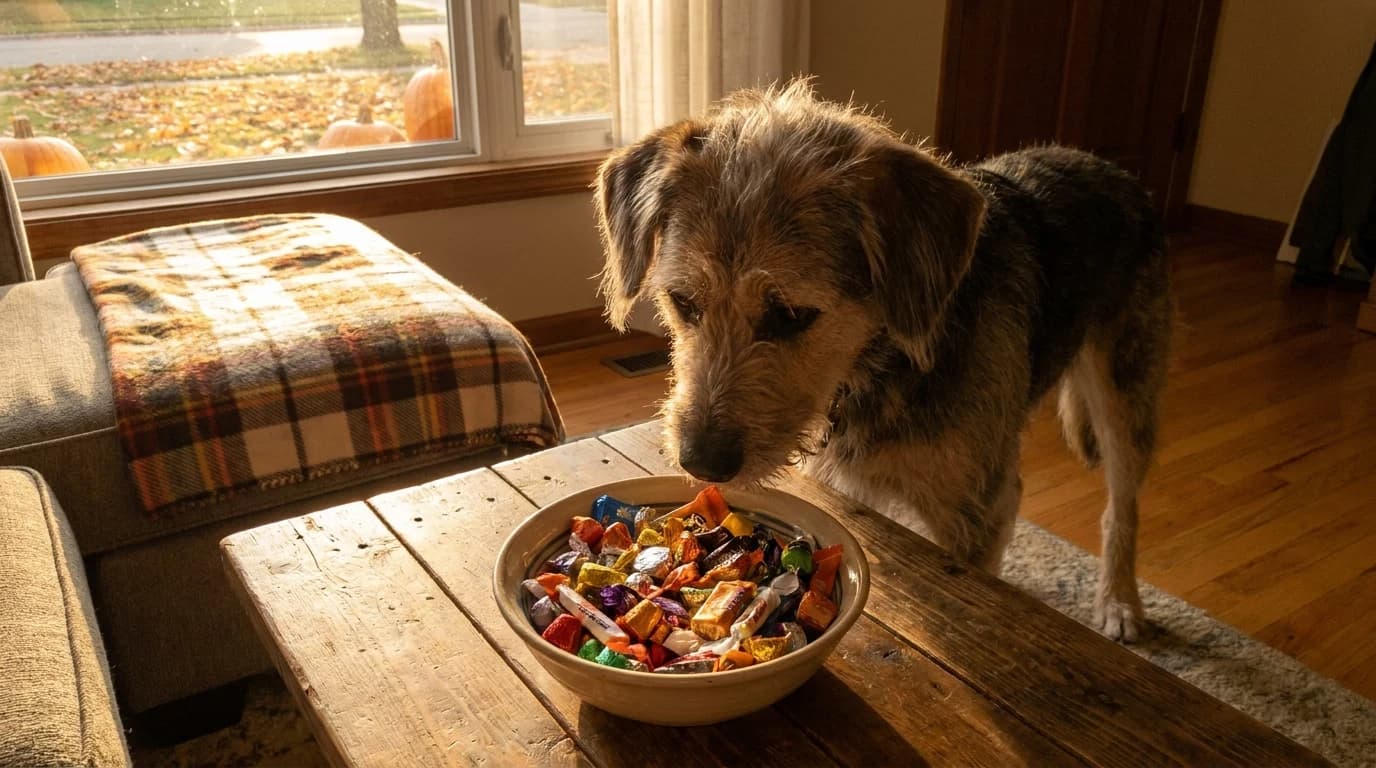
Halloween: the hazards hiding in the same bowl
Pet Poison Helpline says calls rise the week of Halloween, chocolate ingestions first. A candy raid is rarely only chocolate.
Wrappers and lollipop sticks
Pet Poison Helpline warns that foil, cellophane wrappers and lollipop sticks can cause a life-threatening bowel obstruction that may need surgery. Count the wrappers left against what was in the bag, and tell your vet about any shortfall. Signs to report: vomiting, poor appetite or lethargy, not pooping, or straining.
Sugar-free candy and gum (xylitol)
The FDA says xylitol shows up in sugar-free candy, mints, chocolate bars and gum, and can drop a dog's blood sugar sharply within 10 to 60 minutes. Pet Poison Helpline adds keto and diabetic-friendly candy to the list, and says to check labels for "xylitol", "birch sugar", "birch extract" or "wood sugar".
Raisins
The ASPCA says grapes and raisins can lead to kidney damage in dogs. Pet Poison Helpline says there is no known safe amount, and flags chocolate-covered raisins as two toxins in one bite. For the rest of the pantry, see our list of human foods safe or toxic for dogs and the Thanksgiving plate guide.
What the vet will actually do
There is no quick blood test that confirms chocolate poisoning. Merck says diagnosis rests on the history of exposure and the signs, which is why the wrapper and your weight estimate matter.
- Decontamination, if it is recent. For a dog with no signs yet, Merck says a vet should consider inducing vomiting when the chocolate was eaten recently, for example within about two hours. That is a clinical decision: the vet chooses the drug and the dose.
- Activated charcoal, carefully. Merck says the decision to give charcoal should be carefully considered, because chocolate already dehydrates dogs.
- Treating the signs. Medication to control vomiting, tremors, seizures and abnormal heart rhythms, plus IV fluids that help flush methylxanthines out in urine.
- Monitoring. Heart monitoring, temperature management, and in dogs that cannot walk, a urinary catheter so the toxins are not reabsorbed from the bladder.
Before next Halloween: Keep both poison-line numbers in your phone and a basic kit where you can find it. A pet first-aid kit like the Adventure Medical Kits Trail Dog kit is for cuts and scrapes; it does not treat poisoning. For chocolate, the phone call is the first-aid step.
Frequently Asked Questions
- My dog ate chocolate but seems fine. Can I wait?
- No. The Merck Veterinary Manual says signs usually appear 6 to 12 hours after ingestion, and Pet Poison Helpline says a dog who seems fine may still need veterinary care. Call now: any decision to decontaminate is most useful early, and Merck describes inducing vomiting as something a vet considers for recent exposures, roughly within two hours.
- Should I make my dog throw up with hydrogen peroxide?
- Do not do it on your own. Pet Poison Helpline's emergency instructions say not to induce vomiting without consulting a vet or the helpline, and not to give home antidotes. Whether to make a dog vomit, and with what, is a clinical decision for the vet.
- Is white chocolate safe for dogs?
- It is far less toxic, not harmless. Merck lists white chocolate at 1.1 mg of methylxanthines per ounce and calls it a negligible source, but also notes the high fat content of chocolate products may trigger pancreatitis in susceptible dogs. Check the candy for raisins, nuts or xylitol too.
- How long does chocolate poisoning last in dogs?
- Merck gives theobromine a half-life of 17.5 hours in dogs and says clinical signs may persist for up to 72 hours in severe cases, which is why treated dogs are often monitored for a while rather than sent straight home.
Research Sources
- Chocolate Toxicosis in Animals — Merck Veterinary Manual (Cristine Hayes, DVM, ASPCA Animal Poison Control Center)
- Emergency instructions and fee — Pet Poison Helpline
- Halloween Pet Safety: Dangers for Dogs and Cats — Pet Poison Helpline
- Chocolate — Pet Poison Helpline
- ASPCA Poison Control — ASPCA
- People Foods to Avoid Feeding Your Pets — ASPCA
- Paws Off Xylitol; It's Dangerous for Dogs — U.S. Food and Drug Administration

PawBench Editorial
Published by Hilly Shore LabsPawBench’s editorial team researches dog products from primary veterinary sources, manufacturer specifications and aggregated buyer sentiment, alongside the lived ownership of Maggie, an Australian Labradoodle. We do not run hands-on product tests.
331 dog products scored · 1,222,724 buyer review-aspect mentions aggregated · cites AVMA, FDA, AAFCO, Cornell, WSAVA, AKC, ASPCA.
Recommendations are based on published veterinary guidelines, manufacturer specifications, and verified customer feedback. See our editorial standards.