Can Dogs Eat Turkey? A Thanksgiving Plate, Dish by Dish
Quick Answer
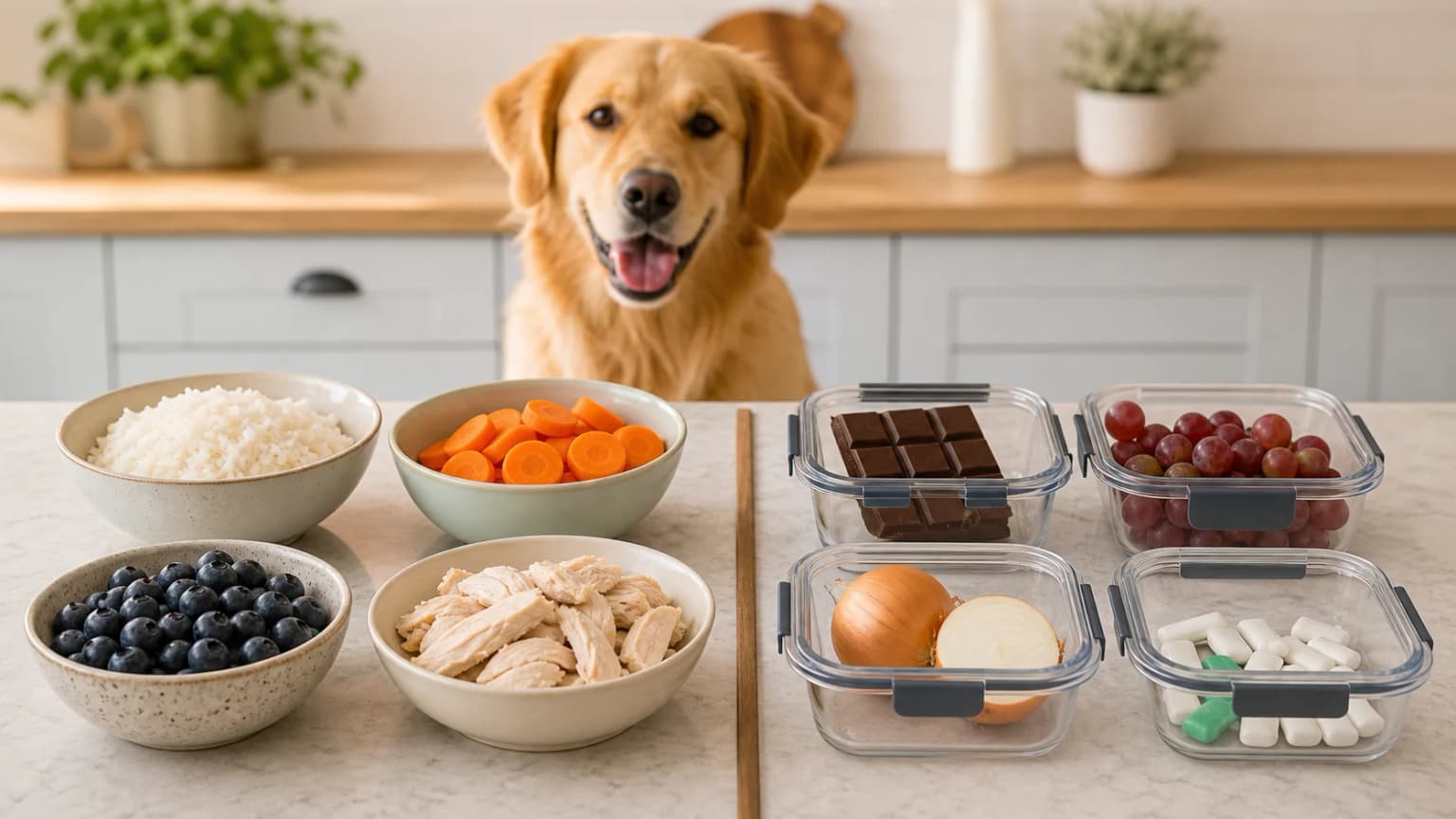
Yes, in small amounts. Plain, fully cooked, boneless white turkey meat with the skin removed is a fine treat, according to the AKC and ASPCA. Skip the skin, drippings and gravy (fat linked to pancreatitis), every cooked bone (splinters), stuffing (onion and garlic), and any sugar-free dessert (possible xylitol). If your dog already ate something risky, call your vet or ASPCA Animal Poison Control before trying anything at home.
On this page6 sections
Our Verdict
Share turkey the boring way: a few bites of plain, boneless white meat, pulled before anyone seasons it. Keep skin, drippings, gravy, stuffing, ham, bones, dough and desserts away from your dog, and treat the trash can as part of the table. If you want them included, set aside plain turkey, sweet potato and green beans, mix a little into their dinner or a lick mat, and tell guests to ask first. If something goes wrong, call before you treat; onion and garlic damage can surface days later.
LickiMat Classic Soother Slow Feeder 4.4 The simple way to make a spoonful of plain holiday food last. | KONG Wobbler Treat Dispensing Toy 4.5 A food puzzle that keeps a larger dog busy through dinner. | KONG Classic (Large) 4.6 The stuffable rubber toy to freeze a plain holiday portion into. | Outward Hound Fun Feeder Slo Bowl (Large) 4.7 A maze bowl that stretches out a dinner with plain extras mixed in. | AWOOF Pet Snuffle Mat 4.2 Scatter kibble in the fleece for a sniffing job during dinner. | Carlson Extra Wide Walk-Through Pet Gate with Small Pet Door 4.4 Keeps a counter-surfer out of the kitchen while the meal is cooking. | |
|---|---|---|---|---|---|---|
| Price | $8.99Buy on Amazon | $24.91Buy on Amazon | $13.96Buy on Amazon | $10.35Buy on Amazon | $11.98Buy on Amazon | $44.99Buy on Amazon |
| Pros |
|
|
|
|
|
|
| Cons |
|
|
|
|
|
|
| Material | Food-grade TPR rubber | Food-safe hard polymer | Natural rubber | BPA/PVC/phthalate-free plastic | Fleece strips | Steel, pressure mount |
| Size | 8 x 8 inches | Large (dogs 25+ lbs) | — | — | — | — |
| Freezer Safe | Yes | — | — | — | — | — |
| Dishwasher Safe | Yes | Top rack only | — | — | — | — |
| Capacity | — | Up to 1 cup of kibble | — | 4 cups | — | — |
| Type | — | — | Chew / treat dispenser | — | — | — |
| Size Options | — | — | XS to XXL | — | — | — |
| Diameter | — | — | — | 11 in | — | — |
| Washable | — | — | — | — | Machine (manufacturer) | — |
| Height | — | — | — | — | — | 30 inches |
| Width Range | — | — | — | — | — | 29.5 to 36.5 inches |
* Prices are approximate and may vary. Please check the latest price on Amazon.
What the risky ingredient does, and when it shows
The hidden ingredients behind most of the holiday-table rows, with the timing the source gives. Sources are the ASPCA, FDA and Merck Veterinary Manual pages cited below.
| Ingredient | Where it hides | What it does | When it shows |
|---|---|---|---|
| Xylitol | Sugar-free pies, cakes and some nut butters | Insulin surge, low blood sugar; liver damage possible | Low blood sugar in 10 to 60 minutes (FDA) |
| Onion and garlic | Stuffing, gravy, onion soup mix | Red blood cell damage and anemia | Several days after eating (Merck) |
| Raw yeast dough | Rolls left to rise | Stomach bloats; yeast makes alcohol | Alcohol is absorbed rapidly (ASPCA) |
| Grapes and raisins | Stuffing, cranberry sauce, baked goods | Kidney damage | Not stated; call right away (ASPCA) |
| Chocolate | Pies, cookies, candy | Vomiting, abnormal heart rhythm, tremors, seizures | Not stated; darker chocolate is riskier (ASPCA) |
| Fat | Skin, drippings, gravy, ham | Stomach upset; can trigger pancreatitis | Not stated; vomiting plus belly pain after rich food suggests it (Merck) |
Timing is what each source states, not a guarantee. Any of these warrants a call to your vet or poison control, even if your dog seems fine.
How PawBench is paid: we earn an Amazon Associates commission on qualifying purchases. We don’t accept sponsored placements, paid reviews, or free products in exchange for coverage. Picks are ranked on documented owner outcomes and primary-source research, never on commission rate. Read the full methodology.
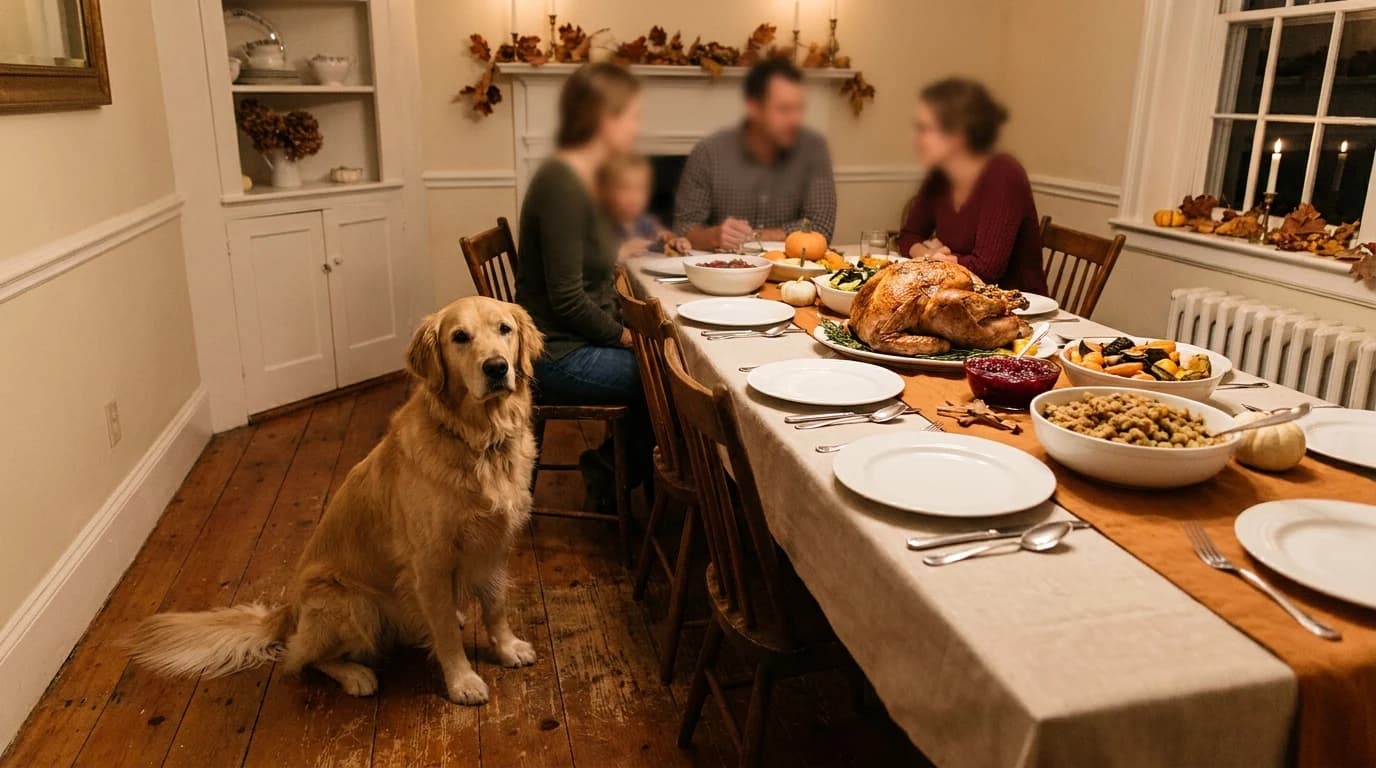
Yes, dogs can eat turkey: a few bites of plain, cooked, boneless white meat with the skin pulled off. The AKC is clear that turkey itself isn't toxic; the problem is how holiday turkey gets cooked. Butter, skin, drippings, onion-packed stuffing and the bones are where the trouble is. The rest of the table is a mix, and it pays to go dish by dish.
Plate rule: plain, cooked, boneless and small. If a bite fails any one of those four words, it stays on your plate.
If you want the general list of safe and toxic people foods, see our human foods safe vs. toxic guide. This page covers one meal: the holiday table.
The whole table, dish by dish
| Dish | Can your dog have it? | The specific risk | Source |
|---|---|---|---|
| Plain white turkey meat | Yes, a few bites | Only if boneless, fully cooked and unseasoned | ASPCA |
| Turkey skin and drippings | No | Fat and butter can trigger pancreatitis | AKC |
| Cooked turkey bones | No | Brittle; can splinter, choke, obstruct or pierce the gut | AKC |
| Stuffing | No | Onion and garlic damage red blood cells | AKC |
| Gravy | Skip it | Fatty, and bouillon adds a lot of sodium | K-State, ASPCA |
| Mashed potatoes | Only if plain | Butter, milk and salt are the issue, not the potato | AKC |
| Ham | Not advisable | High in sodium and fat | AKC |
| Sweet potatoes, green beans | Yes, plain | Fine mixed into their dinner; skip the butter | ASPCA |
| Cranberry sauce | A taste at most | Sugar; some recipes add raisins or brandy | AKC |
| Raw rolls or bread dough | No | Rises in the stomach and produces alcohol | ASPCA |
| Sugar-free pie or dessert | No | May contain xylitol | FDA |
| Chocolate desserts | No | Methylxanthines; darker means worse | ASPCA |
| Corn on the cob | Kernels only | Swallowed cobs can cause fatal gut complications | K-State |
| Turkey string and foil | No | Smell like food, get eaten from the trash | Purdue |
Turkey, part by part
According to the AKC's turkey guidance, skin carries the fat and the butter or oil it was roasted in, and seasonings irritate the stomach. The ASPCA adds that raw or undercooked turkey can carry salmonella.
Fine in small amounts:
- White meat, cooked through, no skin
- Meat picked clear of onion, garlic and other roasting aromatics
- A portion sized like a treat, not a meal
Keep off the plate and the floor:
- Skin, fat trimmings and pan drippings
- Any cooked bone, including the wishbone and neck
- Dark meat soaked in gravy or butter
Fat is the quiet risk. The Merck Veterinary Manual lists dietary indiscretion as a common risk factor for pancreatitis in dogs, and a Kansas State veterinarian warns that gravy, dark meat, ham, butter and drippings can cause stomach upset and, in some cases, fatal pancreatitis.
Four hazards hiding inside side dishes
You can't see these in the serving bowl.
- Onion and garlic in stuffing and gravy. The Merck Veterinary Manual says concentrated forms such as powders and dry onion soup mixes are the usual culprits in dogs, garlic is 3 to 5 times more toxic than onion, and signs of anemia appear several days after eating. A dog that seems fine that night isn't yet in the clear.
- Xylitol in sugar-free desserts. The FDA notes that bakers use xylitol in cakes, muffins and pies, and that it can drop a dog's blood sugar within 10 to 60 minutes.
- Raisins in stuffing, sauces and baked goods. The AKC points out that some cranberry sauce recipes include raisins or currants, and the ASPCA links grapes and raisins to kidney damage.
- Raw yeast dough. The ASPCA warns that dough can bloat and potentially twist the stomach, and that the yeast produces alcohol. Know the signs of bloat.
Recipe check: ask the cook before sharing anything mixed. A plain-looking side can carry onion powder, butter or a sugar substitute.
The ones that aren't food
- Turkey string and foil. Purdue's veterinary college warns these smell like food and get eaten from the trash.
- Corn cobs. K-State notes swallowed corncobs can cause fatal gastrointestinal complications. Kernels off the cob are fine in small amounts, per the AKC.
- Carcass and bones in the bin. The ASPCA advises emptying the trash throughout the day.
Trash rule: carve, bag, and take it outside the same hour. A lidded can in the kitchen is not dog-proof on a busy day.
If your dog counter-surfs, K-State's veterinarian suggests a baby gate or other barrier across the kitchen. A pressure-mounted doorway gate such as the Carlson Extra Wide Walk-Through Pet Gate does that job.
Give them their own holiday plate
The ASPCA suggests giving your dog a small feast of their own, then stuffing it into a puzzle toy. Here's how:
- Set aside plain food first. A few pieces of turkey breast, cooked sweet potato and green beans, before anything is seasoned.
- Mix it into their normal dinner. Treat portions, not a second meal.
- Make it last. Put it in something that takes work, so they are busy while you eat (table below).
- Tell your guests. The AKC suggests making sure visitors and children ask before feeding.
| Their own holiday treat | Fill it with | Best for |
|---|---|---|
| LickiMat Classic Soother | Mashed plain sweet potato, frozen | Any size; a long, calm lick |
| KONG Classic (Large) | Plain turkey bits in wet food, frozen | Strong chewers |
| KONG Wobbler | Their kibble plus a few green beans | Dogs over 25 pounds |
| Outward Hound Fun Feeder Slo Bowl | Their normal dinner with the extras mixed in | Fast eaters |
| AWOOF Pet Snuffle Mat | Kibble scattered into the fleece | Sniffers and smaller dogs |
Filling check: if you reach for peanut butter, read the label. The FDA lists some nut butters among products that may contain xylitol. More options in our puzzle toy guide.
If they already ate something
- Note what and how much. The ASPCA asks you to record the amount eaten.
- Call before you treat. Phone your vet or ASPCA Animal Poison Control at (888) 426-4435; a consultation fee may apply.
- Don't make them vomit on your own. The ASPCA warns home-induced vomiting can be dangerous; remedies like salt or oil cause harm of their own.
- Watch for delayed signs. Vomiting and belly pain after a fatty meal can point to pancreatitis, per Merck. See when to call the vet.
Timing: xylitol acts within the hour, while onion and garlic damage can take days to show. Call either way.
Frequently Asked Questions
- Can dogs eat turkey skin?
- No. The AKC advises removing turkey skin because it holds fat plus the butter or oil used in roasting, and high fat can cause pancreatitis. Seasonings on the skin can also irritate the stomach.
- Can dogs eat mashed potatoes?
- Only plain ones. The AKC says mashed potatoes are fine if they contain no butter, milk, salt or seasonings. Holiday mashed potatoes usually have all of these, so the AKC lists them among Thanksgiving foods to avoid sharing.
- Can dogs eat ham?
- The AKC calls it not advisable. Store-bought ham is high in sodium, and its fat content can lead to pancreatitis. A tiny sliver is unlikely to hurt, but a plain dog treat is the better choice.
- What should I do if my dog ate a cooked turkey bone?
- Call your veterinarian for advice rather than waiting it out. The AKC warns cooked poultry bones are brittle and can cause mouth injuries, choking, obstruction and perforation. Do not try to make your dog vomit without veterinary guidance; the ASPCA warns home-induced vomiting can be dangerous.
- Can dogs eat stuffing?
- No. Stuffing usually contains onion and garlic. The Merck Veterinary Manual notes that concentrated forms such as powders and dry soup mixes cause most cases in dogs, and signs of anemia can take several days to appear.
Research Sources
- Thanksgiving Safety Tips — ASPCA Animal Poison Control Center
- People Foods to Avoid Feeding Your Pets — ASPCA Animal Poison Control Center
- Is It Ever Safe to Induce Vomiting? — ASPCA
- ASPCA Poison Control — ASPCA
- Can Dogs Eat Turkey? Holiday Safety Tips for Pet Owners — American Kennel Club
- Which Thanksgiving Foods Can I Give My Dog? Which Should I Avoid? — American Kennel Club
- Can Dogs Eat Potatoes? — American Kennel Club
- Can Dogs Eat Ham? — American Kennel Club
- Can Dogs Eat Cranberries? — American Kennel Club
- Paws Off Xylitol; It's Dangerous for Dogs — U.S. Food and Drug Administration
- Garlic and Onion (Allium spp) Toxicosis in Animals — Merck Veterinary Manual
- Pancreatitis in Dogs and Cats — Merck Veterinary Manual
- Can Dogs Eat Corn? — American Kennel Club
- K-State veterinarian shares Thanksgiving pet safety reminders — Kansas State University College of Veterinary Medicine
- Your Pets Will Thank You If You Follow These Thanksgiving Pet Tips — Purdue University College of Veterinary Medicine

PawBench Editorial
Published by Hilly Shore LabsPawBench’s editorial team researches dog products from primary veterinary sources, manufacturer specifications and aggregated buyer sentiment, alongside the lived ownership of Maggie, an Australian Labradoodle. We do not run hands-on product tests.
254 dog products scored · 1,160,974 buyer review-aspect mentions aggregated · cites AVMA, FDA, AAFCO, Cornell, WSAVA, AKC, ASPCA.
Recommendations are based on published veterinary guidelines, manufacturer specifications, and verified customer feedback. See our editorial standards.