Pet-Safe Ice Melt: What the Bag Does and Doesn't Promise
Quick Answer
Pet-safe ice melt is not safe to eat. Read the ingredients, keep bags and treated snow away from your dog, use a tolerated paw barrier, and wash and dry feet after walks. EPA no longer certifies ice melts under Safer Choice; older labeled products may remain for sale.
On this page4 sections
Our Verdict
Choose by ingredients and exposure, not the front-panel promise. A tolerated barrier and consistent cleanup are the useful paw-protection tools. Keep bags inaccessible and call a veterinarian after suspected ingestion; no boot, wax or first-aid kit changes the contents of the melt.
PawZ Rubber Dog Boots (Medium, 12-Pack) Owner rating3.5 Short sidewalk outings | Ruffwear Grip Trex Dog Boots Owner rating4.1 Rougher, longer walking routes | Musher's Secret Paw Wax Owner rating4.7 Dogs that reject boots | Adventure Medical Kits — Me & My Dog Medical Kit Owner rating4.7 Away-from-home injury preparation | |
|---|---|---|---|---|
| Price | $20.99Buy on Amazon | $49.99Buy on Amazon | $24.99Buy on Amazon | $58.99Buy on Amazon |
| Pros |
|
|
|
|
| Cons |
|
|
|
|
| Best for | Short sidewalk outings | Rougher, longer walking routes | Dogs that reject boots | Away-from-home injury preparation |
| Key feature | Natural rubber; 12 boots | Vibram outsole; sold in pairs | Natural food-grade waxes; 200 g | Bandages and canine first-aid guide |
| Trade-off | Remove after outings; rubber is a replaceable wear item | Measure each paw; two pairs cover four feet | A wax barrier still needs post-walk cleanup | No treatment for swallowed ice melt |
* Prices are approximate and may vary. Please check the latest price on Amazon.
Three exposures, three different decisions
Ingredient risks are compared in the body below. This matrix separates prevention from ingestion response using ASPCA and ASPCApro guidance.
| Exposure | Main concern | First step | What gear cannot do |
|---|---|---|---|
| Walking across treated pavement | Skin irritation; trapped salt between toes | Use a tolerated barrier, then clean and dry feet | Boots do not keep the dog from drinking a puddle |
| A couple of licks from paws or ground | Usually limited drooling or digestive upset (ASPCApro) | Remove residue; ask your vet about symptoms or uncertain exposure | Wax is not a substitute for removing residue |
| Eating pellets from a bag or treated snow | Larger ingestion can affect electrolytes or injure the digestive tract | Contact your vet or poison control with the label | First-aid supplies are not a poisoning treatment |
Risk depends on the product, amount and animal. More than a casual lick, significant vomiting or neurological signs need immediate veterinary assessment (ASPCApro).
How PawBench is paid: we earn an Amazon Associates commission on qualifying purchases. We don’t accept sponsored placements, paid reviews, or free products in exchange for coverage. Picks are ranked on documented owner outcomes and primary-source research, never on commission rate. Read the full methodology.
A friendlier label still needs an ingredient check
Start with the back of the bag. The ASPCA's winter ice-melt guidance says products marketed as pet-friendly commonly contain urea or magnesium chloride, but even those can upset a dog's stomach. The front-panel promise does not tell you what happened on a neighbor's sidewalk or how much your dog swallowed.
There is also an easy certification trap. EPA's current Safer Choice criteria page says the agency will no longer certify ice-melt products because their use, especially overuse, can harm pets and the environment. EPA retains the old criteria while previously labeled products remain for sale. An older logo is not evidence that EPA is currently approving new ice melts.
Bag rule: read the ingredients and directions; keep the dog away from the contents even when the bag says pet-safe.
When comparing bags, ask three questions:
- What is the main ingredient? Get a chemical name, not just a paw-shaped logo.
- Are other ingredients disclosed? Keep the full label available if you need to call a vet.
- How does the maker say to apply it? Use the directions for that exact product rather than copying a neighbor's scoop size.
This is a purchasing check, not a legal verdict on every use of the words pet-safe. The useful question is narrower: does the label give you enough information to manage contact and accidental ingestion?
Read the ingredient, not the pellet color
The ASPCA identifies sodium, potassium, calcium and magnesium chlorides as common ice-melt ingredients. Its advice does not establish a separate paw-safety ranking for each one. The table keeps that uncertainty visible rather than turning a lower ingestion risk into a promise about skin.
| Ingredient on the bag | Paw-contact evidence | Ingestion concern | What to make of the label |
|---|---|---|---|
| Sodium chloride | ASPCA gives a general skin-irritation warning for ice melts, not an ingredient-specific score | Excess intake can cause salt toxicosis; Merck describes vomiting, weakness, tremors and seizures in dogs | A common salt ingredient, not a safe-to-eat material |
| Calcium chloride | No individual paw-safety ranking in the cited ASPCA guidance | Larger amounts can ulcerate the mouth and stomach, per ASPCApro | Check for it even in a blend with friendlier branding |
| Magnesium chloride | No individual paw-safety ranking in the cited ASPCA guidance | Larger amounts can cause digestive upset, dehydration and electrolyte problems, per ASPCApro | Sometimes in pet-friendly products; that does not remove ingestion risk |
| Potassium chloride | No individual paw-safety ranking in the cited ASPCA guidance | Larger amounts can cause digestive upset, dehydration and electrolyte problems, per ASPCApro | Another common ice-melt salt; check the whole blend |
| Urea | No individual paw-safety ranking in the cited ASPCA guidance | ASPCApro describes it as the least stomach-irritating option for dogs prone to licking | A useful ingredient preference, not permission to eat pellets |
Calcium magnesium acetate and glycol-based products are not graded here. The cited ASPCA guidance does not give the same ingredient-by-ingredient assessment for them. An unfilled evidence gap should not become a green light.
Build the walk around the contact
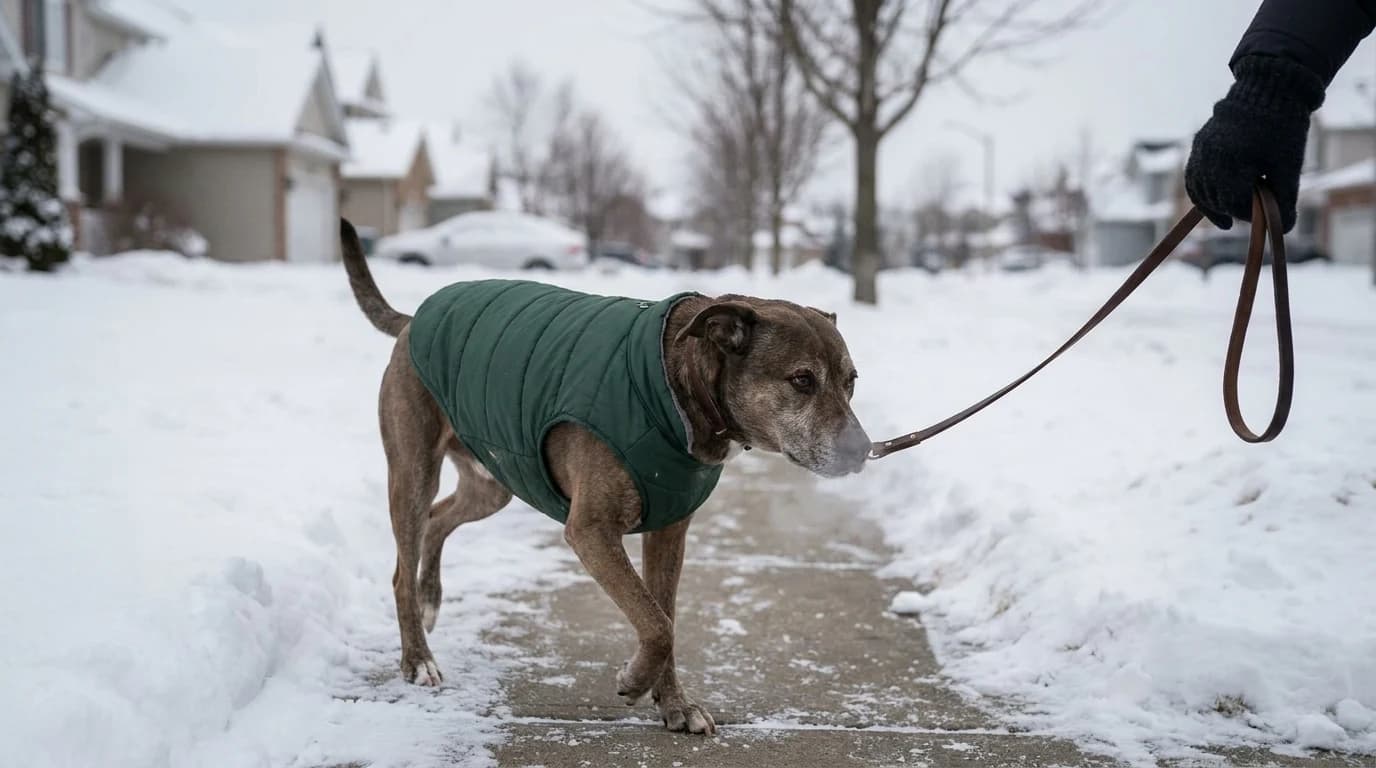
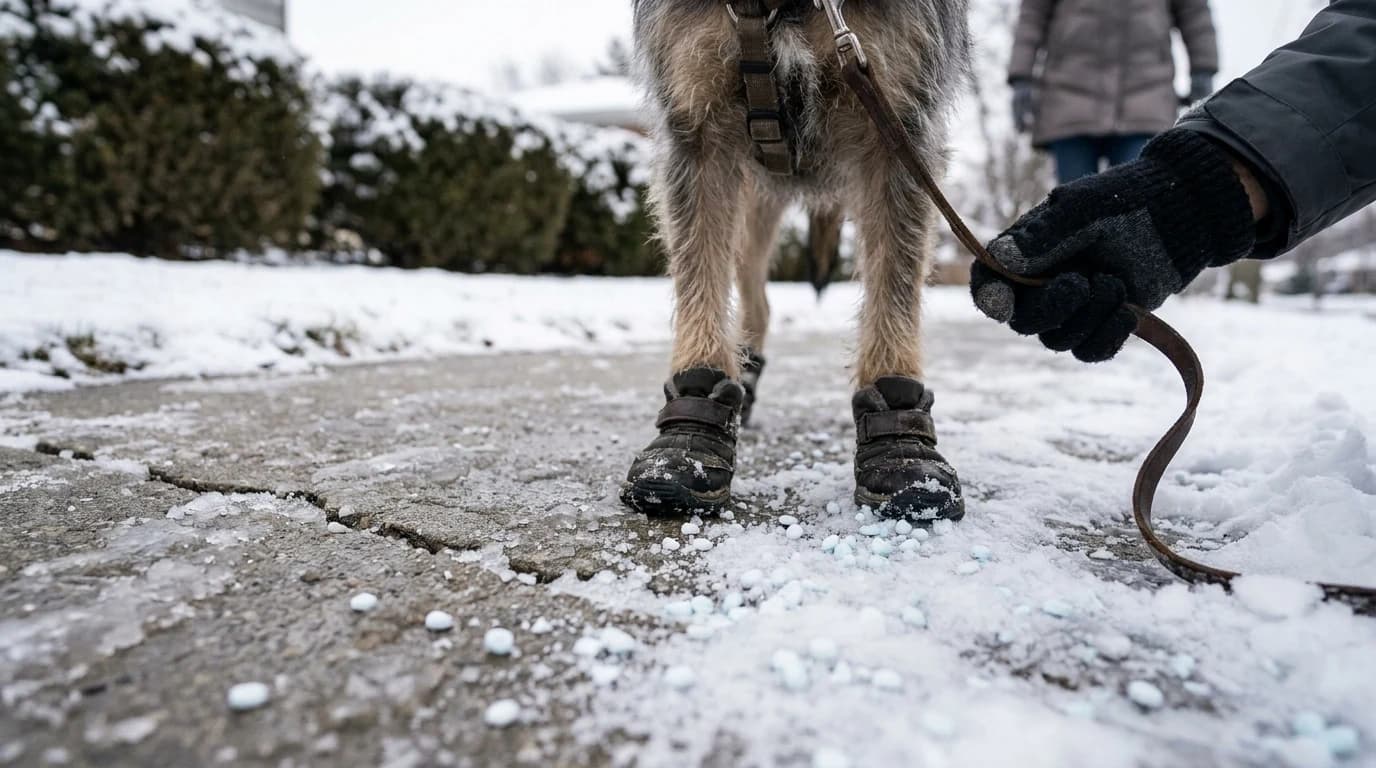
For feet, ASPCA's cold-weather guidance recommends vet-approved paw protectants or boots, washing and drying feet after walks, and checking between toes. That is why a barrier and cleanup belong together. Neither changes what is in a puddle or an accessible bag.
A barrier your dog will actually wear
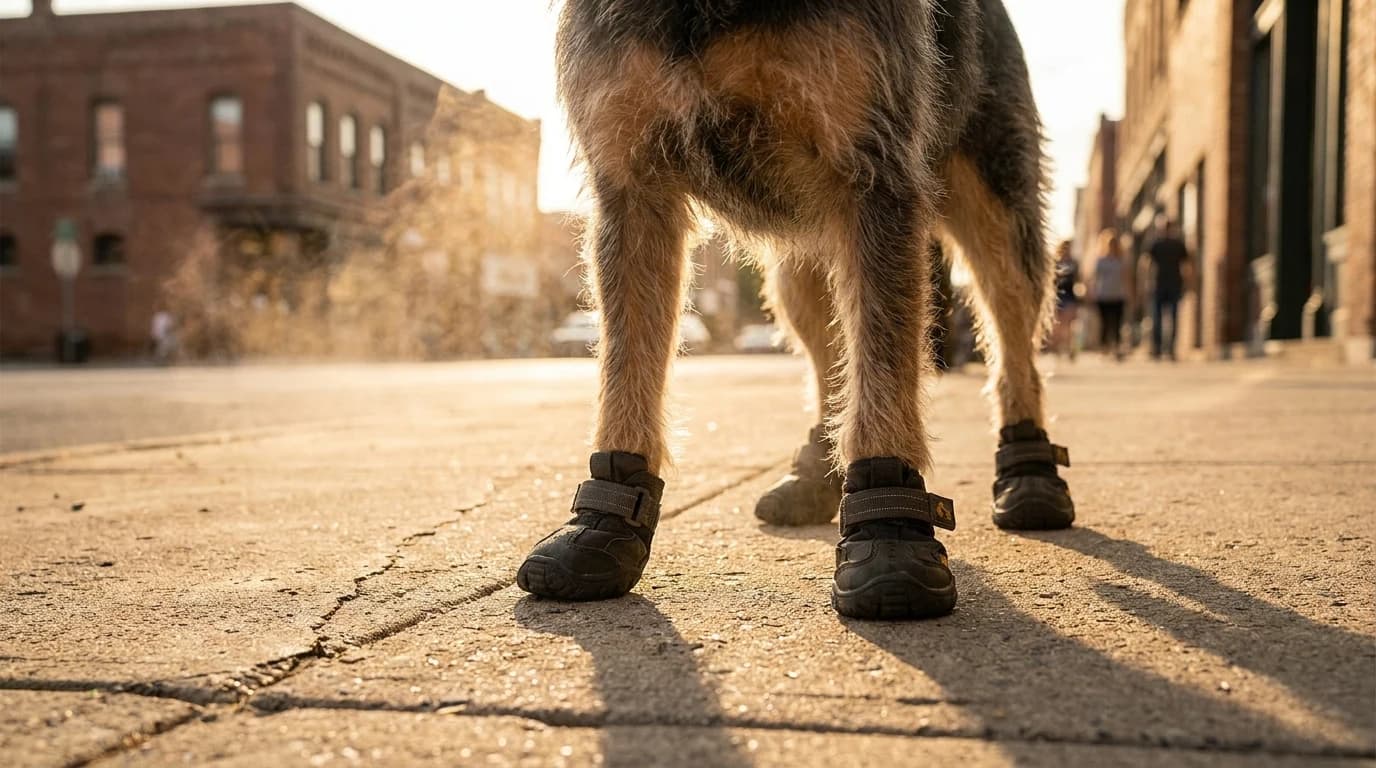
For short sidewalk outings, PawZ Rubber Dog Boots are the simple pull-on option in our catalog. The manufacturer's directions say to remove them after outings rather than leave them on during rest or sleep. Inspect the rubber before reusing a boot.
For longer, rougher routes, Ruffwear Grip Trex Dog Boots add a Vibram outsole and breathable mesh. Ruffwear's product page sells them in pairs and stresses paw measurement: protecting four feet takes two pairs. They are a barrier choice, not a guarantee against slipping on ice. Our dog-boot guide covers fit trade-offs.
If boots are a daily battle
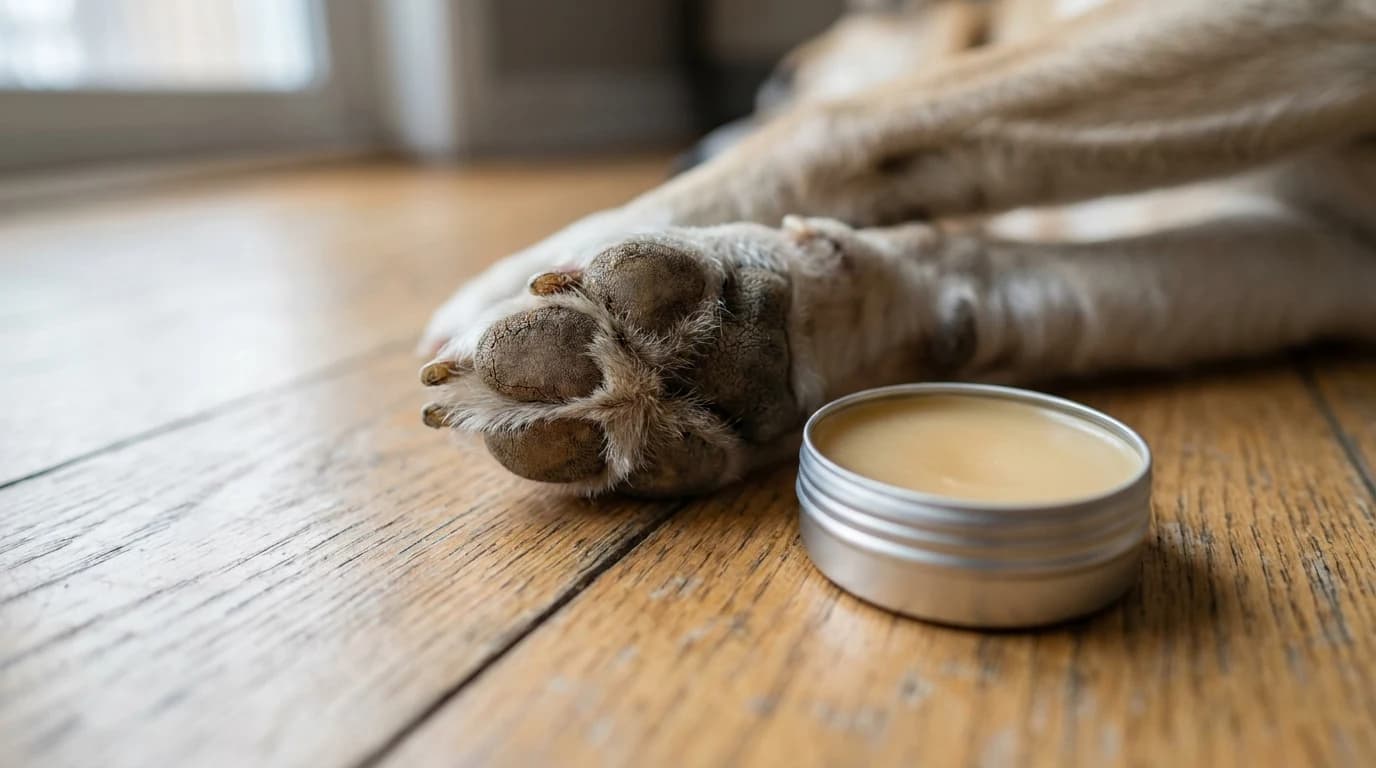
Musher's Secret Paw Wax is a wax option the maker markets for snow and road salt. It avoids putting a boot on each foot, but it does not replace washing. Our paw-balm guide separates routine protection from pads that need veterinary care.
Barrier rule: boots or wax before the walk; clean feet after it. A product on the paw never makes the de-icer edible.
The doorway routine
- Stop before the licking starts. Keep a damp cloth ready at the door.
- Clean feet and the underside. ASPCA recommends washing away ice, salt and chemicals from feet and stomach after each walk.
- Dry between the toes. Remove trapped snow and inspect for redness or cracks.
- Put walking gear away. Set boots aside for cleaning and move melt bags out of reach.
For walks away from home, pack a towel and clean water. The Adventure Medical Kits Me & My Dog kit adds bandages and a canine first-aid guide for an injured paw; the manufacturer lists its contents. It is optional injury preparation, not an ice-melt treatment or something every neighborhood walk needs.
If your dog already swallowed some
The exposure matters. ASPCApro distinguishes a couple of incidental licks from a larger ingestion: the former commonly means limited digestive upset; the latter can require urgent care. More than a casual lick, significant vomiting or neurological signs warrant immediate veterinary assessment. Do not use a pet-safe label to decide to wait.
- Keep the packaging. Photograph ingredients and note when exposure happened.
- Call your veterinarian or ASPCA Poison Control at (888) 426-4435. Tell them what was eaten and the amount you observed.
- Follow their directions. Do not improvise treatment with pantry ingredients. Merck identifies salt used to induce vomiting as a cause of poisoning itself.
For your own steps, ASPCApro suggests sand as a traction alternative. It does not melt ice. Keep the surface-maintenance decision separate from the dog decision: clear the route, follow the chosen product's directions, and supervise the walk. For temperature and outing length, use our cold-weather guide.
Frequently Asked Questions
- Is magnesium chloride ice melt safe for dogs?
- ASPCA describes magnesium chloride as common in pet-friendly melts, but it can still cause stomach upset. Larger ingestions can cause dehydration and electrolyte abnormalities. Prevent ingestion and clean paws after contact.
- Does EPA approve pet-safe ice melt?
- EPA says it will no longer certify ice-melt products under Safer Choice because use and overuse can be problematic for pets and the environment. It keeps the old criteria published while previously labeled products remain in the marketplace.
- Can paw wax replace rinsing after a salty walk?
- No. Wax can provide a barrier, but ASPCA still recommends cleaning feet after walks. Wash and dry the feet, pay attention between toes, and inspect for redness or cracks.
- What if my dog eats ice melt from the bag?
- Contact a veterinarian or ASPCA Poison Control immediately and keep the ingredient label available. A larger ingestion is more concerning than a few incidental licks, regardless of a pet-safe claim on the bag.
Research Sources
- Keeping Pets Safe during Winter: The Dangers of Ice Melts — ASPCA Poison Control
- Ice Melt Toxicity in Pets — ASPCApro
- Cold Weather Safety Tips — ASPCA
- Safer Choice Standard and Criteria: Ice-Melt Products — U.S. Environmental Protection Agency
- Salt Toxicosis in Animals — Merck Veterinary Manual
- Grip Trex Dog Boots — Ruffwear
- PawZ Rubber Dog Boots: Product and Wear Directions — PawZ
- Musher’s Secret Paw Wax and Ice Salt — Musher’s Secret
- Adventure Dog Medical Kit: Me & My Dog — Adventure Medical Kits

PawBench Editorial
Published by Hilly Shore LabsPawBench’s editorial team researches dog products from primary veterinary sources, manufacturer specifications and aggregated buyer sentiment, alongside the lived ownership of Maggie, an Australian Labradoodle. We do not run hands-on product tests.
254 dog products scored · 1,160,091 buyer review-aspect mentions aggregated · cites AVMA, FDA, AAFCO, Cornell, WSAVA, AKC, ASPCA.
Recommendations are based on published veterinary guidelines, manufacturer specifications, and verified customer feedback. See our editorial standards.