Are Poinsettias Poisonous to Dogs? The Holiday Hazard Ladder
Poinsettias are only mildly toxic to dogs: the ASPCA calls them over-rated, and the usual result is drooling or a single vomit. The holiday items that deserve the high shelf are amaryllis bulbs, mistletoe and holly berries, tinsel, salt-dough ornaments and snow globes. If your dog ate something and you are unsure, call your vet or a poison line first.
Quick Answer
Mildly. The ASPCA calls poinsettias generally over-rated in toxicity, and Pet Poison Helpline rates them mild: expect drooling, lip licking or vomiting, usually without treatment. Amaryllis bulbs, mistletoe, holly, tinsel and snow globes carry more risk. If your dog ate any of them and you are unsure, call your vet or a poison line.
On this page5 sections
Our Verdict
Stop guarding the poinsettia and start guarding the decorations. Both poison references describe poinsettia exposure as mild, while tinsel, salt-dough ornaments, amaryllis bulbs and broken snow globes are the items with serious outcomes on record. Do a nose-height sweep of the tree room, block or cover the tree stand, and keep both poison-line numbers saved before December starts.
The holiday hazard ladder
Ten December items, ordered by the worst outcome the ASPCA or Pet Poison Helpline describes for each. The order is our editorial reading of those sources, not a published severity scale.
| Item | Worst outcome described | What matters | Your move |
|---|---|---|---|
| Snow globes (broken) | Ethylene glycol (antifreeze) poisoning and kidney failure | Some globes only; concentration generally low | Keep high; call if one breaks within reach |
| Tinsel and garland | Gut blockage or rupture; zinc-coated tinsel adds anemia | Even small amounts | Skip it |
| Amaryllis | Vomiting, low blood pressure, tremors or seizures | Bulb most concentrated | Keep bulbs and pots out of reach |
| Salt-dough ornaments | Life-threatening electrolyte imbalance | Even when dry | Hang high or skip |
| Mistletoe | Low blood pressure and stumbling after large amounts | Berries and leaves | Hang high; sweep fallen berries |
| Bubble lights | Aspiration pneumonia; eye, skin and gut irritation | Liquid inside if chewed | Keep off low branches |
| Holly | Vomiting, diarrhea; cut lips and gums | Leaves and berries | Keep out of reach |
| Tree water | Nausea or diarrhea from bacteria | Open tree stand | Cover or block the stand |
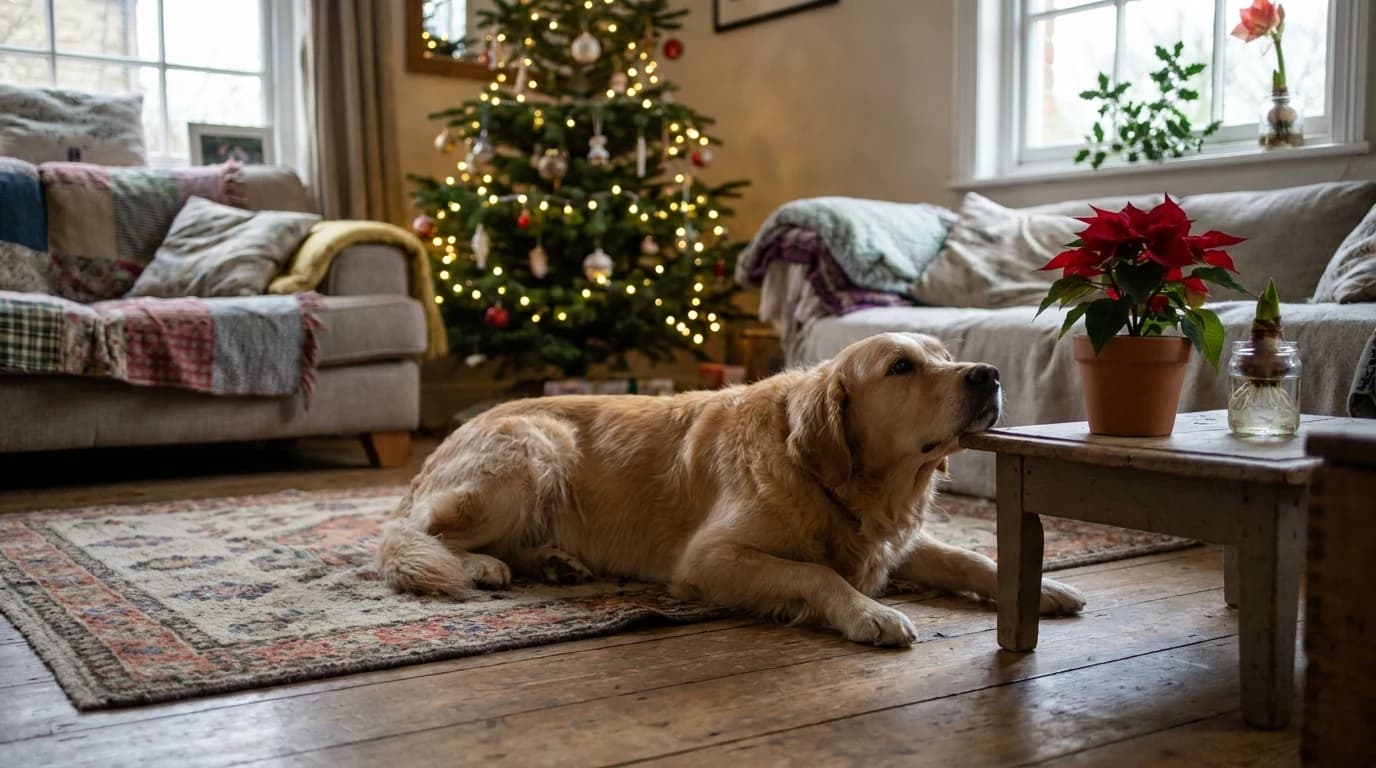
| Poinsettia | Drooling, vomiting, rarely diarrhea | Milky sap | Wipe the mouth; call if signs persist |
| Christmas cactus | Listed as non-toxic to dogs by the ASPCA | Not applicable | A safe swap for the coffee table |
How PawBench is paid: we earn an Amazon Associates commission on qualifying purchases. We don’t accept sponsored placements, paid reviews, or free products in exchange for coverage. Picks are ranked on documented owner outcomes and primary-source research, never on commission rate. Read the full methodology.
Every December the poinsettia gets moved to the top of the fridge while a snow globe sits on the coffee table at nose height. That is the wrong way round. The red plant everyone worries about is one of the mildest things in the room, and the ASPCA says so in four words: "generally over-rated in toxicity." The ladder above ranks what actually deserves the high shelf.
If your dog already ate something: call your vet, ASPCA Poison Control at (888) 426-4435 (a consultation fee may apply) or Pet Poison Helpline at (855) 764-7661 ($99 per incident). Pet Poison Helpline says not to induce vomiting or give home antidotes without consulting a vet or the helpline.
The poinsettia's reputation is bigger than its bite
The sap is the problem part. Pet Poison Helpline says it contains diterpenoid euphorbol esters and saponin-like detergents, rates the plant as mildly toxic to dogs, and calls the poisoning "greatly exaggerated." What it describes looks like this:
- Drooling and lip licking
- Vomiting, and rarely diarrhea
- Redness, swelling or itching where sap touched skin
- Rarely, mild eye irritation
The helpline adds that signs are generally self-limiting, there is no antidote, and treatment is rarely needed unless signs are severe or persistent.
The human numbers behind the myth
The fear has never matched the record in people either. A 1996 analysis of US poison center data looked at 22,793 poinsettia exposures: no deaths, 92.4% with no toxicity at all, and 96.1% handled without a trip to a health care facility. Those are human cases, mostly children, so they do not transfer to dogs as a dose guide. They do explain why toxicologists keep calling the plant's reputation inflated.
Rule of thumb: a poinsettia nibble usually means drool and maybe a vomit. Call if signs are severe or keep going, and call anyway if you are unsure what was eaten.
Where the real plant risk lives
Amaryllis: the bulb is the part that matters
Pet Poison Helpline says amaryllis leaves, stems and bulbs carry alkaloids that can cause dose-dependent vomiting, a drop in blood pressure, tremors or seizures, and slowed breathing. The oxalate crystals behind drooling and belly pain are more concentrated in the bulb. Gift kits sold as a bare bulb in a pot of soil are the version to keep high.
Mistletoe: dose decides
The ASPCA lists vomiting, diarrhea, difficulty breathing, a low heart rate and, rarely, low blood pressure for American mistletoe. Pet Poison Helpline says stomach upset is the common result, with low blood pressure and a stumbling gait after large ingestions. Fallen berries under a doorway sprig are the easy miss.
Holly: the leaves bite back
Holly's saponins cause nausea, vomiting and diarrhea, per Pet Poison Helpline, which also warns that the spiky leaves can injure lips and gums. The ASPCA adds depression to the list.
Lower stakes, by the sources:
- Christmas cactus: non-toxic to dogs, per the ASPCA
- Poinsettia: mild, mostly mouth and stomach irritation
Higher stakes, keep out of reach:
- Amaryllis, especially the bulb
- Mistletoe, especially fallen berries
- Holly, leaves and berries
The tree is not on the poison lists; its accessories are
Neither the ASPCA's holiday safety tips nor Pet Poison Helpline's winter holiday list names the tree itself as a poison. The ASPCA's tree advice is about anchoring it so it cannot tip, and what hangs on it and sits under it. Plenty of sites assert that fir needles or oils are toxic. We could not trace that to either source, so treat it as unproven rather than proven safe.
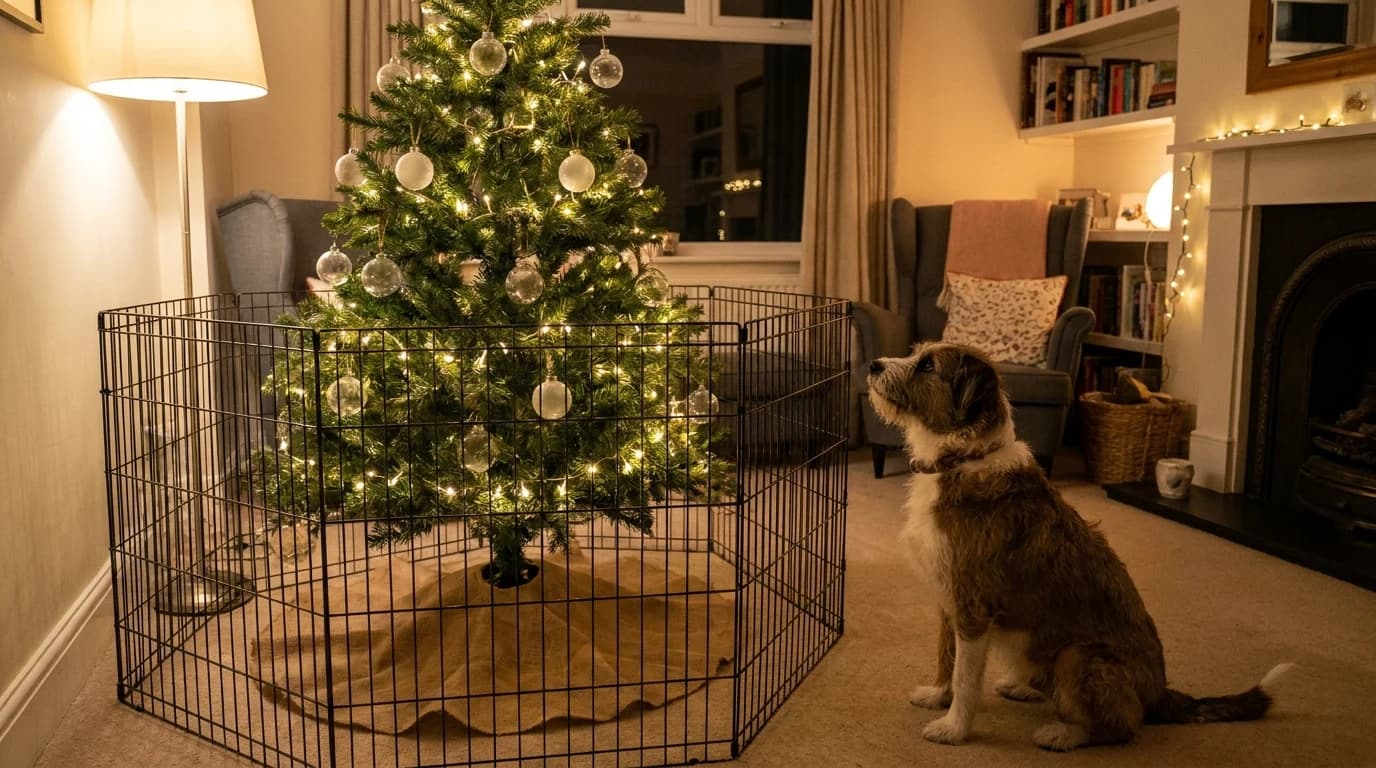
The decorations are where the sources get serious:
- Tinsel and garland: even small amounts can cause a gut blockage or rupture, and zinc-coated tinsel adds a poisoning risk (Pet Poison Helpline).
- Snow globes: the ASPCA says they contain ethylene glycol, the antifreeze chemical. Pet Poison Helpline says only certain globes do and the concentration is generally low, but says a broken one within a pet's reach should still be taken seriously.
- Bubble lights: methylene chloride can cause depression, aspiration pneumonia and irritation, per Pet Poison Helpline.
- Salt-dough ornaments: the ASPCA warns that even dry ones can cause life-threatening electrolyte imbalances. Same reasoning as our ice melt guide.
- Tree water: the ASPCA calls it a breeding ground for bacteria that can cause nausea or diarrhea.
The pattern: the plants mostly cause stomach upset. The decorations are where a vet visit, or surgery, enters the picture.
A dog-height audit before the tree goes up
- Kneel at your dog's nose height and look at the room. Anything you can reach from there, so can they.
- Anchor the tree, then cover the stand or block it. A MidWest 30-inch exercise pen can ring a small tree; for a big jumper, a Regalo walk-through gate across the doorway keeps the whole room off-limits overnight.
- Hang breakables, salt-dough and glass on upper branches. Skip tinsel.
- Put amaryllis bulbs, mistletoe and holly where a standing dog cannot reach them; sweep fallen berries daily.
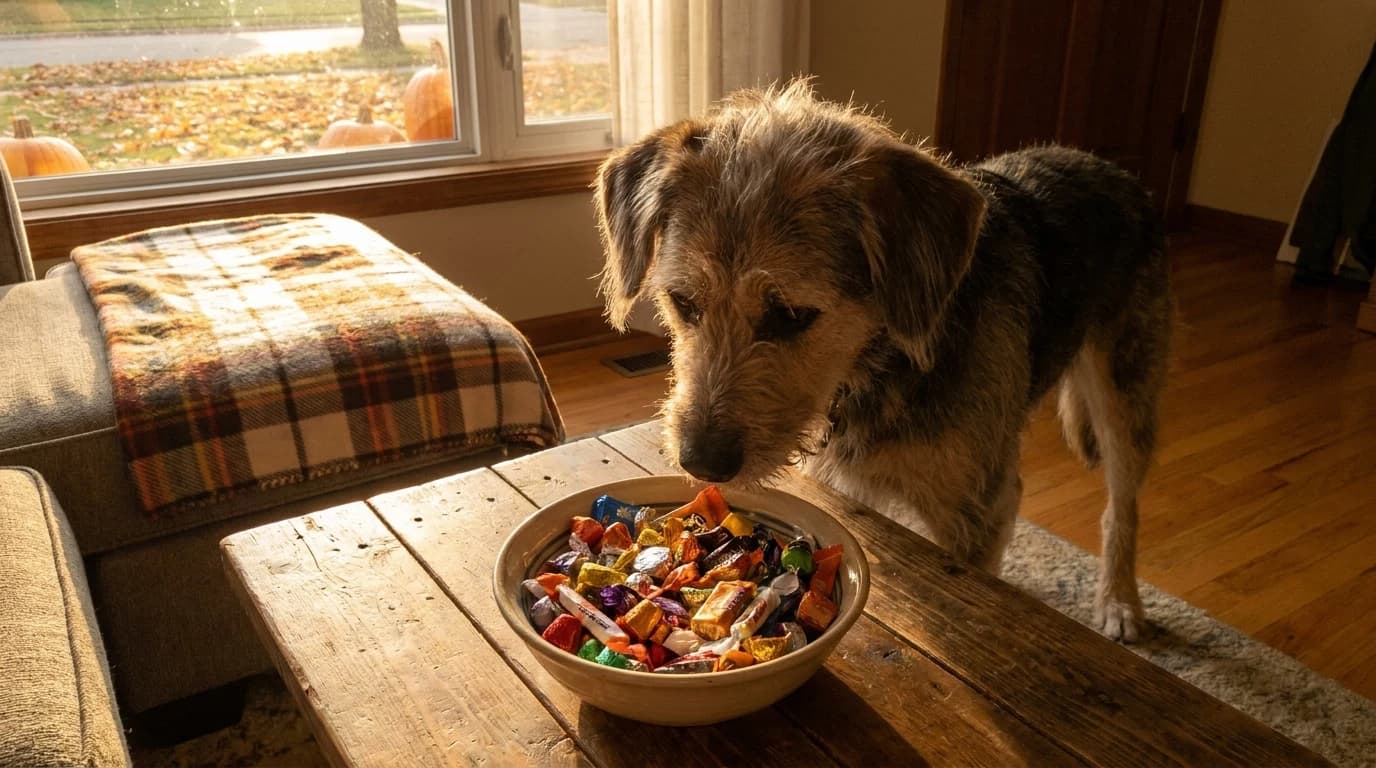
- Keep wrapped food and candy off the floor. The ASPCA notes pets can smell what you cannot see, and our chocolate guide has the dose maths if a box goes missing.
- Save both poison-line numbers in your phone today.
What to tell the poison line
- What was eaten, by name or a photo of the plant or label
- Which part: a leaf and a bulb are different calls
- Roughly how much, and when
- Your dog's weight
For the holiday table itself, see which Thanksgiving foods dogs can eat, and for an upset stomach with no known cause, our guide to vomiting and diarrhea and when to call the vet.
Frequently Asked Questions
- My dog ate a poinsettia leaf. What should I do?
- Wipe out the mouth and watch. Pet Poison Helpline rates poinsettia as mildly toxic: drooling, lip licking and vomiting are typical, and signs are usually self-limiting. Call your vet or a poison line if signs are severe or persistent, or if you are not sure what plant it was.
- Are Christmas trees toxic to dogs?
- Neither the ASPCA's holiday tips nor Pet Poison Helpline's winter list names the tree itself as a poison. Their tree warnings cover a tipping tree, bacteria in the stand water, and tinsel, which can block the gut. Claims that fir needles are toxic could not be traced to either source.
- Is a Christmas cactus safe for dogs?
- The ASPCA lists the Christmas cactus as non-toxic to dogs, which makes it the easy swap if you want a holiday plant at nose height. Non-toxic does not mean a dog should eat it; a large mouthful of any plant can still upset a stomach.
- Is mistletoe more dangerous than poinsettia for dogs?
- Yes, by the sources. Both cause stomach upset, but the ASPCA lists a low heart rate, difficulty breathing and rare low blood pressure for American mistletoe, and Pet Poison Helpline warns of low blood pressure and stumbling after large ingestions. Neither describes those signs for poinsettia.
Research Sources
- Poinsettia — ASPCA Animal Poison Control
- Poinsettia — Pet Poison Helpline
- Poinsettia exposures have good outcomes...just as we thought (Am J Emerg Med, 1996) — Krenzelok, Jacobsen and Aronis via Europe PMC
- Amaryllis — Pet Poison Helpline
- Mistletoe "American" — ASPCA Animal Poison Control
- Mistletoe — Pet Poison Helpline
- Holly — Pet Poison Helpline
- Christmas Cactus — ASPCA Animal Poison Control
- Holiday Safety Tips — ASPCA
- Winter Holiday Pet Poison Tips — Pet Poison Helpline
- Tinsel — Pet Poison Helpline

PawBench Editorial
Published by Hilly Shore LabsPawBench’s editorial team researches dog products from primary veterinary sources, manufacturer specifications and aggregated buyer sentiment, alongside the lived ownership of Maggie, an Australian Labradoodle. We do not run hands-on product tests.
331 dog products scored · 1,222,724 buyer review-aspect mentions aggregated · cites AVMA, FDA, AAFCO, Cornell, WSAVA, AKC, ASPCA.
Recommendations are based on published veterinary guidelines, manufacturer specifications, and verified customer feedback. See our editorial standards.